Medical Device Automation Is Taking On Harder Problems
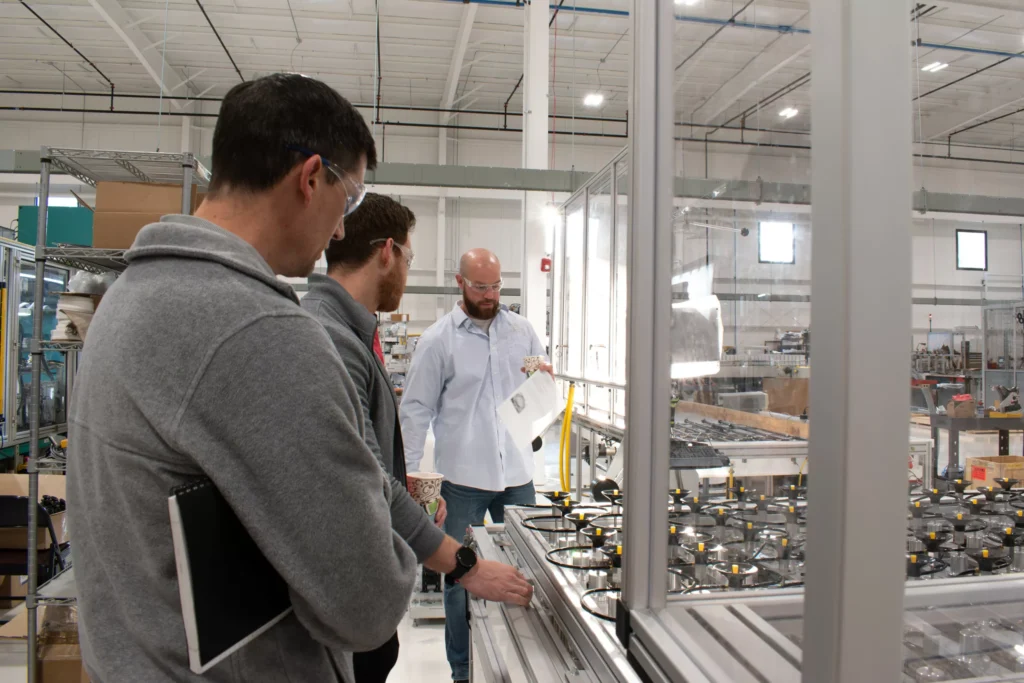
Walk through our build floor right now and you’ll see one of this year’s biggest medical device automation trends firsthand: far more medical equipment than we’re used to.
Contact lens and medical tube handling machines have been steady work for us for years. This year, that work spread into CPAP components, endoscope and microscopic assembly, small-board PCB soldering for medical equipment and antennas, and product bagging. Customers are bringing us processes they used to assume had to stay manual.
That shift says something about where medical device manufacturing, and life sciences more broadly, is heading. Here’s what we’ve seen from inside these projects, and what it means if you’re planning automation for a medical product.
“Some of our medical customers have been with us through several generations of the same machine. Every time their product changes, we learn something, and the next machine is better for it. That’s the kind of relationship we want with every customer.”
— Dan Belliveau, President, Steven Douglas Corp.
Key Takeaways
- Flexible tubing, tiny components, and multi-step assemblies are now realistic automation candidates, as long as the process is proven before the machine is designed.
- As parts shrink, success depends more on tooling, fixturing, and handling than on which robot you buy.
- More medical devices carry electronics, so soldering, wire processing, and testing are landing in the same machine as mechanical assembly.
- Inspection works best at the station where a defect can happen, not at the end of the line.
- Packaging, marking, and RFID are being designed into equipment from the start instead of left for later.
- Medical devices stay in production for years, so the machine and the team behind it need to last too.
1. Flexible Materials Are No Longer Off Limits
Medical tubing is the clearest example we have of a process that used to be considered too finicky to automate.
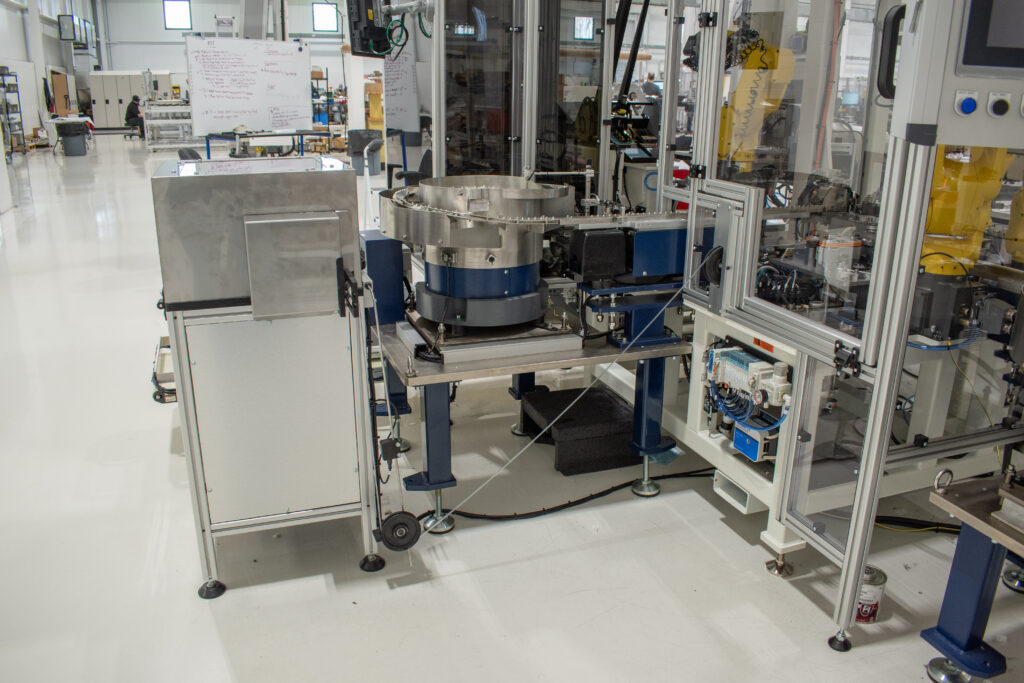
Tubing doesn’t sit still. It curls off the spool, stretches when you pull it, and wants to spring back the second you let go. An operator compensates for all of that without thinking about it. A machine has to be told exactly how.
So feeding, cutting, and inserting tubing isn’t really a pick-and-place problem. It’s about controlling tension, knowing where the end of the tube actually is, watching insertion force, and understanding how that particular material behaves over a full shift.
We’ve built multiple generations of feeding tube assembly machines, and each one got better at the hard parts: controlled payout, robotic handling, force checks, vision, and automatic corrections when something drifts. The newer work goes past assembly into robotic unloading, inspection, and automated bagging.
If a process on your floor seems too variable to automate, it may not be. More often it means the process needs to be developed and proven before anyone settles on a machine layout.
2. Smaller Parts Change Every Design Decision
Endoscopes, minimally invasive instruments, and other precision devices keep getting smaller, and so do the parts inside them.
At that scale, normal assumptions stop working. A standard gripper can crush a part. A tiny misalignment can ruin an assembly. Sometimes the machine needs vision just to find the part before it can do anything with it.
Our endoscope and microscopic assembly work comes down to precision fixturing, specialized gripping, tightly controlled motion, and inspection planned in from the beginning. The same thinking carries over to small electronic assemblies.
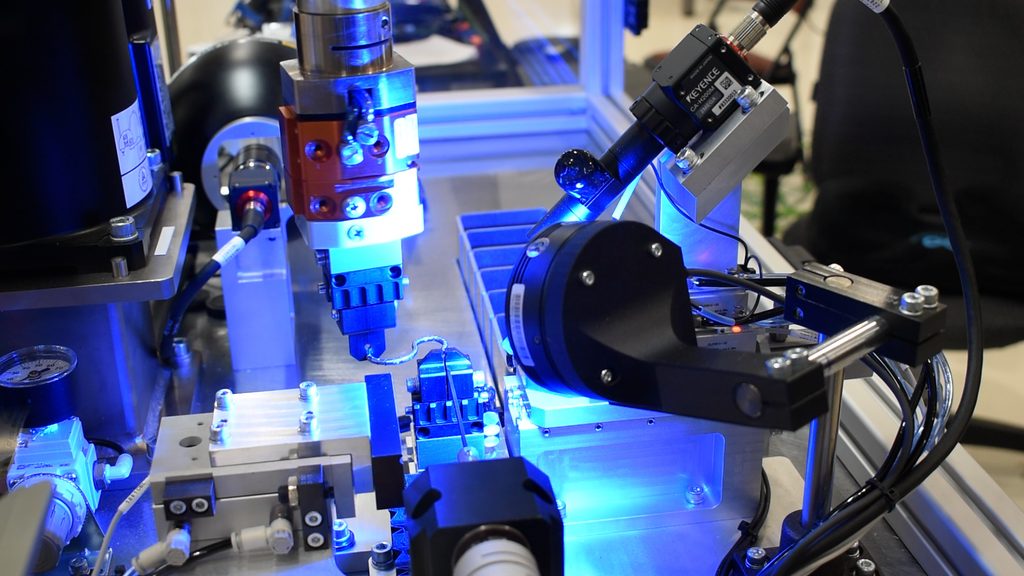
The lesson for anyone planning a project: when products shrink, whether a process can be automated depends far more on tooling and handling than on robot selection. Answer those questions early and the rest of the project carries a lot less risk.
3. Electronics Are Pulling More Processes Into One Machine
More medical devices now include sensors, antennas, circuit boards, and wiring, and that brings a whole new set of operations into the assembly picture.
A single product might need wire cutting and stripping, heat shrink, tinning, soldering, adhesive dispensing, curing, inspection, and a functional test before it’s finished. Traditionally those steps lived at separate benches, with people carrying parts from one to the next.
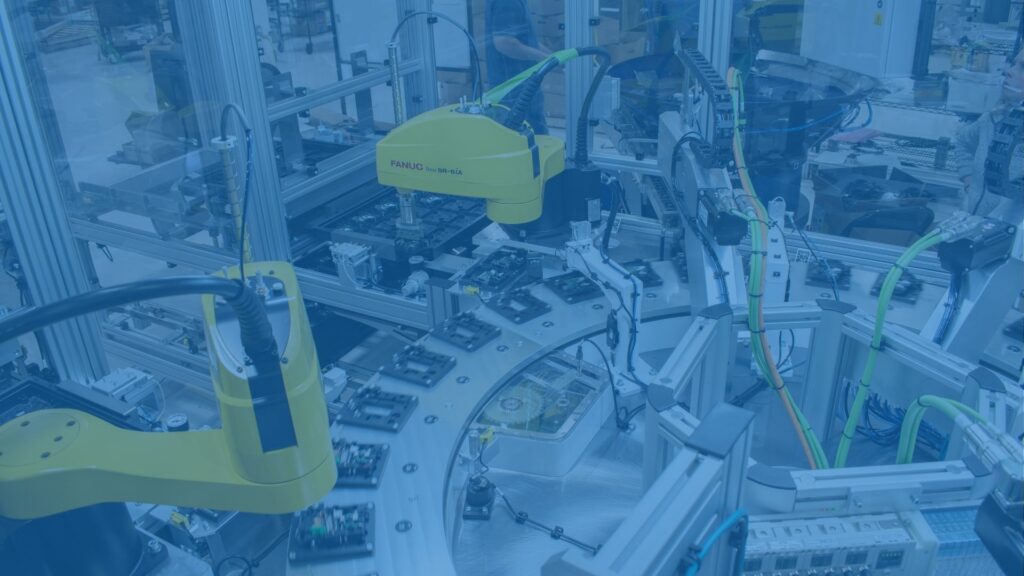
This year we’ve done more small-board PCB and soldering work for medical equipment and antennas. We’ve also engineered multi-robot systems that process wire, handle boards, solder, and move assemblies through inspection and cure. In one design, two robots hold opposite ends of a wire assembly so it stays under control as it travels between operations, while vision checks the leads before each solder step.
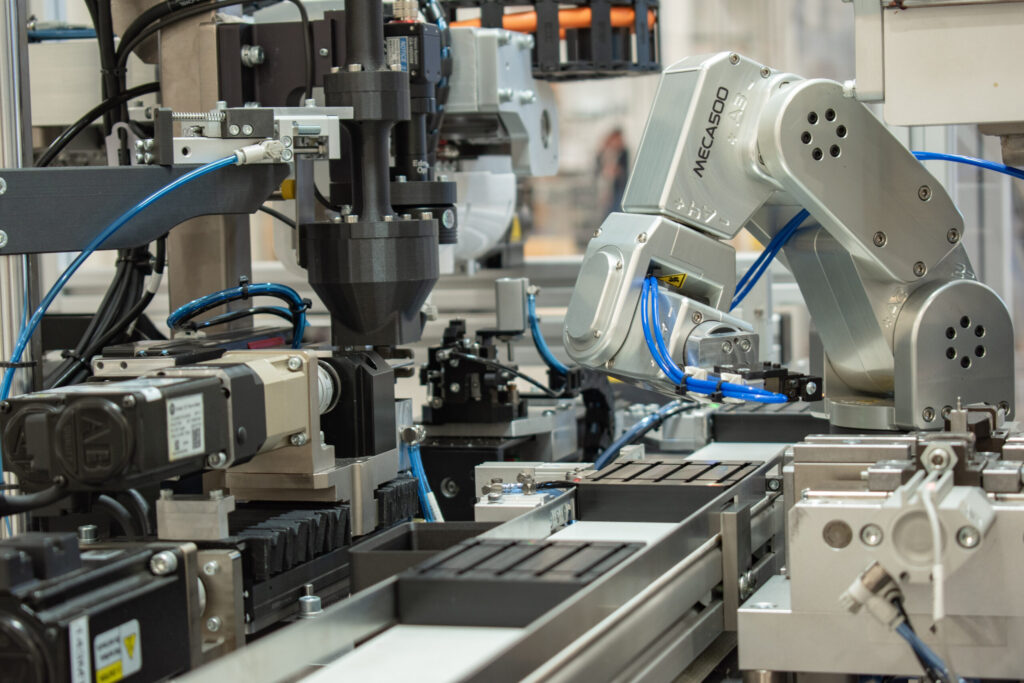
We’re also seeing interest in combining adjustment with testing. For medical imaging electronics, we’ve engineered a cell where a precision robot makes fine adjustments while test instruments take RF and functional measurements in the same process, instead of passing the part back and forth between an adjuster and a tester.
Every manual transfer you remove is one less chance for damage, mix-ups, or variation. In medical electronics, that’s where most of the opportunity sits.
4. Inspection Is Moving to Where the Work Happens
Quality has always mattered in medical manufacturing. What’s changed is where inspection lives.
Instead of one check at the end, more manufacturers want each critical operation verified as it happens. On a wire processing line, vision can check the strip, then the tinned leads, then the solder joint before the assembly moves on. A bad part gets pulled right there, before anyone puts more time or material into it.
The same idea shows up in other applications. Force monitoring confirms a tubing insertion. Vision confirms placement on a precision assembly. Barcode verification, part identification, fault history, and production data fill in the rest, and they give quality teams a much clearer view of what the machine is actually doing.
Our advice is to plan inspection during concept development, not after. Which steps need verification, what data you want to keep, and where rejected parts go can shape the entire machine. Our test and inspection page covers the technologies we use most.
5. Packaging and Identification Are Joining the Line
Assembly is only part of the job. Products still have to be handled, marked, identified, inspected, and packaged before they move on.
We’re getting more requests to build those steps into the equipment. Our medical work includes bagging, robotic product handling, barcode reading, laser marking, thermal inkjet printing, RFID, and vision inspection of what’s been printed.
One secondary packaging cell we engineered pairs operator loading with servo-driven indexing, barcode scanning, laser marking, inkjet printing, print inspection, and RFID read/write. On tubing equipment, we’ve combined robotic unloading with bagging and inspection before and after the bag.
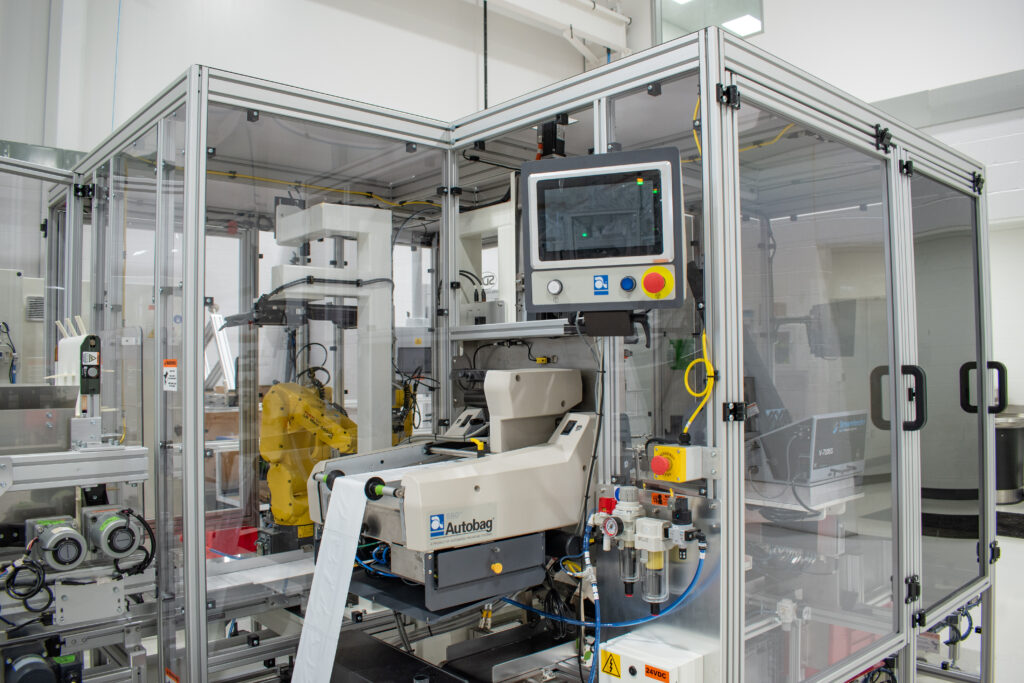
A caution worth stating plainly: automated bagging and secondary packaging aren’t the same thing as validated sterile-barrier packaging. Each has its own requirements, and the equipment has to be designed around them.
When you scope a project, look at the whole workflow. Pulling downstream steps into the original design is almost always simpler than bolting them on later. You can see more of our material handling and packaging work on our site.
6. Machines Have to Keep Up With the Product
Medical devices can stay in production for many years, but the way they’re made rarely stays the same. Product revisions, higher demand, quality improvements, and packaging changes all land on equipment that’s already running.
Our feeding tube work is a good example. Across several machine generations we’ve improved material handling, force verification, robotic corrections, and downstream packaging, each time building on what the previous machine taught us.
Sometimes the right move is upgrading the machine you already have. Sometimes requirements have shifted enough that a new system makes more sense. Either way, it helps to work with a team that knows the original process and has supported the equipment since it shipped. That’s the job of our service and support group.
For new equipment, think ahead about product variants, rate increases, maintenance access, and room to grow. A machine your team can live with for years is worth more than one that simply passes runoff.
The Common Thread
Put these six medical device automation trends side by side and the message is simple. Life sciences manufacturers are asking automation to take on harder problems than they used to.
Flexible tubing, microscopic parts, electronics, built-in inspection, integrated packaging: none of it fits a catalog machine. Good results start with understanding the process, especially when several technologies have to work as one. If you’re trying to figure out how much custom engineering your project needs, our post on custom machine builders vs. systems integrators walks through it, and our Custom Automation Machines Buyer’s Guide goes deeper.
Since 1998, SDC has built more than 1,500 machines, taking projects from the customer’s manufacturing problem through concept, engineering, build, integration, testing, commissioning, and support. As a family-owned company, we keep the same people close to a project from the first sketch to years after it ships.
Planning a Medical Device Automation Project?
Whether it’s a new device or a process that’s been stuck in manual assembly, SDC’s engineers are ready to scope the right automation solution. Our team works with manufacturers from the earliest concept through design, build, commissioning, and long-term support. Here’s how our project process works.
Engineers. Builders. Problem Solvers.

Talk to our engineering team about your medical device automation project.
FAQs: (Frequently Asked Questions)
What are the biggest trends in life sciences automation?
The main ones we see are automating flexible materials like tubing, precision micro assembly, more electronics and soldering inside medical devices, inspection at each critical step, packaging and identification built into the line, and equipment designed to adapt as products change.
What medical device manufacturing processes can be automated?
Tubing feeding and cutting, component insertion, precision assembly, wire processing, soldering, adhesive dispensing, inspection, electrical testing, marking, and packaging are all common. The right approach depends on the device, the volume, and what makes the process difficult.
Can medical tubing and feeding tube assemblies be automated?
Yes. Controlled material handling, specialized tooling, robotics, force monitoring, and machine vision make it possible. SDC has built multiple generations of medical feeding tube assembly equipment.
How is machine vision used in medical device assembly?
Vision verifies that components are present, oriented, and positioned correctly, and it checks assembly and processing results such as stripped wire and solder joints. It also guides robots, reads barcodes, and inspects printed information on packaging.
What should medical device manufacturers look for in an automation partner?
Look for experience with similar manufacturing problems, strong mechanical and controls engineering under one roof, a structured project process, acceptance criteria agreed on up front, and a team that will support the equipment long after installation.