When a long-time life sciences customer needed more from their medical device assembly operation, they came back to SDC — the same team that built the machine already running on their floor. That original system, detailed in our medical tube assembly case study, had proven itself on the production floor. The new project called for expanded throughput, integrated automated bagging, and the same synchronous robotic bonding approach that could handle both tube ends simultaneously.
Their product — a medical feed set used in life sciences fluid management — required precise tube cutting, primer dispensing, and clean, traceable packaging. The previous SDC machine covered assembly. Packaging was a separate process — one the customer wanted to bring inside the same cell.
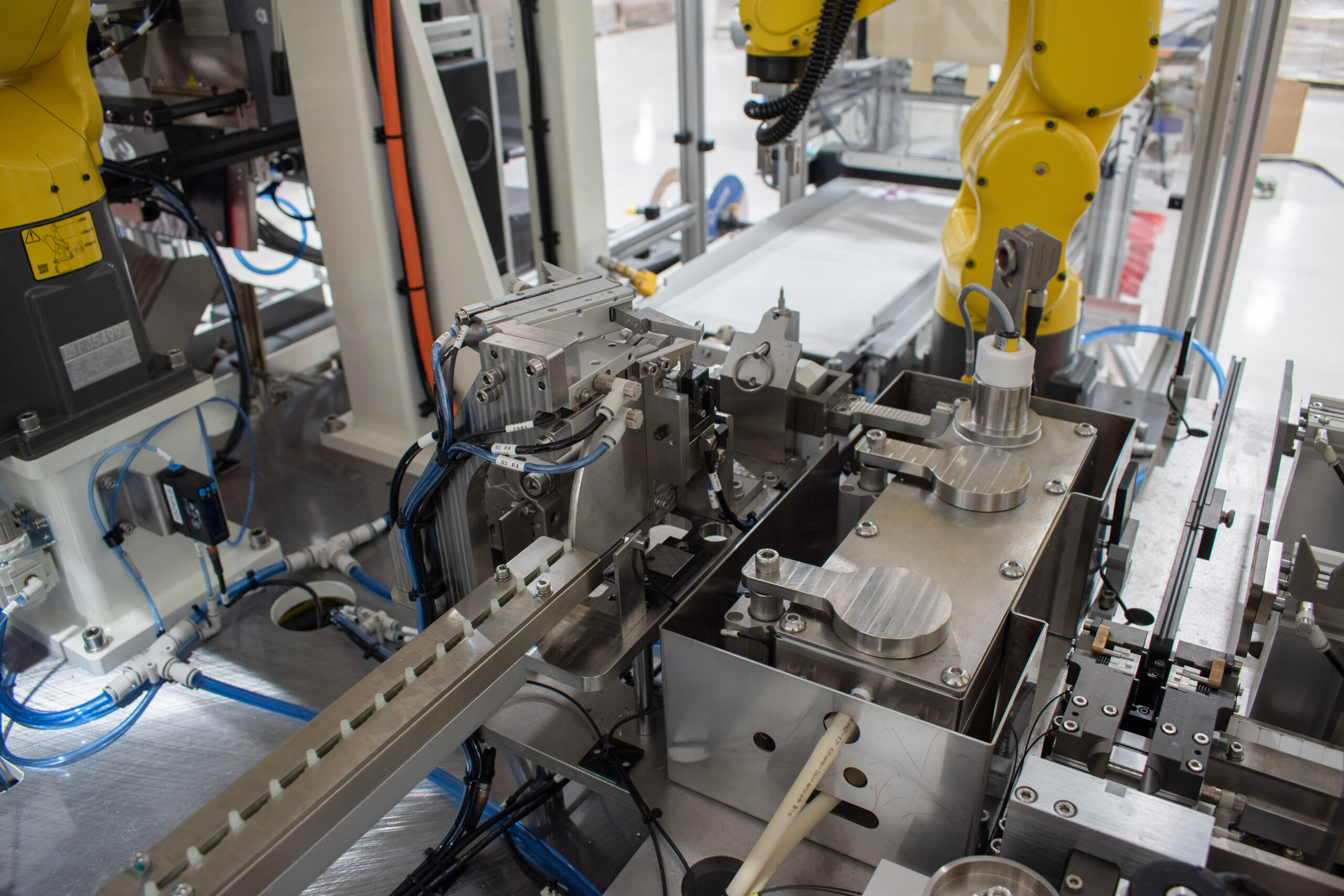
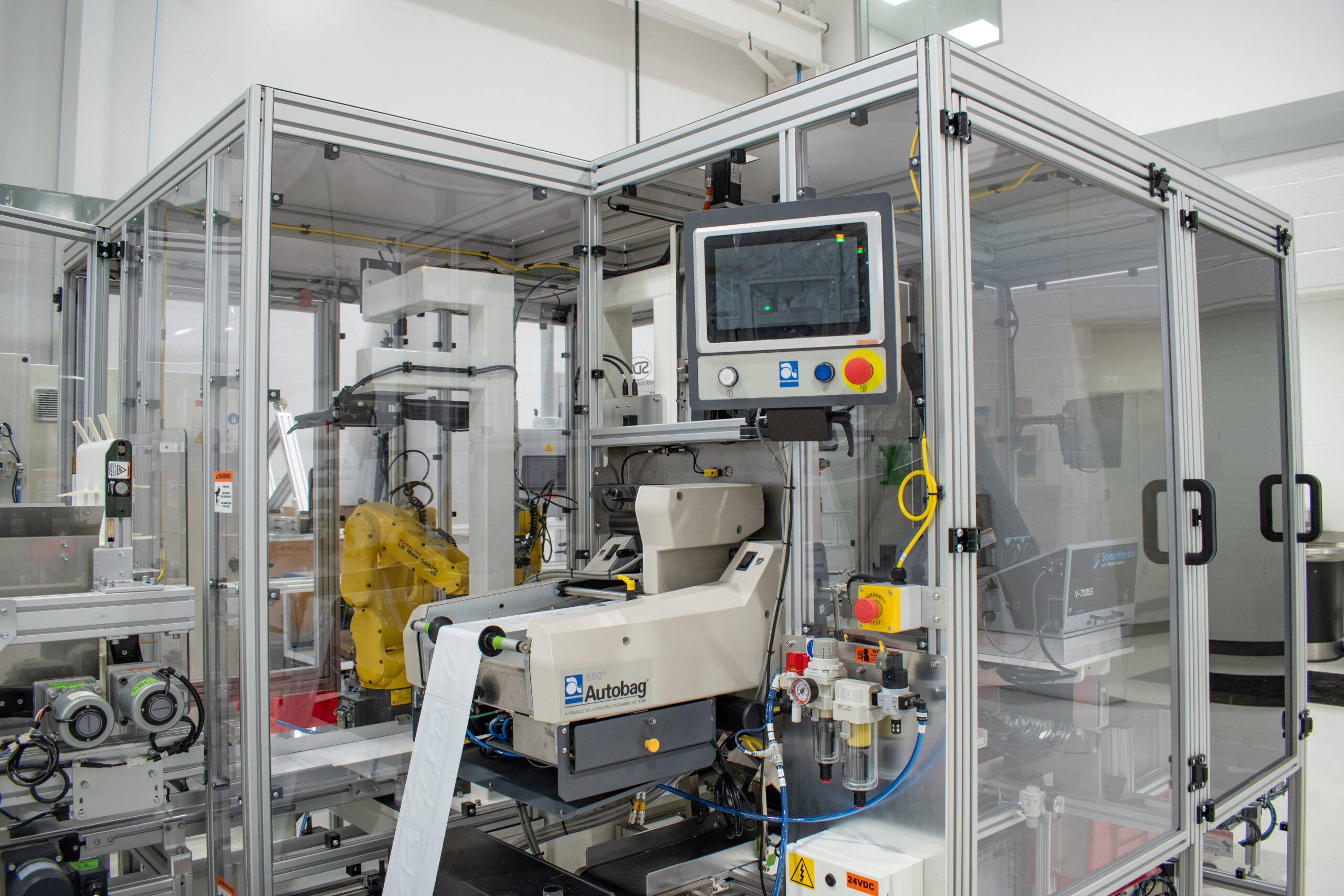
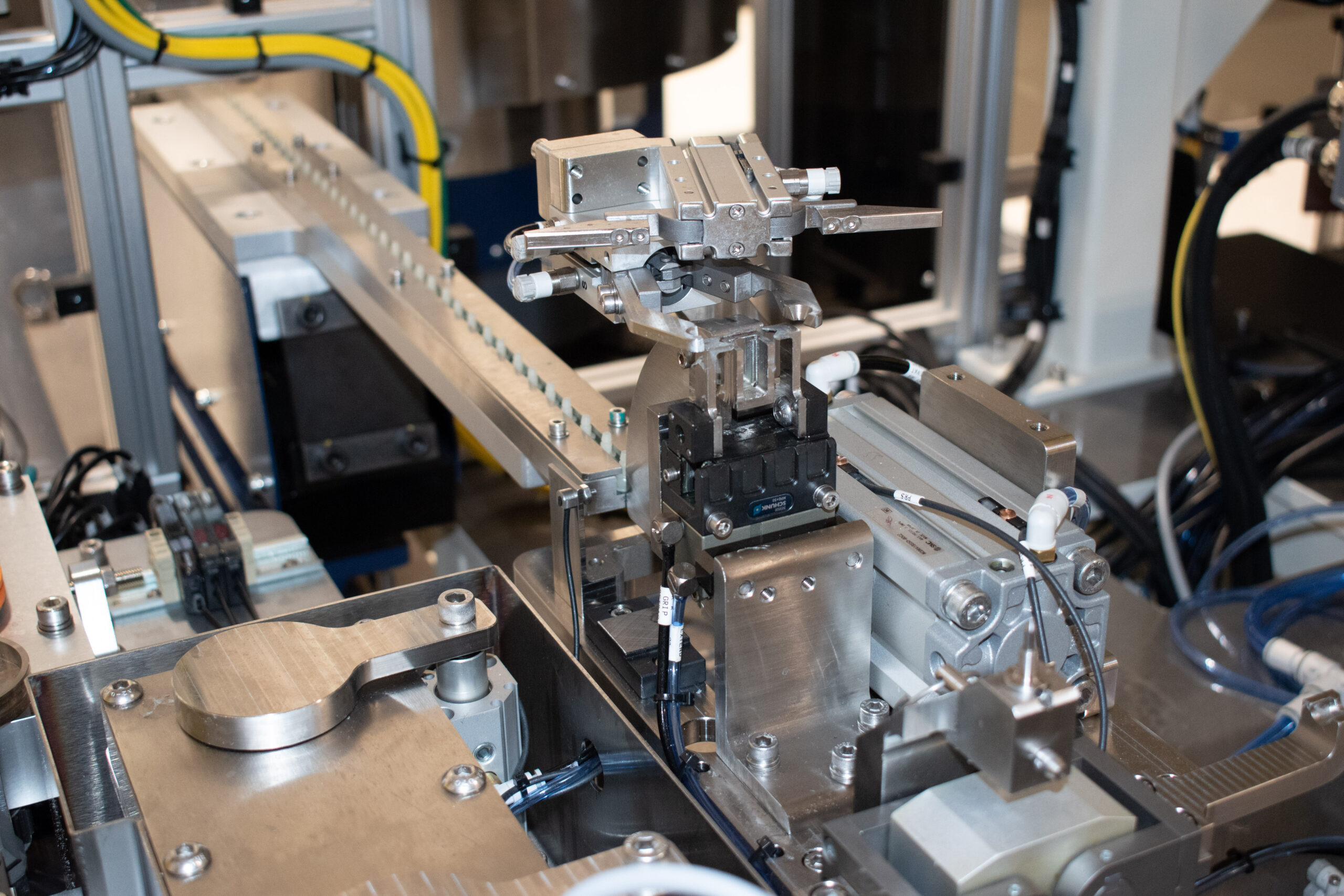
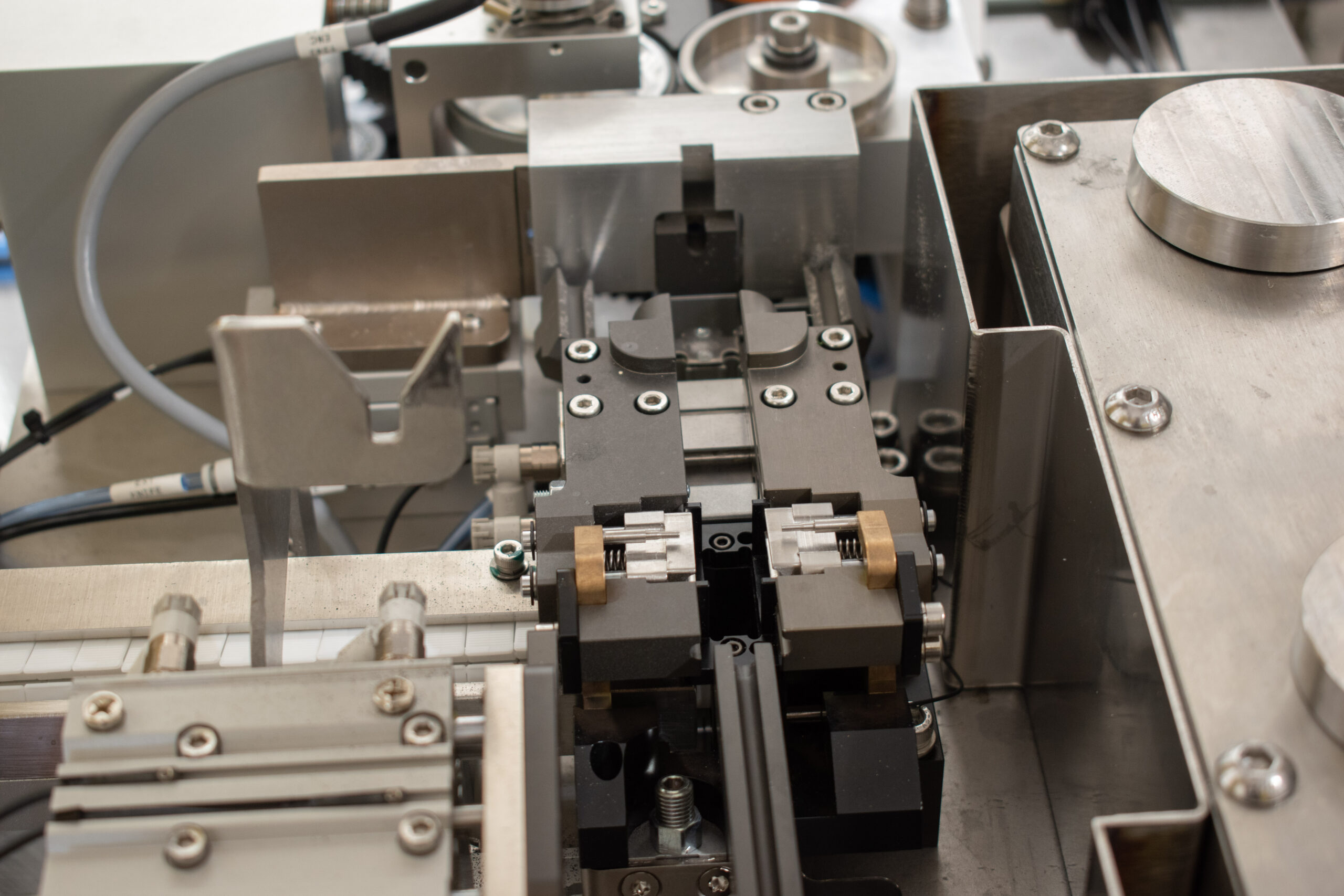
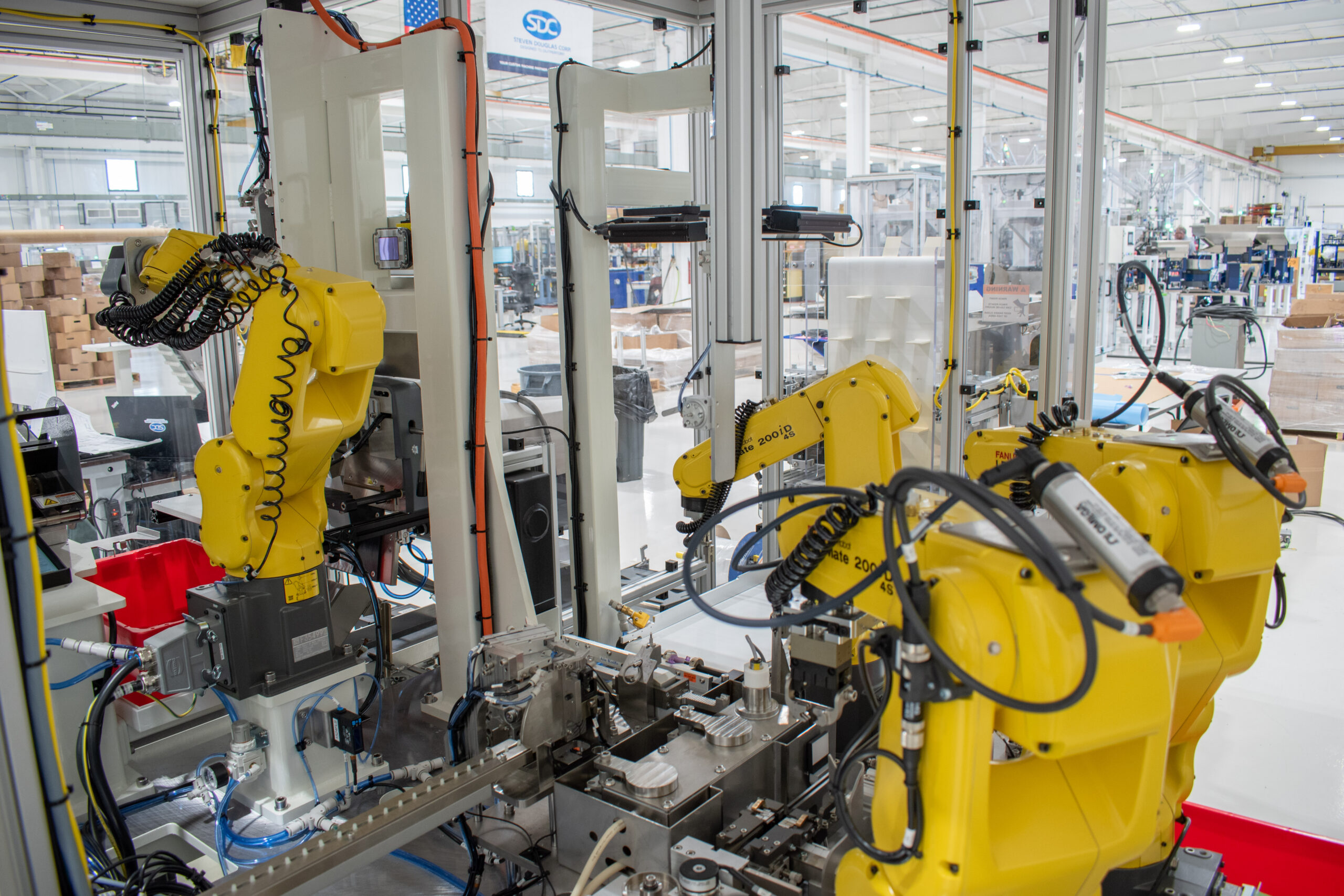
The concept for this machine was straightforward: raw tubing and components enter the cell, and finished, packaged feed sets come out. Every operation — cutting, primer dispensing, robotic part joining, vision inspection, bagging, and vision inspection — had to be controlled, measurable, and rejection-capable within a single enclosed system.
The previous machine was one of several SDC had built for this customer — and all of them had earned their keep on the production floor. This upgrade preserved the core architecture — including all force checks, dereeling logic, and process-specific robot sequences — and extended it with a fully integrated packaging line. Bagging, literature insertion, and multi-point vision inspection became part of the same cell. Secondary packaging operations were eliminated, and full product traceability now ran from assembly through the final sealed bag.
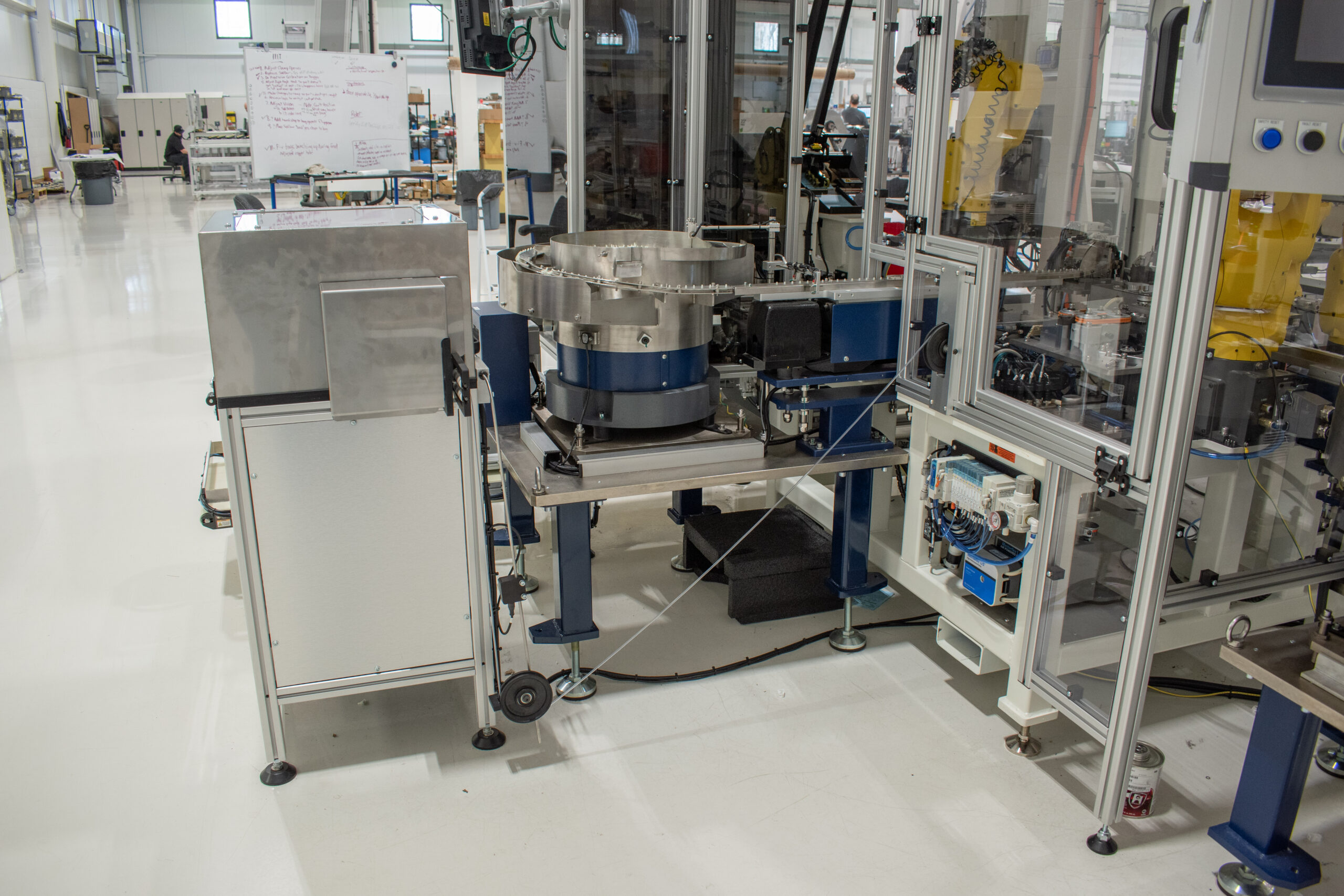
SDC built this machine on the foundation of a system it already knew worked. Force checks, tube payout improvements, and automatic robotic corrections carried over directly from the previous design. The packaging and inspection systems were then layered in on top. The finished system is a fully enclosed robotic automation cell, electrically and pneumatically energized, with a redundant safety-monitored circuit that keeps operators protected from all machine motion.
Assembly begins with the custom SDC dereeling system — a component SDC engineered specifically for this customer’s medical-grade tubing. The material is tacky and prone to tangling, and a standard dereeler would not handle it reliably. This purpose-built mechanism maintains consistent tension through every cycle. An encoder and camera measure the payout length, and the tube is cut to spec: 12 inches or 24 inches, depending on the active product configuration.
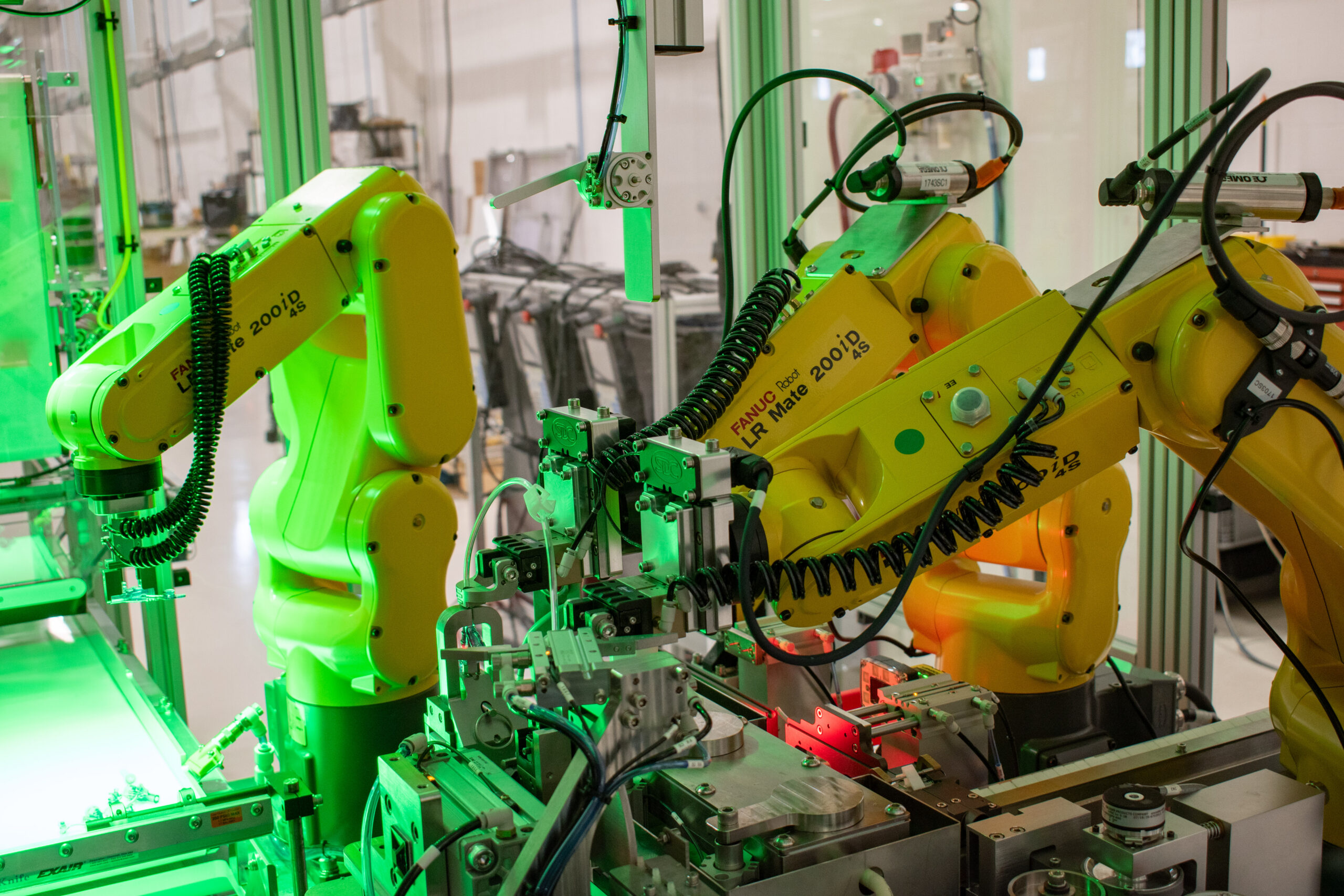
Two of the four FANUC robots operate in synchronized motion during the bonding step — a process SDC engineered to simplify assembly and reduce cycle time. Both ends of the cut tube are captured simultaneously, dipped into a solvent well, and pressed into their respective adapters: an elbow fitting on one side, a Y-port on the other. Insertion force and depth are measured on every single part and checked against acceptance criteria. Any reading outside the acceptable range triggers an automatic rejection. A camera then inspects each bonded end and the overall exterior of the completed hose assembly
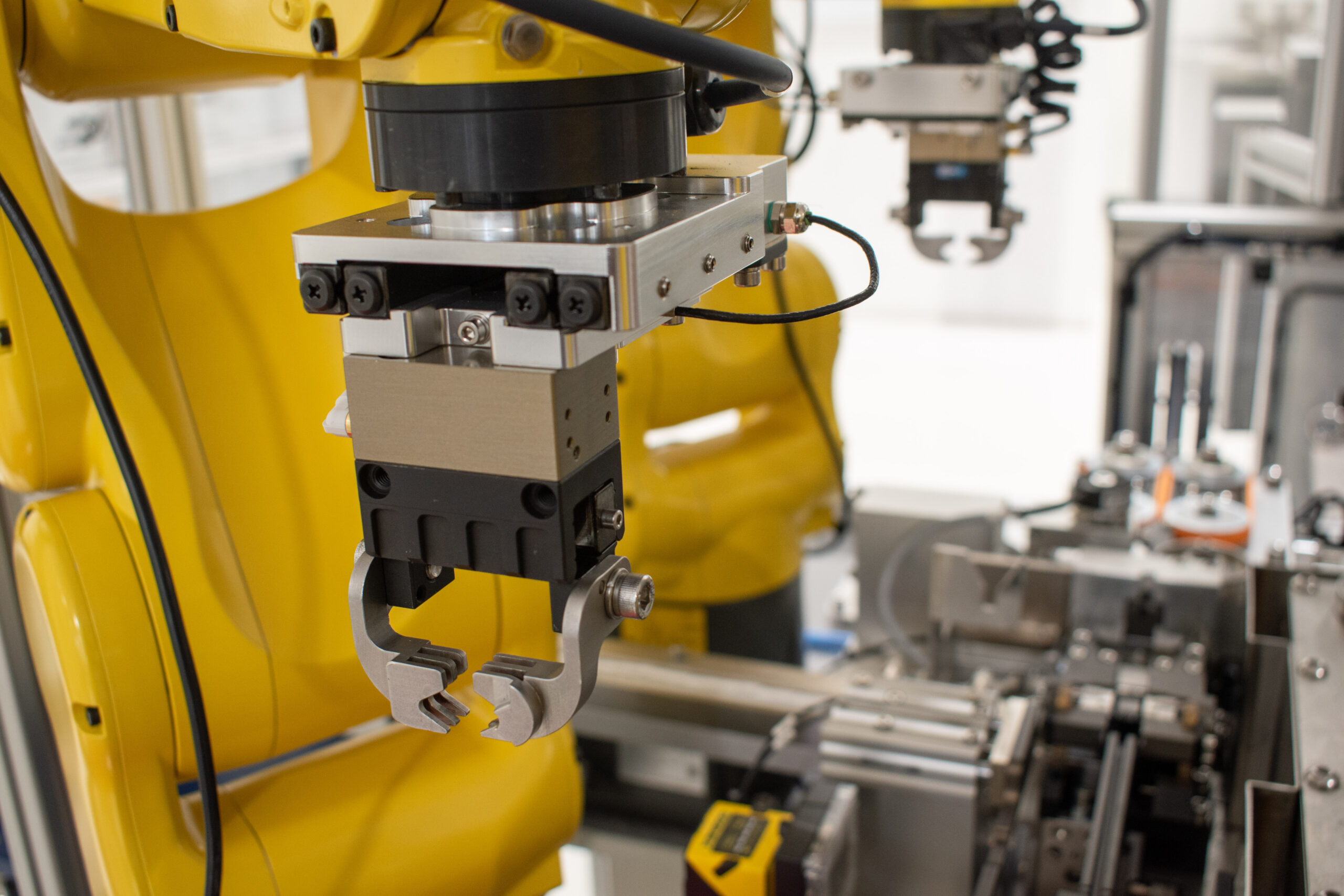
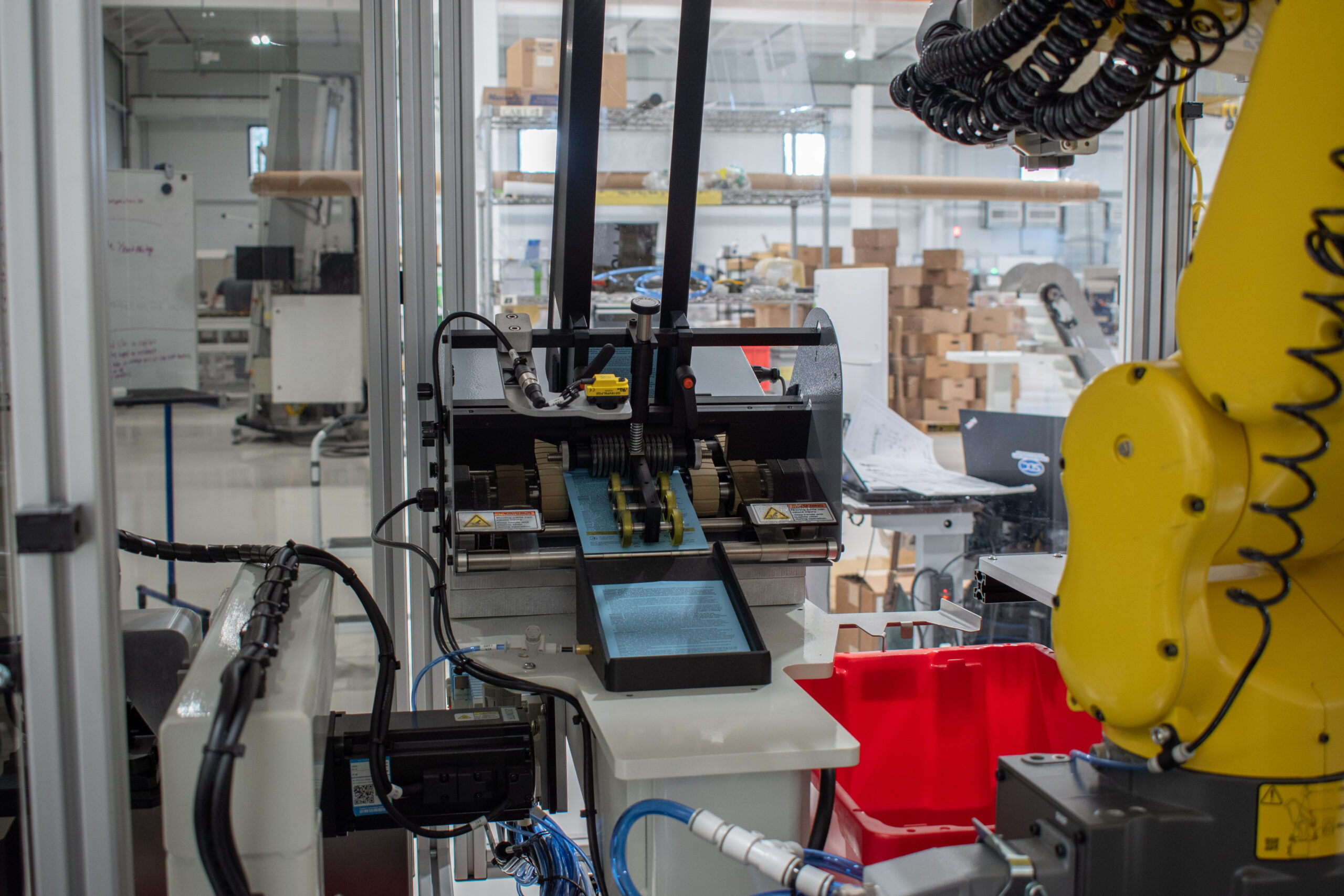
The integrated packaging line is one of the new features that separates this machine from its predecessor. A dedicated unload robot moves each completed assembly through a pre-pack inspection camera. Assemblies that pass are transferred to the bagging station. There, the robot retrieves a sheet of paper from the automated media feeder and presents it alongside the assembly. The gripper loads both into a bag, and the Autobag bagging system seals it closed.
After sealing, each bag transfers to the inspection conveyor. A Keyence camera checks the printed side for barcode readability and readable text, an upgrade from the previous machine. The bag is then flipped, and a Cognex post-pack camera verifies that the media is present and correctly oriented, and that all required components are visible inside. Any bag that fails either check is automatically diverted to a reject bin — keeping non-conforming product entirely separate from finished goods.
This machine was designed to hit 1200 parts per day at an 85% OEE target. Beyond throughput, it delivered meaningful improvements across quality, traceability, and labor. Key outcomes include:
This project is a strong example of how SDC leverages a proven platform to deliver more value without unnecessary risk. The previous machine had already earned the customer’s confidence through consistent, reliable performance in life sciences manufacturing automation. Rather than rebuilding, SDC preserved what worked and engineered the next step forward. Development was faster because the foundation was already validated, and the customer’s team was already familiar with the system. The upgrade introduced fully integrated synchronous robotic bonding with automated bagging — eliminating a separate packaging operation entirely.
The result is a machine that takes raw tubing and components in and delivers fully assembled, inspected, and packaged medical feed sets out — reliably, repeatably, and with complete traceability from first bond to final bag. In life sciences manufacturing, where quality and compliance are non-negotiable, that level of control is exactly what production demands. SDC is proud to be a long-term automation partner to this customer and to keep growing alongside them.
A: A medical feed set assembly machine is a custom automation system that produces completed feed sets from raw tubing and fittings. It handles tube cutting, primer dispensing, robotic insertion, and multi-point vision inspection in a controlled, repeatable cycle. More advanced systems — like this one — also integrate automated bagging and final package verification. These machines are well suited to life sciences manufacturing and medical device assembly applications where consistency, traceability, and throughput all matter.
A: SDC designs custom feeding and dereeling mechanisms when off-the-shelf solutions are not suitable for the material. On this project, the medical-grade tubing had a tacky surface that caused tangling and inconsistent tension with standard equipment. SDC engineered a purpose-built dereeling system that feeds reliably cycle after cycle. Custom feeding solutions are a routine part of how SDC approaches challenging robotic tube assembly and medical device assembly machine projects.
A: Yes. SDC integrated the full assembly and packaging process into one enclosed robotic cell. The machine performs synchronous robotic bonding, multi-point vision inspection, literature insertion, automated bagging, bag sealing, and final bag verification — all without manual intervention between steps. Combining these operations in a single cell improves throughput, reduces part handling, and maintains traceability across the entire process.
A: The machine runs vision inspection at multiple checkpoints throughout the cycle. Bond quality is verified after assembly. The completed hose is inspected before packaging begins. The sealed bag is checked for a readable barcode, correct printed content, and proper internal components. Any part that fails a check is automatically placed in a reject bin by the robot. No incorrectly assembled or partially assembled part can reach finished goods.
A: Synchronous robotic bonding means two robots execute a coordinated movement as part of a single operation. On this machine, two FANUC robots handle both ends of the tube simultaneously during the primer dispensing and insertion step. Moving together keeps force and depth consistent on both ends and eliminates the additional cycle time that sequential operations would require. The result is a more reliable bond and a faster, tighter production cycle.