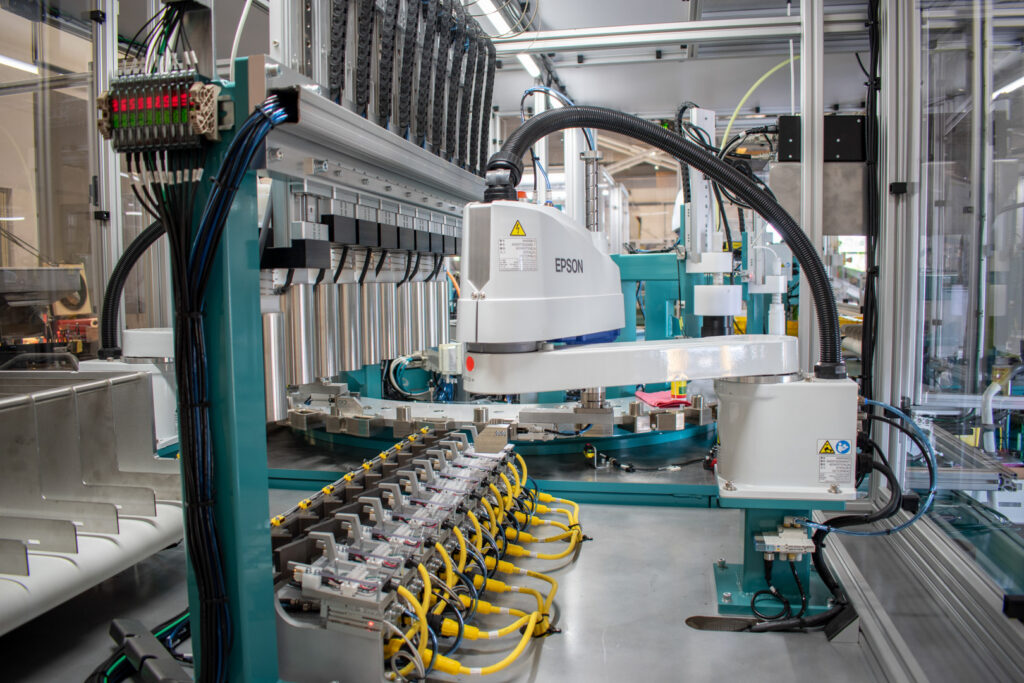

Walk the floor at any manufacturing trade show, and you’ll hear one word everywhere: AI. Some of it is useful. A lot of it is just a buzzword on a product page. For a custom machine builder like us, the real question isn’t whether to talk about AI in manufacturing, it’s how AI can make a turnkey solution better, faster, and more reliable.
We covered a lot of that ground in our Custom Automation Machines Buyer’s Guide. It covers cost, ROI, and where AI fits on a machine. This post picks up one thread from that guide. We’ll look at how AI is changing custom machine building across the industry, and what we’re doing with it at SDC.
Key Takeaways
- AI is changing custom machine building, but only some of it goes beyond marketing buzz.
- The digital twin lets engineers test and fix problems before a machine is built — while a fix is still cheap.
- SDC uses AI internally for quoting, project tracking, and drawing on 28-plus years of project history.
- The result: fewer surprises, more accurate quotes, and a smoother path from design to a running machine.
AI in Manufacturing Isn’t New. The Reach of It Is.
Manufacturers have relied on data for years — statistical process control, PLC logic, rules-based vision systems, you name it. None of that is new. What’s changed is how far AI now reaches. It’s inside the plant floor, and inside the companies that build the equipment running on it.
IoT Analytics published a report in 2026 on AI adoption in machine building. The numbers back up what most of us already feel: most machine builders now use AI somewhere in their operations. That includes remote diagnostics, service automation, and augmented reality tools for field technicians.
Where AI Shows Up in Manufacturing
- Predictive maintenance
- Generative design for early-stage prototyping
- AI-assisted visual inspection
- Supply chain forecasting
- The digital twin
Patterns Worth Watching
- AI-assisted inspection is moving past simple pass/fail checks. It catches subtle, irregular defects that older rules-based vision often misses.
- Predictive maintenance is replacing fixed service schedules. It uses vibration data, motor load, and cycle-time drift to flag wear before it causes downtime.
- “Manufacturing copilots” are showing up at major trade shows too. These are AI assistants built into CNC programming, robot cells, and controls platforms.
- Generative design gives engineering teams more options to consider before a design gets locked in.
Here’s one example worth mentioning. A European packaging machine manufacturer builds highly complex, custom-engineered equipment. It recently partnered with a major software provider to build AI into its configuration, simulation, and commissioning workflow. What used to take several weeks now takes a few hours, without losing accuracy.
That jump — from weeks to hours — is the real story, not the AI tools themselves. The manufacturers getting ahead aren’t treating AI as a checkbox. They’re using it to close the gap between “we designed this” and “this runs the way it’s supposed to.”
The Digital Twin: The Hot Topic That Actually Matters for Custom Machines
If there’s one AI-adjacent technology getting more attention right now, this is it.
What Is the Digital Twin?
The digital twin is a virtual, data-connected copy of a physical machine, system, or process. It mirrors the real thing closely. You can test, monitor, and refine it in software. This can happen before the physical version exists, or once it’s running.
For a company selling off-the-shelf equipment, that’s a nice-to-have. For a custom machine builder designing every system from scratch, it’s becoming close to a requirement.
Here’s the difference between off-the-shelf and custom. When SDC takes on a project, there’s no catalog part number waiting on a shelf. Every mechanism, motion profile, and controls sequence gets engineered from scratch, or pulled from our pre-engineered library. Each one is built around a specific part, cycle time, and production environment.
That’s the whole point of custom automation. That’s also why more can go wrong on the way to production. An off-the-shelf system has fewer unknowns.
How Simulation Closes the Gap
Simulation and virtual modeling are how the industry closes that gap. Here are a few ways this shows up:
- Full machine simulation checks mechanical motion, timing, and controls logic in a virtual environment. This happens early, before a single part gets machined or a robot cell gets bolted down.
- Virtual commissioning tests PLC logic, robot motions, sensor timing, and actuator response while the physical build is still underway. Engineers catch bugs early instead of waiting until the machine is fully assembled.
- Preventive and predictive maintenance feeds real operating data back into the model. This flags issues before they cause an unplanned shutdown.
- Debugging during development catches interference, timing conflicts, and sequencing errors in the virtual model. A fix here takes minutes. Wait until the machine is built, and that same fix can cost an entire shift.
That’s the core idea: catch and solve problems earlier, while fixing them is still cheap. Wait too long, and they turn into physical rework or a delayed run-off.
For a custom machine builder, that pays off in a practical way. Debugging a virtual model beats debugging a machine that’s already half-built, every time. Training on a simulated version means operators and maintenance techs aren’t learning on a live line for the first time.
That’s really what every manufacturer wants from a custom machine builder. A shorter path from kickoff to a running machine. Fewer surprises along the way.
We’ve written before about how preventive maintenance keeps automated equipment running long after installation. This kind of virtual modeling is becoming one of the tools that makes proactive maintenance possible from day one. It’s no longer an afterthought added later.
How SDC Is Using AI Internally, Not Just in the Machines We Build
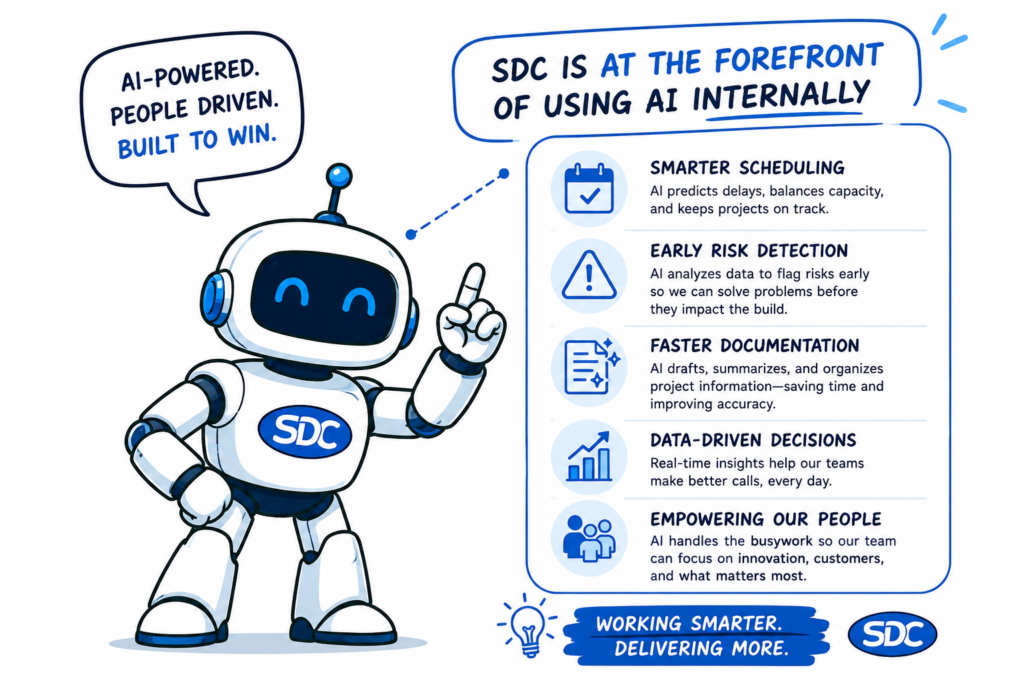
There’s another side to AI in manufacturing that doesn’t get talked about as much. That’s how a custom machine builder uses the technology to run its own business. Plenty of companies talk big here and deliver little. We’d rather just show what we’re doing.
At SDC, AI has become part of how we plan, quote, and run projects. It isn’t a replacement for the engineering judgment of our people. It’s a way to make decisions faster and better informed.
Smarter Project Management
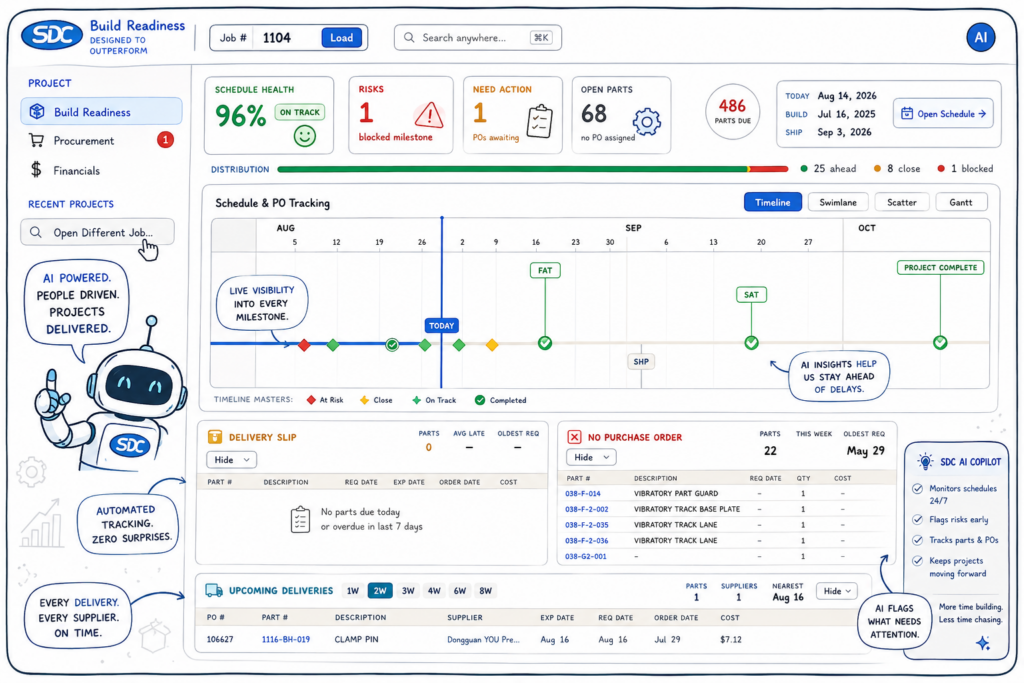
Our project management team uses AI-assisted tools to track project status and flag risk earlier. This keeps communication moving between engineering, the shop floor, and our customers. Custom automation projects have a lot of moving parts on overlapping timelines: mechanical design, controls, robotics integration, procurement, build, and testing. The goal isn’t to replace the people managing all of that. It’s to give them better visibility, so fewer things slip through the cracks.
Faster, More Accurate Quotes
Quoting and costing is another one. Every custom automation quote is really a cost estimate built on hundreds of small engineering decisions. We use AI-assisted tools to help our team pull from current costing data and design concepts. That means estimates reflect this year’s material costs, labor hours, and component pricing, not assumptions from a year ago. The result: more accurate quotes and a faster turnaround, with no shortcuts on engineering rigor.
Putting Nearly 30 Years of Experience to Work
We’re also putting our own history to work. This might be the piece we’re most excited about. After more than 28 years and 1,500-plus custom automation projects, SDC has built an internal library. It’s full of design approaches, mechanisms, and lessons learned. Most machine builders our size simply don’t have this.
AI-assisted search helps our concepting and engineering teams tap into that library faster. It can surface a similar mechanism from a past project, or a controls approach that worked well on a comparable application. This kind of institutional knowledge only matters if people can find it. That’s what our internal tools and dashboards help us do.
Our engineers are also exploring how AI-assisted tools can support early design concepts and validation. This gives the team more options to consider before committing to a direction.
None of this replaces the engineers, project managers, and machine builders who design and build the equipment. It sharpens the tools they already use. Here’s the end result:
- A quoting process pulling from current data instead of last year’s numbers.
- A project timeline that surfaces risk before it becomes a delay.
- A design process that can draw on 25-plus years of internal knowledge in seconds. No more relying on whoever happens to remember it.
That’s the difference between AI as a headline and AI as internal tools and infrastructure.
Why Being a Family-Owned Custom Machine Builder Lets Us Move Faster on This
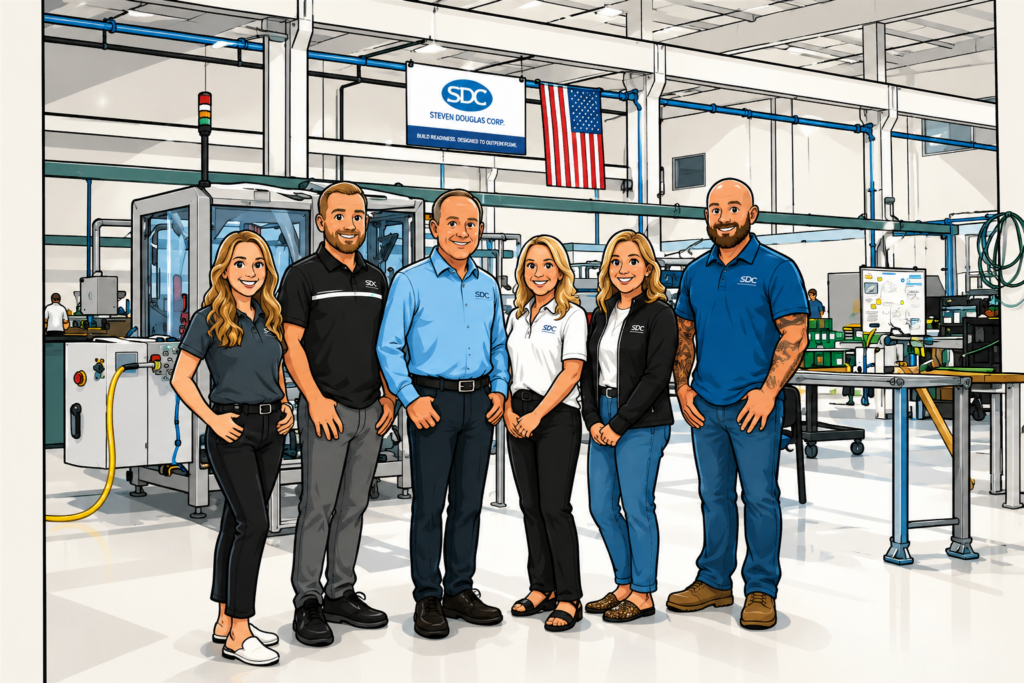
There’s an advantage to being family-owned and privately held that doesn’t come up enough in conversations about new technology: agility.
SDC doesn’t push every new tool or process change through layers of corporate approval. We don’t wait on a quarterly board cycle either. When our team finds a better way to quote a project or validate a design, we try it. We adjust it, then put it to work. There’s no bureaucracy slowing things down the way there can be at larger, more structured organizations. That same agility has always shaped how we approach custom machine building. Now it’s shaping how we bring AI and simulation tools into our own operation.
We’ve always cared about investing in our people. We’re not chasing AI because it’s trendy. We’re investing in our people and our own processes for one reason: staying ahead is what a long-term automation partner should do. We design and build machines that work. That’s easier to deliver on when your team uses the best tools available, not just talks about them.
What This Means If You’re Evaluating a Custom Machine Turnkey Solution
Maybe you’re a manufacturer looking at automating a process: assembly, testing and inspection, material handling, or something else. Here’s the practical takeaway.
AI and simulation tools help a good automation partner get better at the fundamentals. Think accurate quoting, disciplined engineering, thorough validation, and reliable delivery. That means fewer surprises and interruptions throughout the project cycle.
When you’re evaluating a custom machine builder, ask how they actually use these tools. Don’t just check if their equipment has AI-powered features on a spec sheet. Ask if their process is set up to design, simulate, debug, and deliver your project with fewer surprises. There’s a real difference. One vendor added “AI” to a product page. A partner built it into how they work.
At SDC, that’s what we’re building toward: a custom machine turnkey solution. It puts the best available technology to work: simulation, AI-assisted engineering, and smart project management. The goal is simple — get your machine right the first time, backed by our project process.
Want to see how this plays out on a real project? Explore our case studies or get in touch with our sales team to talk through your application.
FAQs (Frequently Asked Questions)
What is the digital twin, and why does it matter for custom automation?
The digital twin is a virtual, data-connected copy of a machine or process. For a custom machine builder, it means a design gets tested, simulated, and debugged early. This happens before it’s built on the shop floor, when catching problems is still cheap.
Is SDC using AI to replace engineers or reduce headcount?
No. AI-assisted tools sharpen the judgment of SDC’s engineers, project managers, and machine builders — they don’t replace it. The people designing and building your machine are still the ones making the calls.
How does AI improve the accuracy of a custom machine quote?
SDC’s team uses AI-assisted tools to pull from current costing data and design concepts. That means estimates reflect this year’s material costs, labor hours, and component pricing, not assumptions from a year ago.
What’s the benefit of virtual commissioning before a machine is built?
Virtual commissioning tests PLC logic, robot motions, sensor timing, and actuator response while the physical build is still underway. Catching an issue in the virtual model takes minutes. Catching that same issue after the machine is built can cost an entire shift.
How can I find out how SDC would apply this to my project?
The SDC team can walk you through it. We’ll show where AI, simulation, and this kind of technology fit into your specific application. Simply fill out a contact form on the website to get started.