
Investing in Simulated Solar Panel Testing Equipment
Investing in the right solar panel testing equipment is an important decision for any U.S. manufacturer. It’s essential to have the most up-to-date and accurate information available in order to remain competitive in the global market. In this article, we’ll explore the benefits of investing in customized testing equipment and why it’s beneficial for manufacturers in the United States—including how tools such as simulated solar panel testing, solar panel environmental testing, and photovoltaic testing help ensure long-term performance.
Introduction to Custom Solar Panel Testing Equipment
As the solar industry continues to grow, so does the need for reliable and accurate solar panel testing equipment. With so many different types and brands of equipment on the market, it can be difficult to know where to start when choosing the right equipment for your needs.
Solar panel testing equipment is used to assess the performance of photovoltaic (PV) cells and modules. This includes advanced photovoltaic (PV) testing methods that help manufacturers accurately evaluate electrical and mechanical performance. It is essential for manufacturers to have this type of equipment in order to ensure that their products meet international standards and customer expectations.
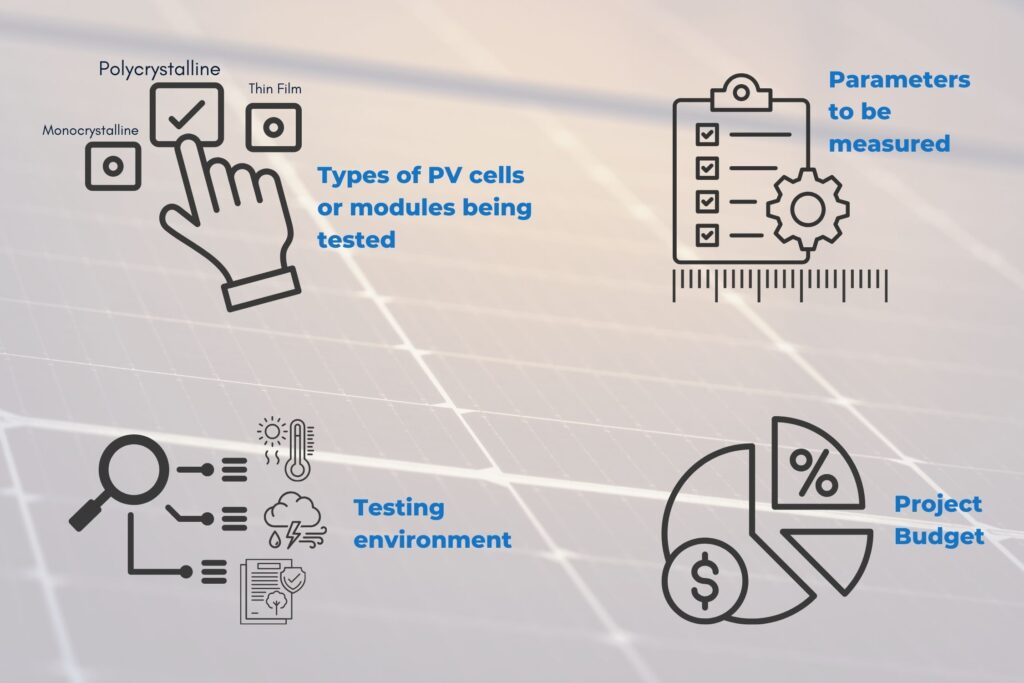
There are a few key factors that should be considered when choosing solar panel testing equipment:
- The dimensions and type of PV cells or modules being tested (monocrystalline, polycrystalline, thin film, etc.)
- The specific parameters that need to be measured.
- The environment in which the tests will be conducted.
- The project budget.
Once you have a clear understanding of your needs, you can begin researching different types of solar panel testing equipment. Many facilities incorporate simulated solar panel testing using a solar simulator to measure power performance under controlled conditions. Here are a few popular options:
- Mechanical Load Test System (Static and Dynamic)
- High Potential (HIPOT) Testing System, Wet or Dry
- Module Breakage & Hail Impact System
- Reverse Current Overload (RCOL) Test System
- Automated Panel Thickness Measurement System
- Robotic Coupon Handling
- Image Capture Equipment
- XY Mapping Machine
- Partial Shade Stress Test
…and more IEC-required testing equipment.

Trending Solar Testing Investments
Demand for solar simulators is driven by improved testing accuracy and efficiency — particularly as manufacturers shift toward newer technologies. According to recent market analysis, the solar simulator market is projected to grow from roughly $457 million in 2025 to more than $655 million by 2030, reflecting a strong 7.5% CAGR. This growth is driven by tightening global testing standards, rapid expansion of PV manufacturing capacity, and the use of solar simulators across sectors like aerospace and materials research. A major factor fueling this demand is the required adoption of IEC 60904-9:2024, which is pushing many manufacturers to upgrade or replace older equipment.
Among solar simulator technologies, there is a clear trend away from older light sources — LED-based simulators (i.e. modern, energy-efficient light sources) are gaining traction for their precision and reliability.
The broader Solar PV Test Equipment Market was valued at around $0.49 billion in 2024, with forecasts estimating growth to $0.66 billion by 2033, at a compound annual growth rate (CAGR) of around 3.3%.
Advantages of Investing in U.S.-Manufactured Solar Panel Testing Equipment
Customization. Quality. Support.
When it comes to solar panel testing equipment, U.S.-based manufacturers offer strong advantages. Automated machine building partners like SDC provide custom-designed, American-made testing equipment tailored to the needs of modern solar production.
One of the biggest benefits is customization and quality. Manufacturers can incorporate special features, branding, and advanced technologies such as solar simulators and photovoltaic testing capabilities. These high-quality solutions are built for long-term reliability and support skilled jobs within local communities.
Another key advantage is the level of support provided by U.S.-based teams. When questions or issues arise, responsive digital and on-site support ensures your equipment stays running efficiently and consistently.
Here are some highlighted benefits:
- Increased accuracy – Customized testing equipment is designed specifically for your products, which means it can provide more accurate results than generic equipment. This is especially important when conducting solar panel environmental testing or solar test and sort procedures, which require precise measurements.
- Improved efficiency – Customized testing equipment is often more efficient than generic equipment, which means you can get results faster and save time and money.
- Increased safety – Custom equipment can help to reduce the risk of accidents and injuries with guarding, emergency locks, and other unique safety features.
- Maintaining competitiveness – In today’s market, it is important to be able to offer high-quality products that meet or exceed customer expectations. Customized testing equipment—especially when paired with simulated solar panel testing or a high-quality solar simulator—can help you do just that.
- Enhanced customer satisfaction – With accurate and reliable results, you can be sure that your customers will be satisfied with your products. Your team is involved throughout the design, build, delivery, and support process, ensuring satisfaction and exceeding expectations.
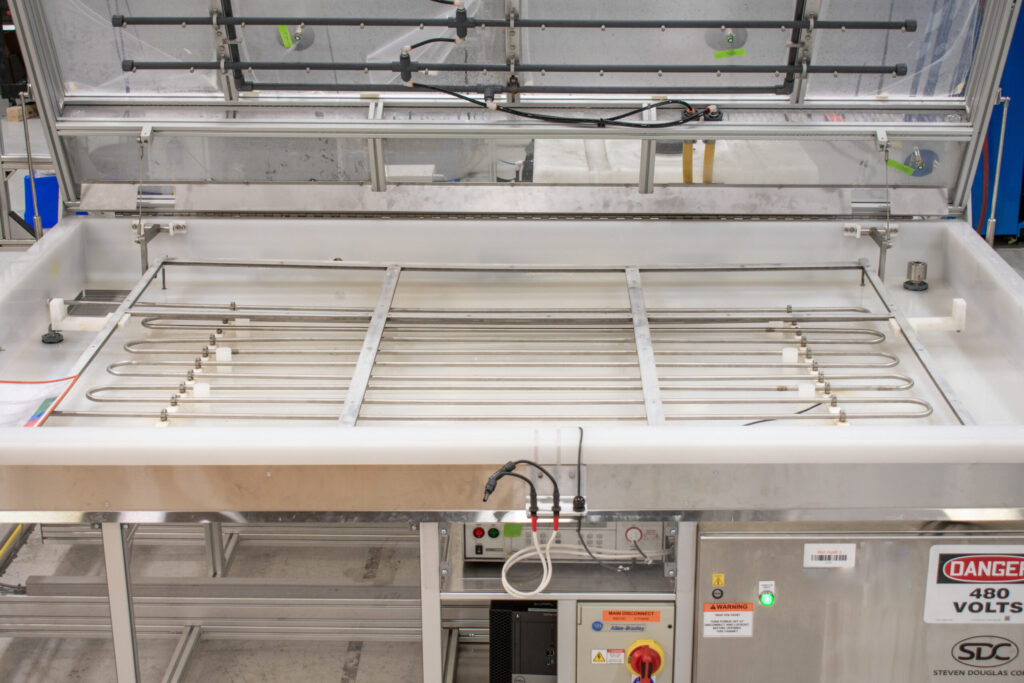
Common Tests Performed During Solar Panel Testing
Understanding the most common types of solar panel testing is essential for manufacturers looking to ensure product quality and meet industry standards. Many of these evaluations focus on solar panel environmental testing and photovoltaic testing, both of which help verify real-world durability and electrical performance.
Common tests include:
- Environmental Testing – This type of test assesses how well a solar panel can perform in extreme conditions such as high temperatures, humidity, and UV exposure.
- Thermal Cycling Testing – Solar panels are repeatedly heated and cooled to simulate real-world conditions and measure durability.
- Electroluminescence Imaging – Used to detect microcracks and other manufacturing defects.
- Visual Inspection – Conducted before and after other tests to ensure all components maintain integrity.
Regulations and Guidelines for Solar Panel Testing
When it comes to solar panel testing, there are important regulations that U.S. manufacturers must follow. All solar panels must be tested according to IEC 61215 and UL 1703 standards, which cover electrical safety, performance, environmental durability, and more. Moreover, when investing in solar simulation, ensure it is classified under IEC 60904-9 — ideally A, A+, or B depending on your quality/control needs.
These standards align closely with testing performed using simulated solar panel testing, solar simulators, and comprehensive photovoltaic testing systems.
Because local jurisdictions often have their own installation requirements, manufacturers should verify all requirements before beginning any installation or certification project.
How to Select the Right Solar Panel Testing Equipment
With so many options available, selecting the right equipment can feel overwhelming. Here are a few factors to consider when choosing solar panel testing equipment:
Accuracy: Ensure the equipment can deliver precise data for processes such as solar test and sort, environmental evaluations, and electrical performance tests.
Ease of use: Equipment should be intuitive so your teams can operate it efficiently.
Cost: Identify which tools—such as a solar simulator—are essential for your testing workflow and budget accordingly.
Conclusion
Customized solar panel testing equipment can help save time and money by providing accurate and reliable data about solar panel performance. Whether you’re conducting solar panel environmental testing, simulated solar panel testing, or detailed photovoltaic testing, having the right tools is essential.
If you’re interested in investing in customized testing equipment, make sure to work with an experienced provider—ideally one specializing in custom testing equipment for the solar industry. Clearly communicate your needs and invest in proper training to ensure your team can use the equipment effectively. Investing in high-quality, customized equipment can significantly improve production efficiency, product reliability, and long-term competitiveness for U.S. manufacturers.
FAQs (Frequently Asked Questions)
What is simulated solar panel testing, and why is it important for manufacturers?
Simulated solar panel testing uses a solar simulator to replicate sunlight under controlled conditions. This allows manufacturers to measure electrical output, evaluate efficiency, and predict real-world performance before the panels are deployed. It is especially valuable for solar test and sort, product validation, and ensuring compliance with global standards.
What types of equipment are commonly used in photovoltaic and solar panel environmental testing?
Manufacturers rely on a range of tools, including solar simulators, mechanical load testers, HIPOT testers, electroluminescence imaging systems, and environmental chambers. These systems help evaluate performance under stress, identify defects, and ensure panels meet IEC 61215, IEC 60904-9, and UL 1703 requirements.
Why should U.S. manufacturers invest in American-made solar panel testing equipment?
American-made testing equipment offers advantages such as higher customization, reliable support, and advanced technology integration. U.S.-based partners can tailor equipment to specific production needs and provide faster service, lower downtime, and better alignment with domestic standards and manufacturing practices.
What trends are driving new investments in simulated solar testing equipment?
Major trends include the rapid adoption of LED light-source solar simulators, multi-sun testing capabilities, and more accurate spectral-matching systems. Growing global testing standards, such as IEC 60904-9:2024, are also driving equipment upgrades. Market forecasts show simulator sales increasing from approximately $457 million in 2025 to over $655 million by 2030, demonstrating strong long-term demand.
How do I choose the right solar panel testing equipment for my facility?
Start by evaluating which parameters you need to measure—such as electrical performance, environmental durability, or optical qualities. Consider the accuracy requirements of your tests, your solar test and sort process, your production volume, and your budget. For most manufacturers, integrating a high-quality solar simulator and equipment that supports photovoltaic testing provides the strongest foundation for reliable results.