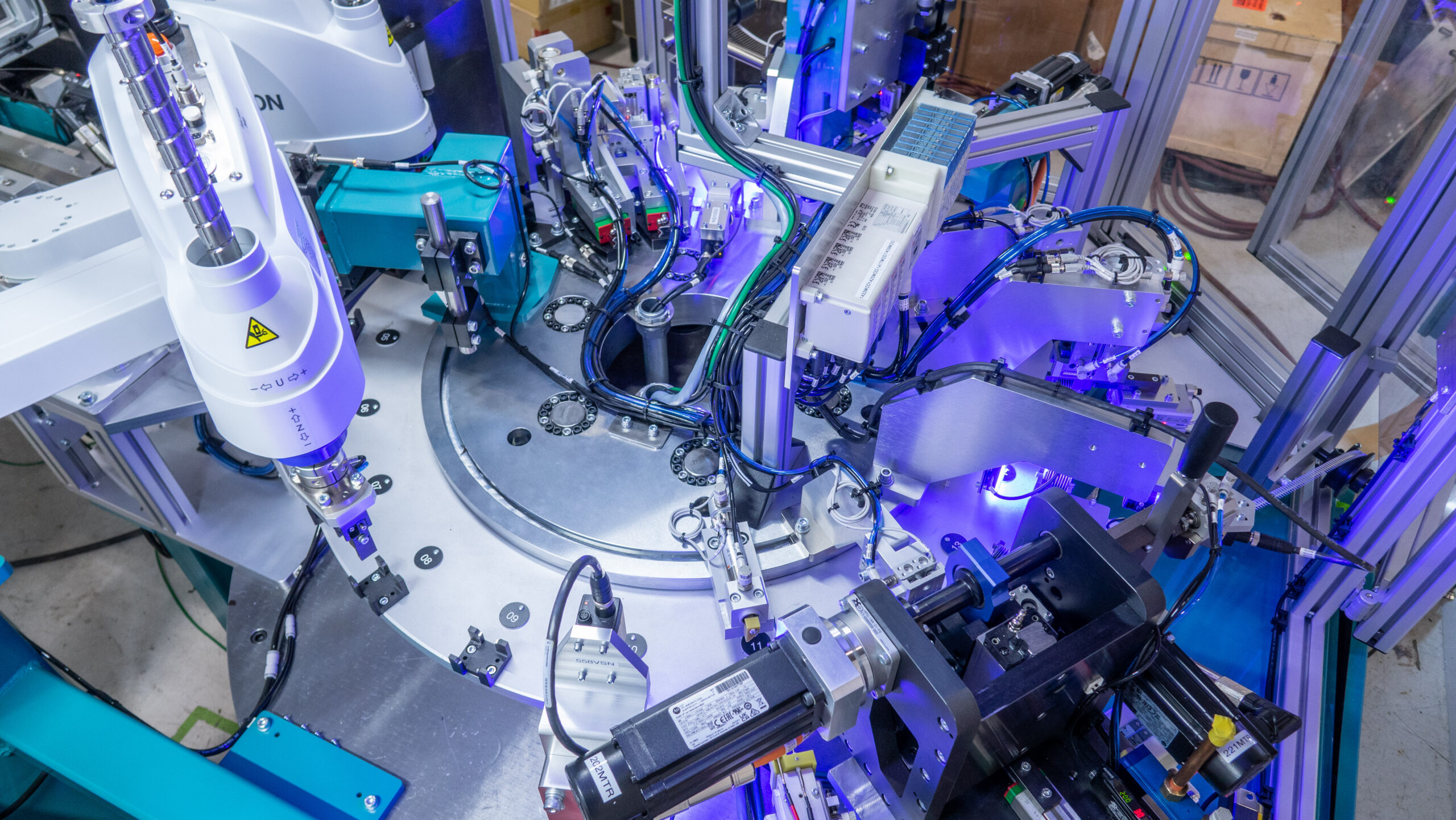
When a long-term customer—a leading Tier 2 automotive manufacturer—needed a fully automated automotive component assembly machine, they turned to SDC to move their production process forward. As part of a broader automotive manufacturing automation initiative, SDC designed and built three custom machines for the customer’s facility, with this case study focusing on one system. This custom automation solution was developed for high-speed assembly automation, combining small part and electrical component assembly into a single machine that assembles, tests, and inspects the wire insertion and forming process for an automobile ignition coil.
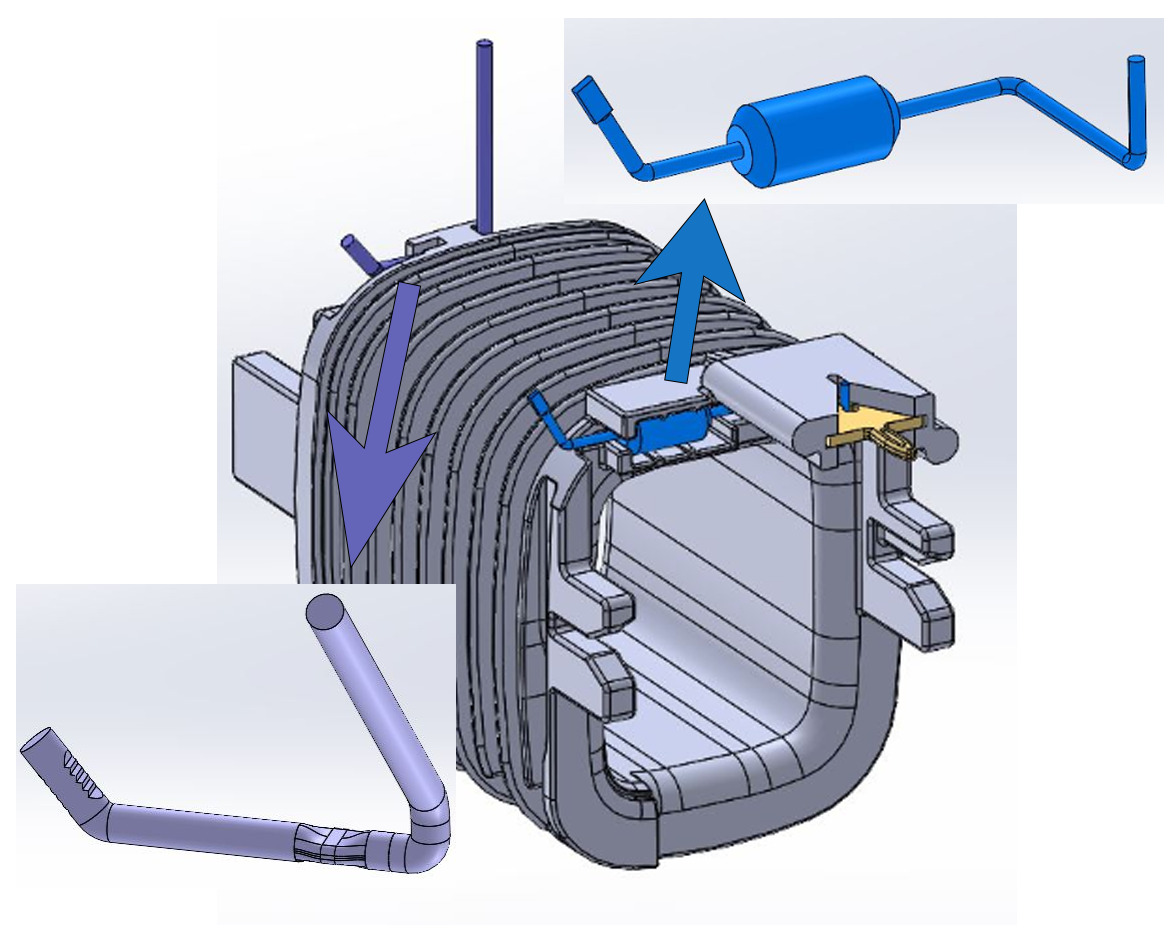
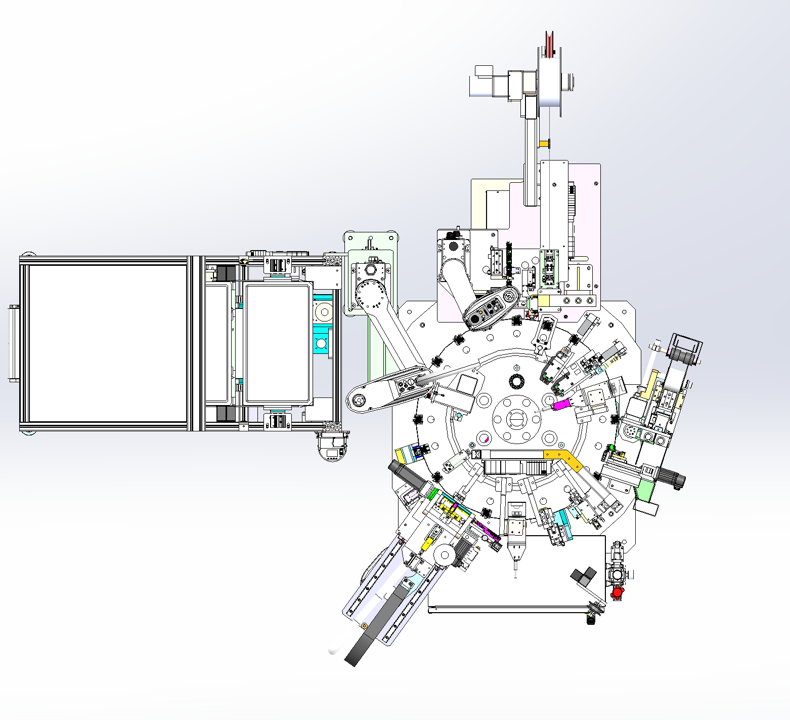
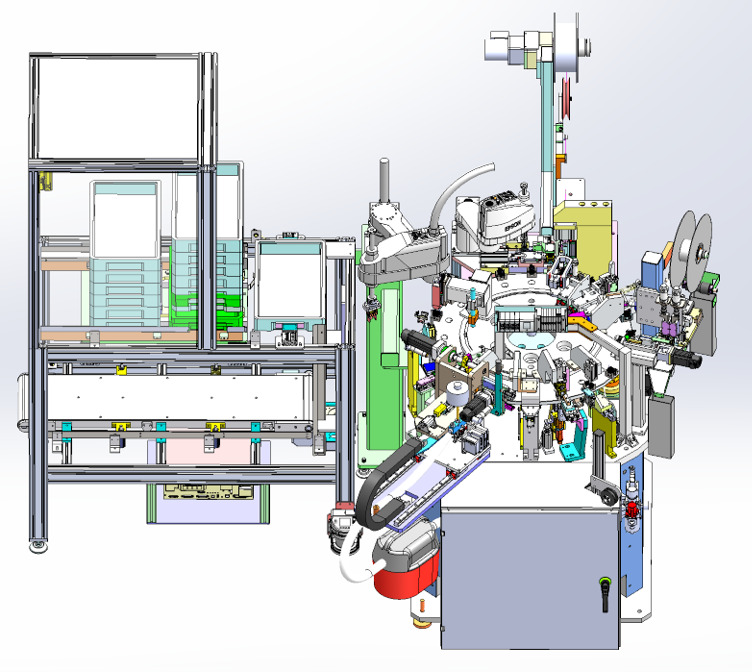
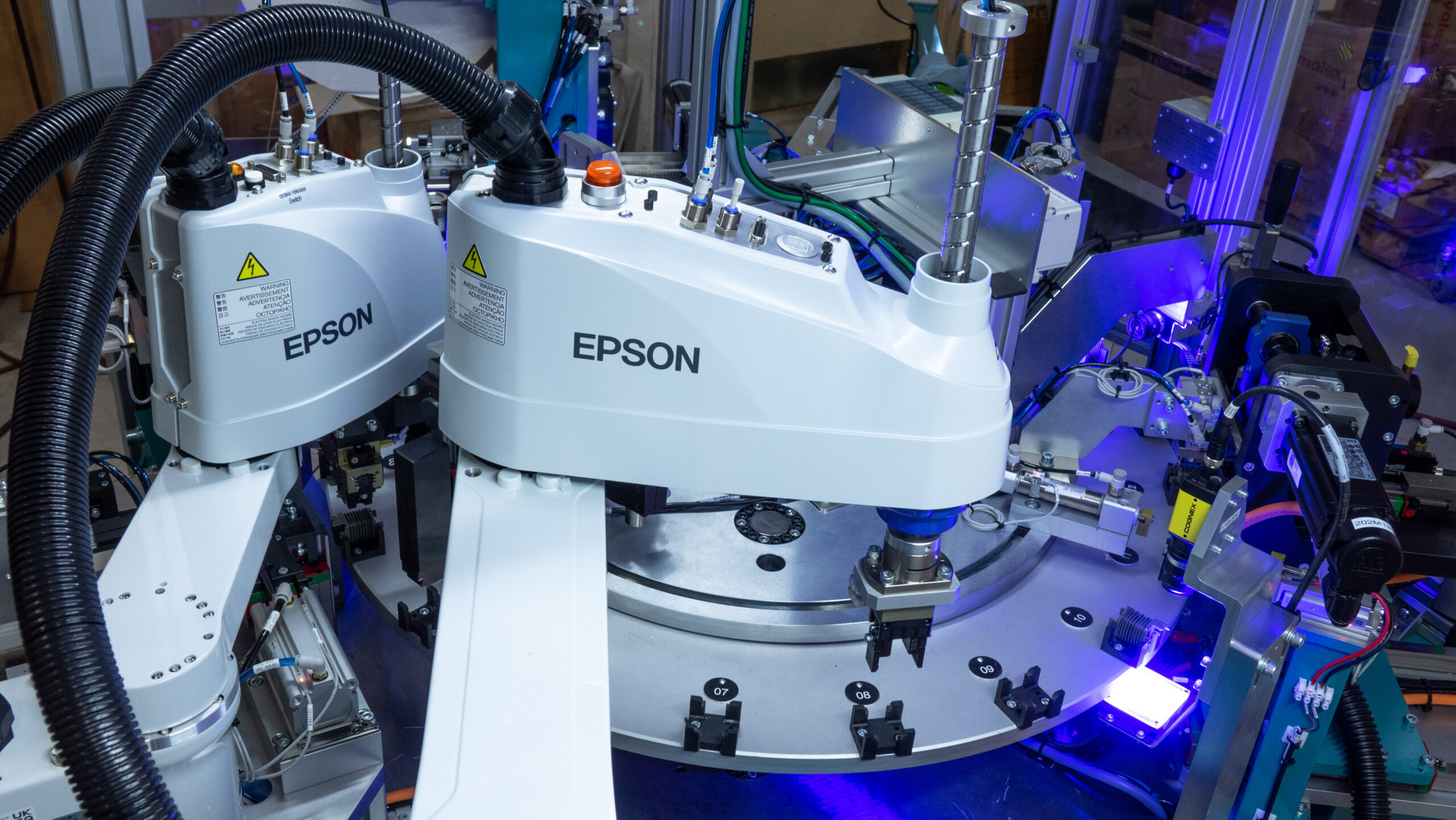
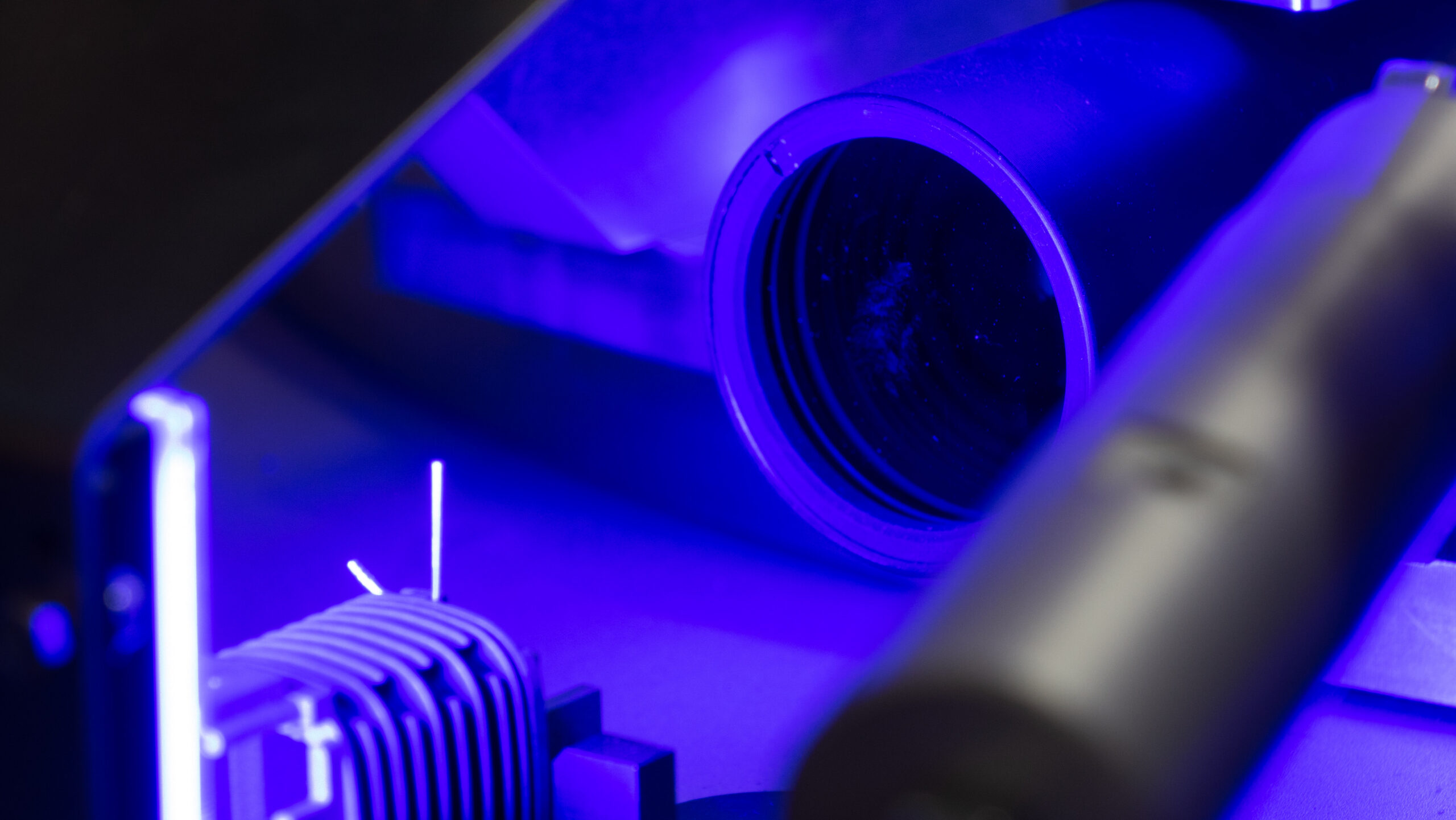
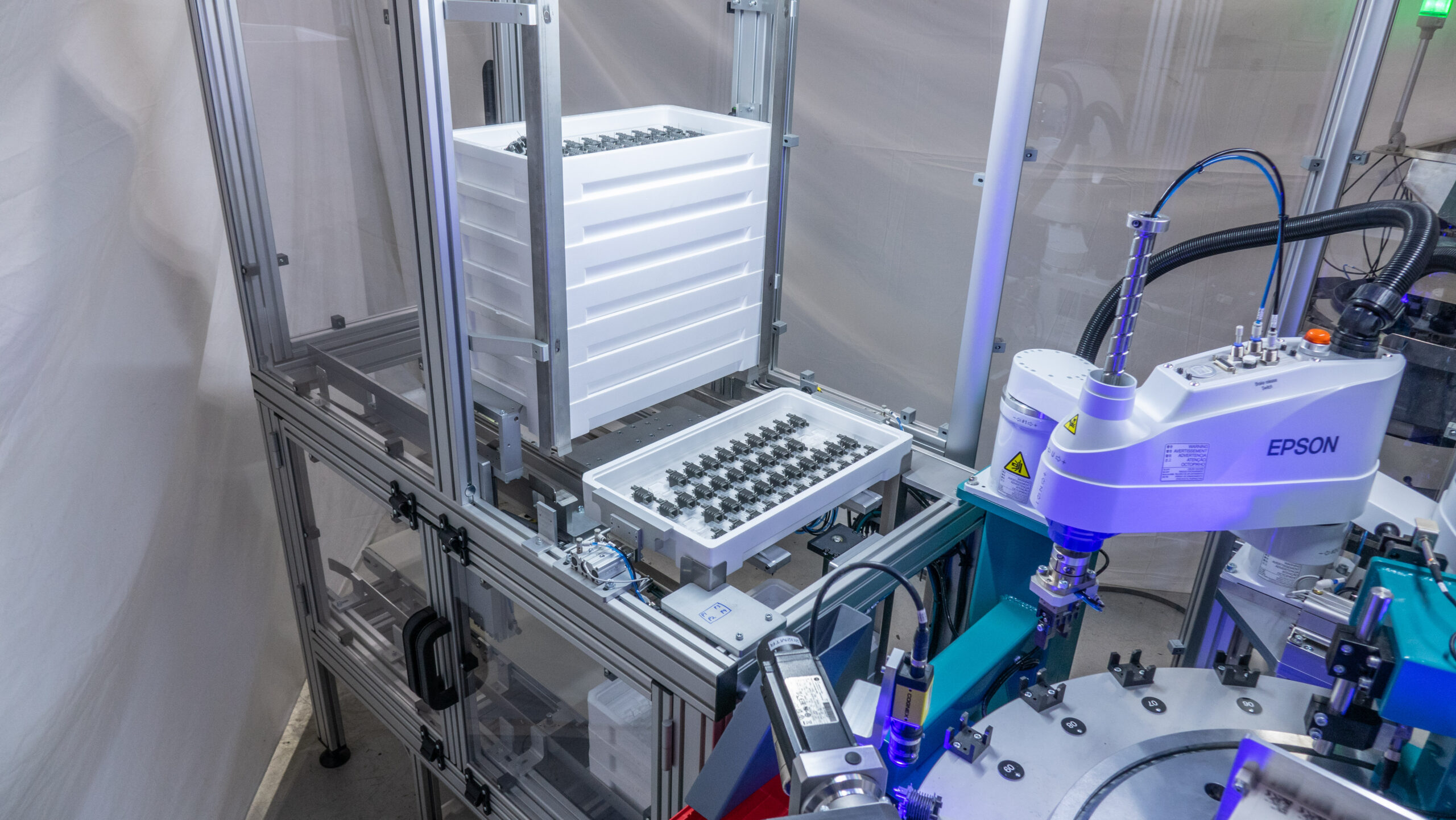
The machine concept combines all required processes into one compact, fully automated wire insertion machine designed for speed, accuracy, and reliability. By using proven SDC platforms and robotic integration, the system reduces complexity while supporting high-speed assembly automation and consistent production quality. This approach allows multiple small part assembly tasks to be completed in one continuous process.
SDC delivered a single, fully automated system that supports electrical component assembly for automotive ignition coils with high accuracy and repeatability. What once required multiple stations is now completed within one compact automotive component assembly machine.
The system combines automated assembly, testing, and inspection into one platform. Custom dereeling equipment manages wire handling, while vibratory feeders and precision tooling support smooth part flow. Vision inspection verifies correct forming and part presence, while continuity testing confirms electrical integrity before parts exit the system. Together, these capabilities deliver reliable automated testing and inspection at production speed.
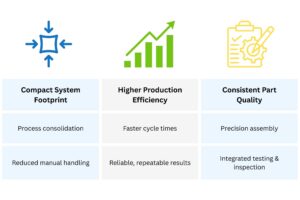
The completed system became a key part of the customer’s connected automation network, operating alongside other SDC-built machines across the facility. By consolidating multiple processes into one custom automation solution, the machine reduced floor space while improving accuracy, repeatability, and throughput.
Built on SDC’s proven standard platforms, the solution reduced engineering risk and supported long-term scalability. Improved space utilization, consistent quality, and reliable performance led the customer to order additional machines—further validating SDC’s approach to automotive manufacturing automation.
✅ Key business outcomes include:
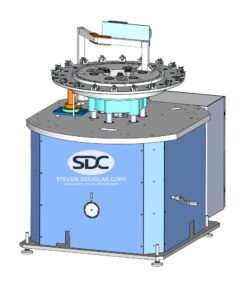
At the core of the system is the base of SDC’s pre-engineered SDChassis, selected for its ability to support fast, flexible small part assembly and robotic integration. The cam-driven rotary dial base provides a stable foundation for assembly, testing, and inspection tasks used in automotive ignition coil production. Its design supports high-speed assembly automation while integrated SDC software adds advanced diagnostics that help ensure smooth operation and reliable performance, allowing the platform to meet demanding production needs with confidence.
The flexible design of the SDChassis base also made it easy to integrate robotics and custom tooling into one complete system. Robotic handling, servo motion modules, and built-in testing and inspection stations work together to ensure each wire in the coil is inserted and formed correctly. This pre-engineered approach reduced engineering risk, shortened build time, and delivered a machine that consistently produces high-quality parts with minimal downtime.
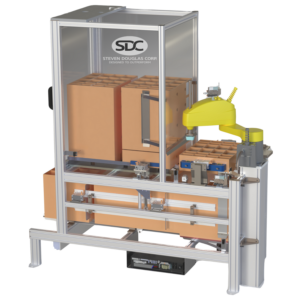
The automated wire inserting and forming machine also uses SDC’s pre-engineered automated Tray Handling system to support smooth, reliable material flow throughout the process. This flexible platform is designed to handle different tray sizes, materials, and configurations, making it easy to adapt to the customer’s production needs. By automating tray loading, unloading, and transfer, the system reduces manual handling and helps keep production moving at a steady pace.
To ensure accuracy and repeatability, the tray handling system integrates vision systems, robotics, and sensors that verify tray position and part content at every step. An efficient over/under conveyor design saves floor space while maintaining high throughput. By reducing manual handling and integrating vision, robotics, and sensors, the tray system improves consistency and supports dependable, high-volume automotive manufacturing automation.
The automotive industry continues to demand faster, smarter, and more reliable automation. This project shows how SDC delivers custom automation solutions that combine robotic integration, precision assembly, and testing and inspection into a single, efficient system.
This is one of three ignition coil assembly machines SDC designed, built, and continues to support. Due to the system’s performance and reliability, the customer ordered duplicate machines, strengthening a long-term automation partnership. By delivering proven solutions faster and with less risk, SDC helps manufacturers stay competitive in today’s evolving automotive landscape.
The success of this system strengthened our partnership as a trusted automated machine supplier. What began as a first-time automation project has grown into a long-term collaboration, allowing SDC to streamline future builds and shorten project timelines. By delivering proven automation faster, SDC helps the customer stay competitive and continue leading in automotive parts manufacturing.
A: The manufacturer was looking to increase production efficiency while reducing manual labor and floor space. Their existing process relied on multiple stations, which slowed throughput and created variation. SDC addressed these challenges by delivering a fully automated automotive component assembly machine that combined assembly, testing, and inspection into one system.
A: This machine combines high-speed assembly automation, automated testing and inspection, and robotic handling in a single compact platform. It performs wire insertion, wire forming, part insertion, and quality verification without manual intervention. By integrating multiple processes into one system, the machine improves reliability while reducing complexity and floor space.
A: Automation ensures every step of the process is completed the same way every time. Precision servo-controlled wire feeding, robotic insertion, and automated wire forming reduce variation in small part assembly. Vision inspection and electrical continuity testing confirm that each ignition coil meets quality standards before leaving the machine.
A: Robotic integration allows the system to handle parts accurately and at high speed. Two Epson SCARA robots load, unload, and transfer components while maintaining precise positioning. This reduces manual handling, improves cycle time, and supports reliable electronic part automated assembly in a high-volume production environment.
A: The machine is built using SDC’s proven standard platforms, which reduces engineering risk and allows for easier duplication and scaling. As part of a connected group of custom automation solutions, the system supports long-term growth, consistent performance, and future expansion across the customer’s facility.