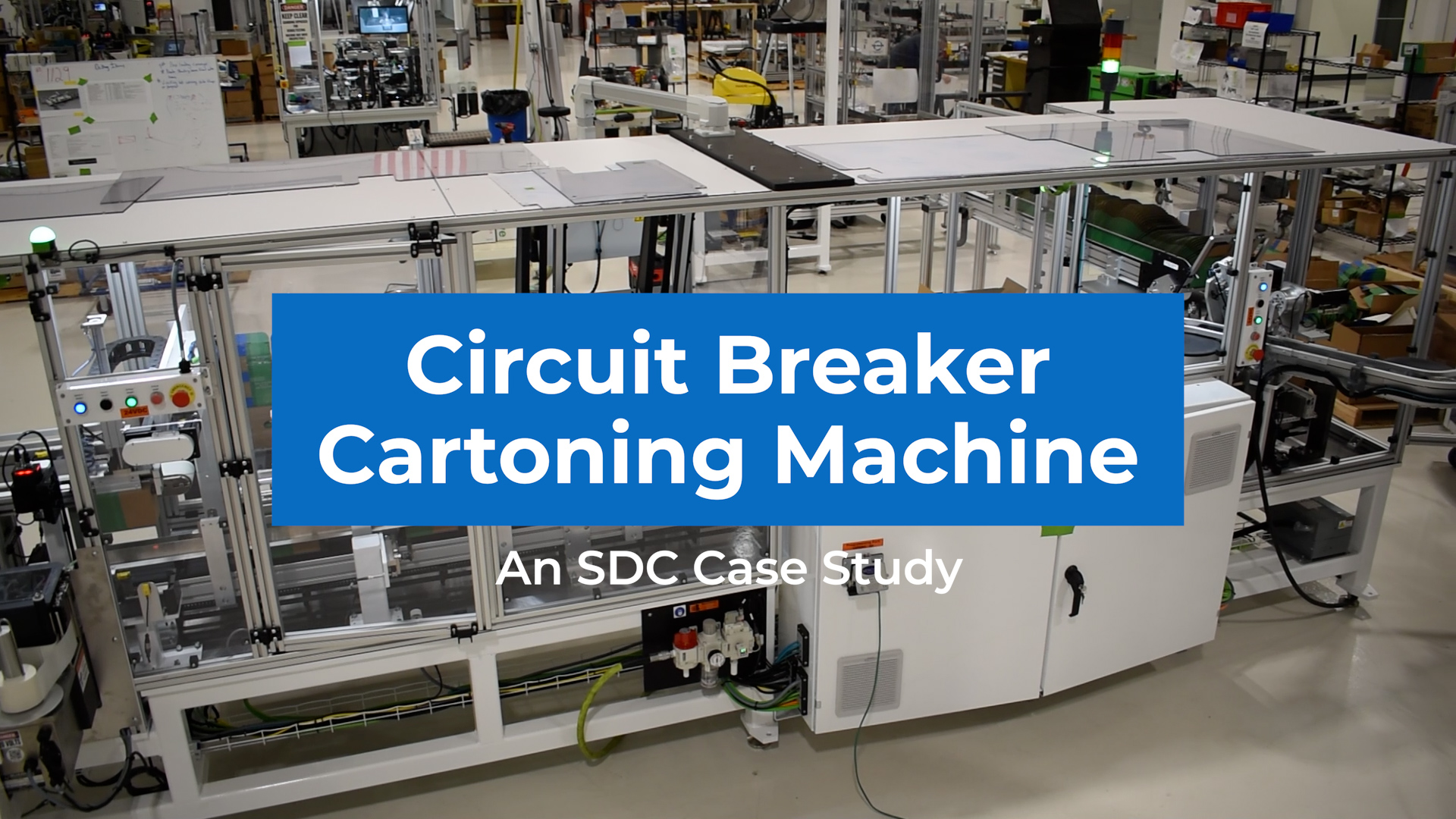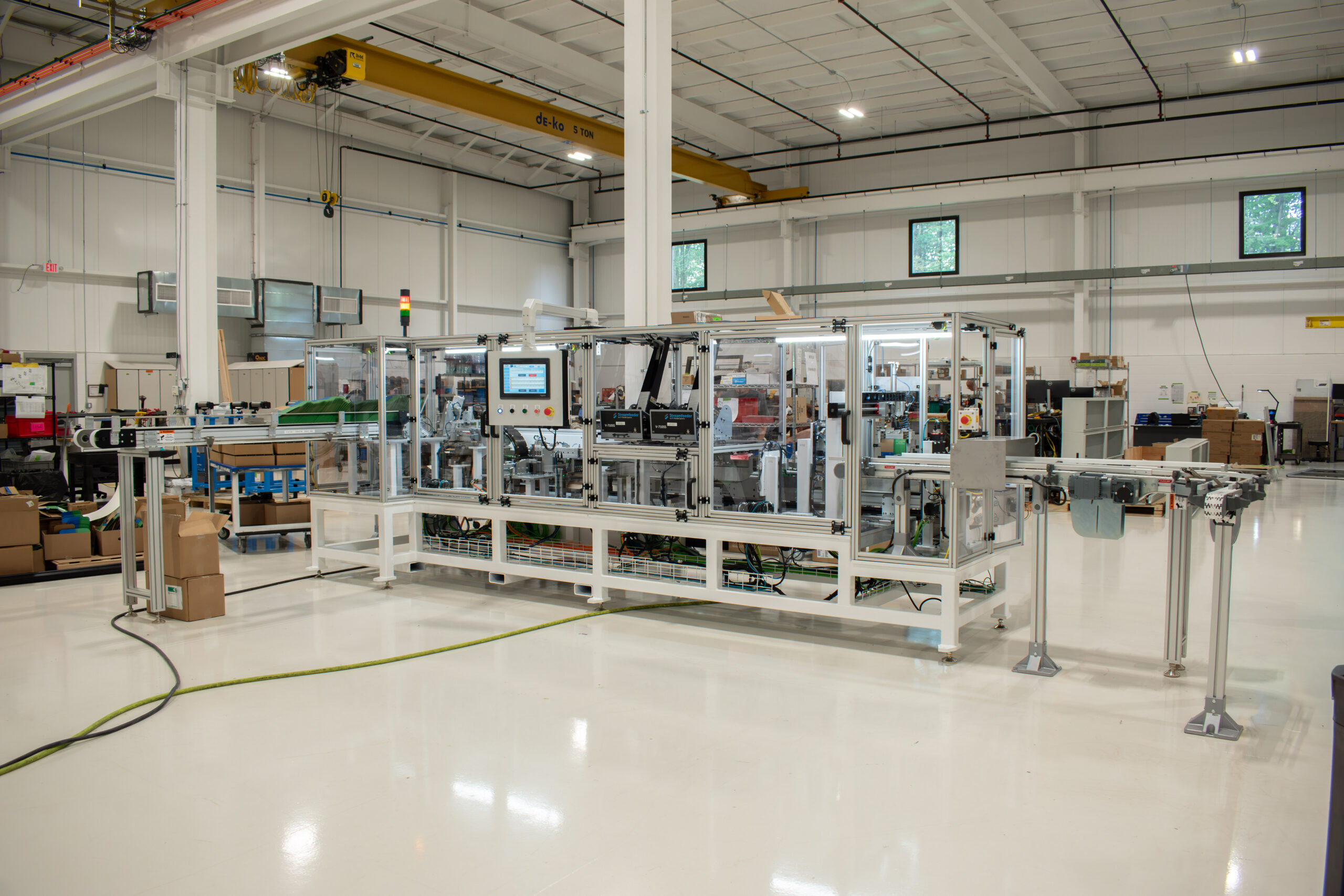
SDC engineered a circuit breaker cartoning machine that packages two circuit breaker families with full barcode and vision traceability. The machine was built for a returning customer in the electrical components industry. The manufacturer makes two circuit breaker families, each with its own body size and carton size. The existing line could not hit the target rate of 255 boxes per hour. It also had no way to check that the right model, count, and label reached each carton. Drawing on proven cartoning building blocks from past projects, this machine checks every breaker and carton at multiple points in the cycle.
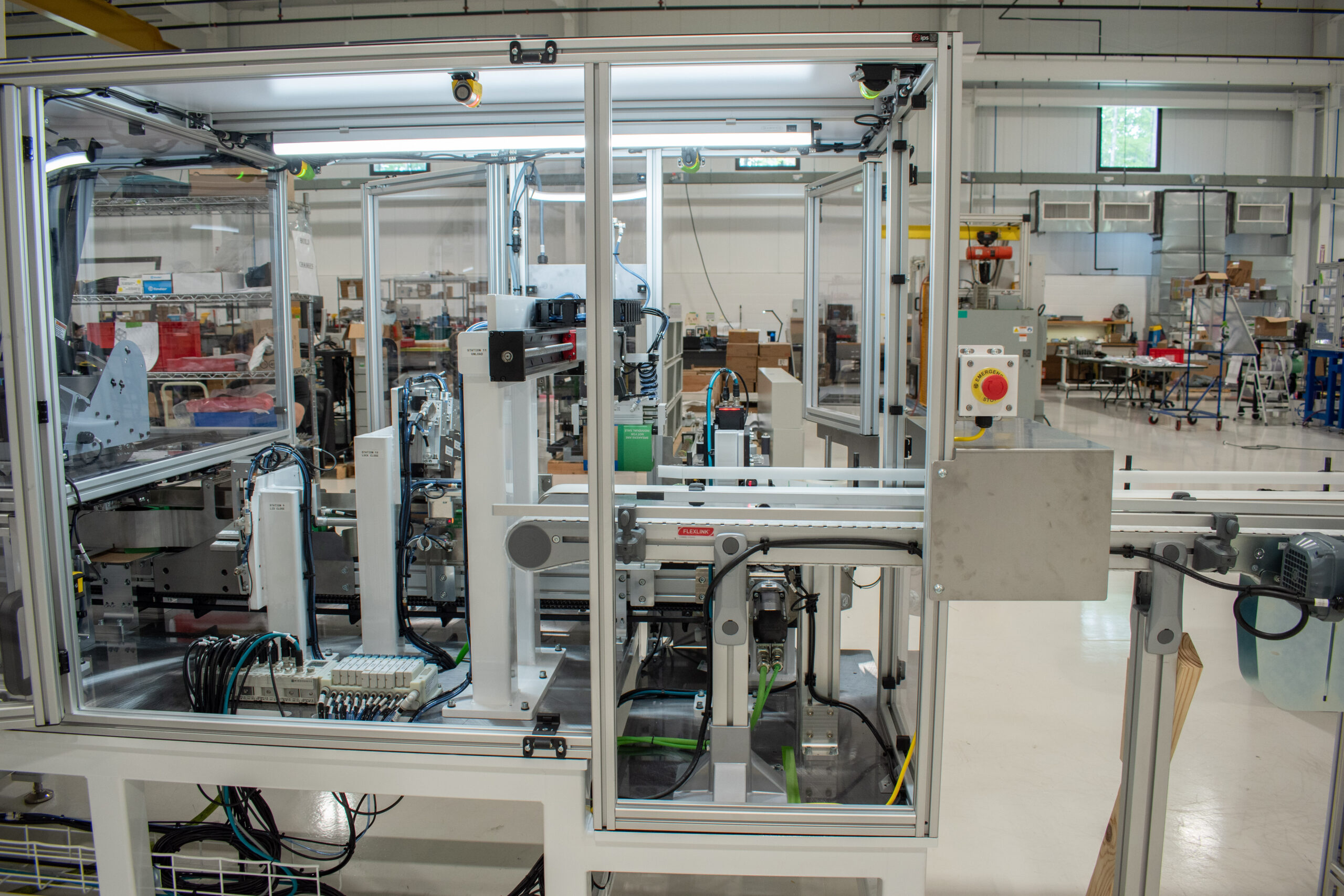
The core idea behind the circuit breaker cartoning machine was simple: catch every bad part without slowing the line down. Every breaker needed a positive identity check before it reached the carton. Every carton needed a positive check before it left the machine. SDC built the concept around single-purpose stations. Each station confirms one pass-or-fail condition, so a bad part can never travel past the point where it was caught.
The design also needed to support two breaker models without manual retooling. SDC drew on proven building blocks from its cartoning project history, then engineered the stacker, carton hopper, and label station to change over automatically between the two breaker families. As a result, the line met the required cycle time of 1.5 seconds per breaker while keeping changeover under three minutes.
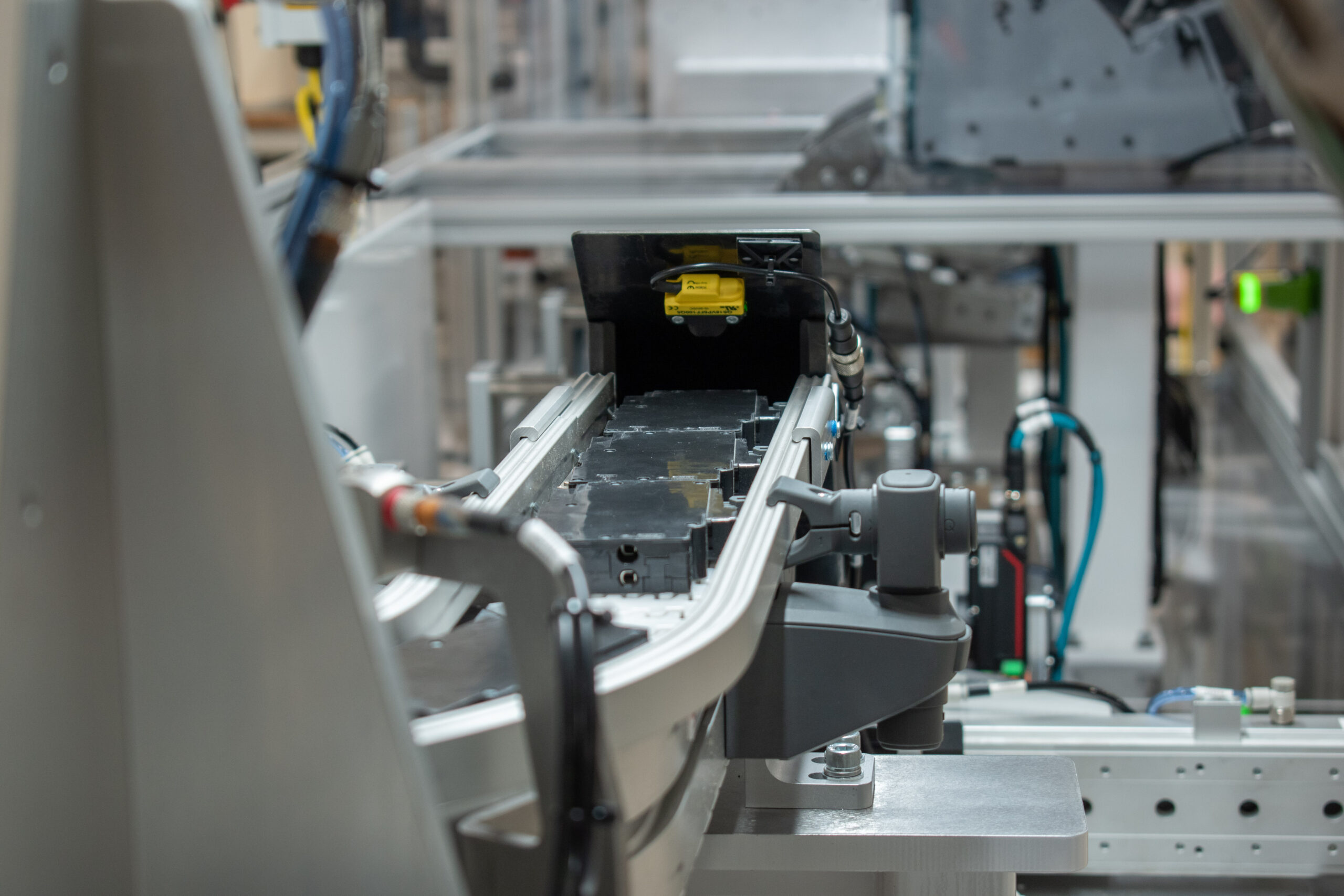
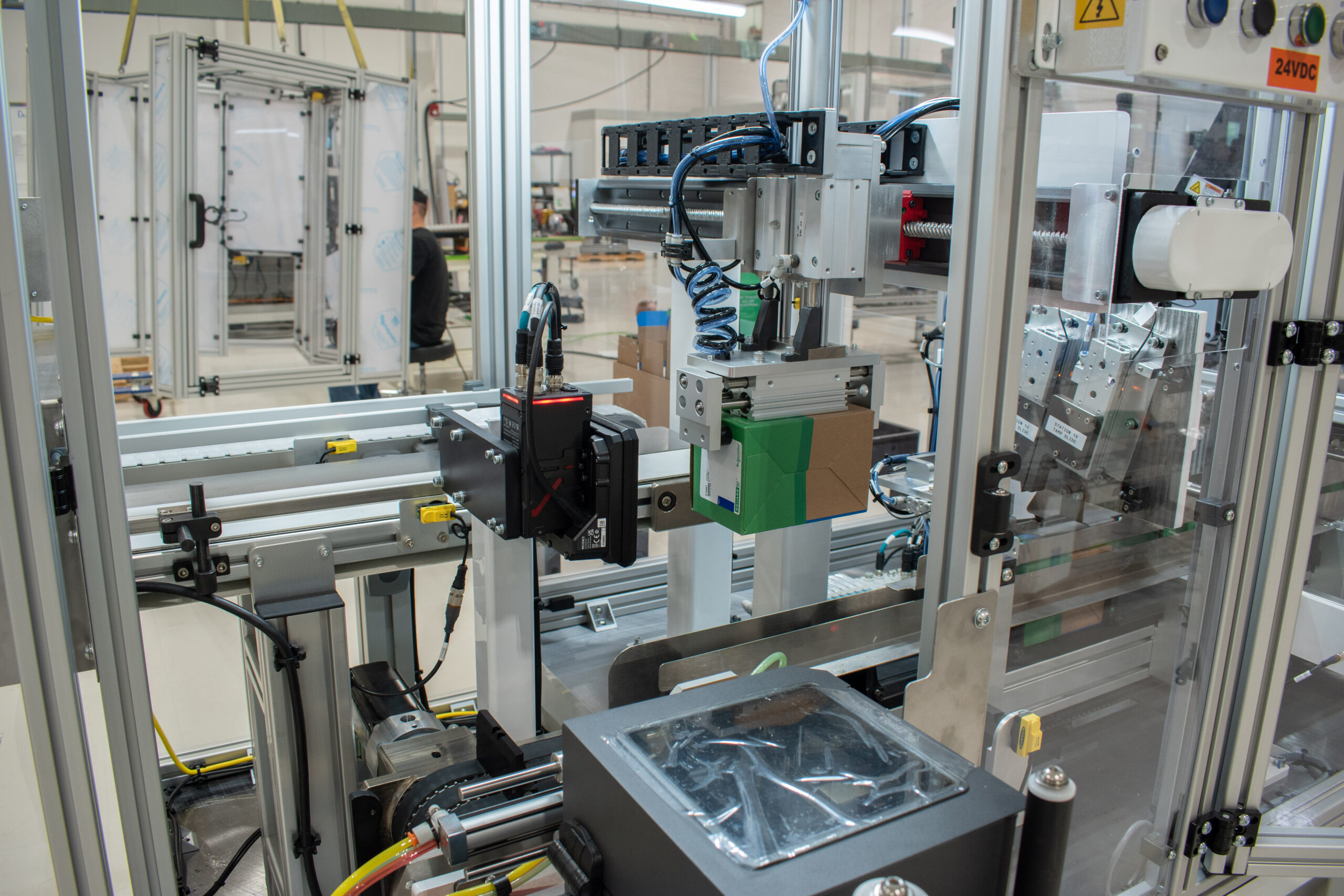
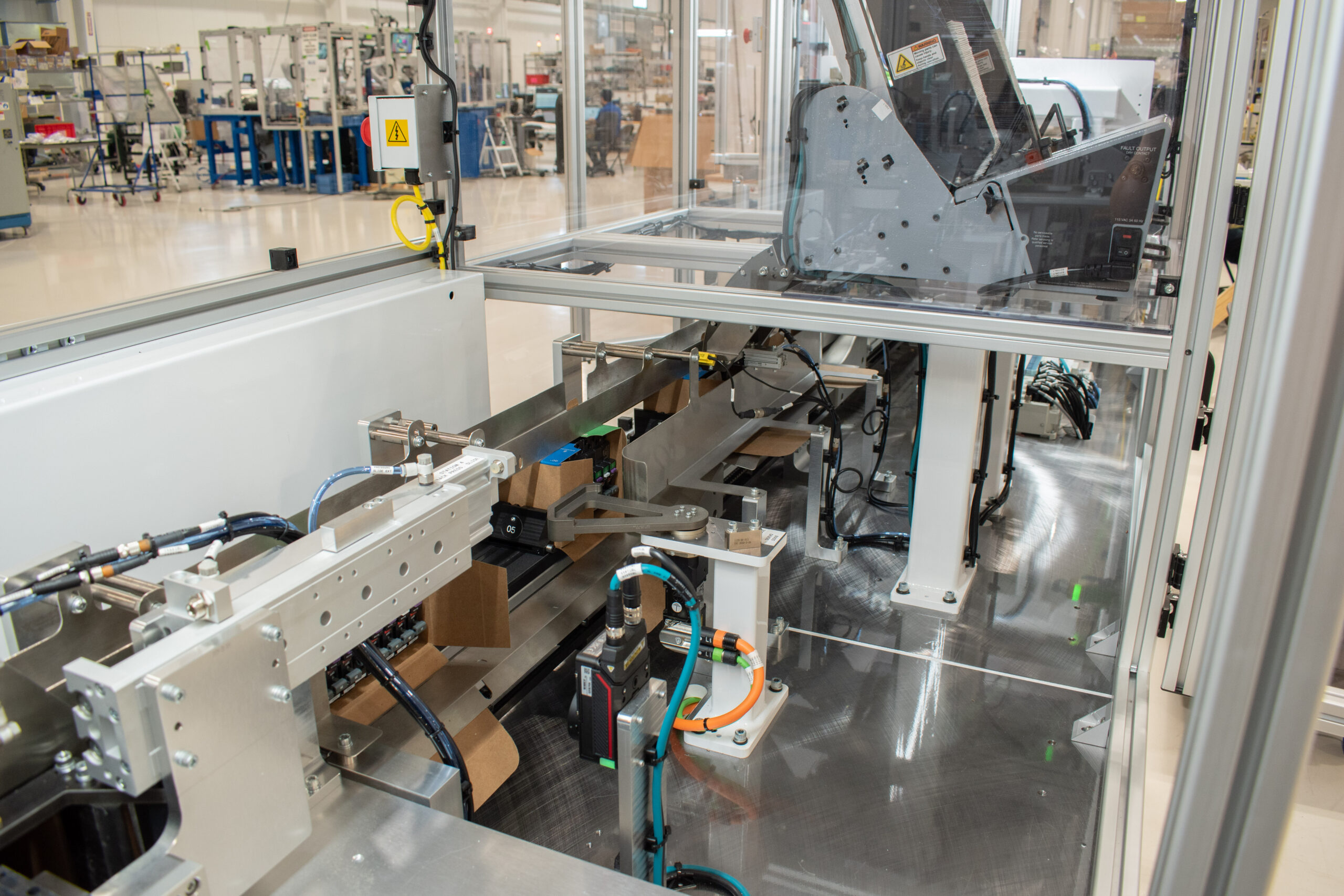
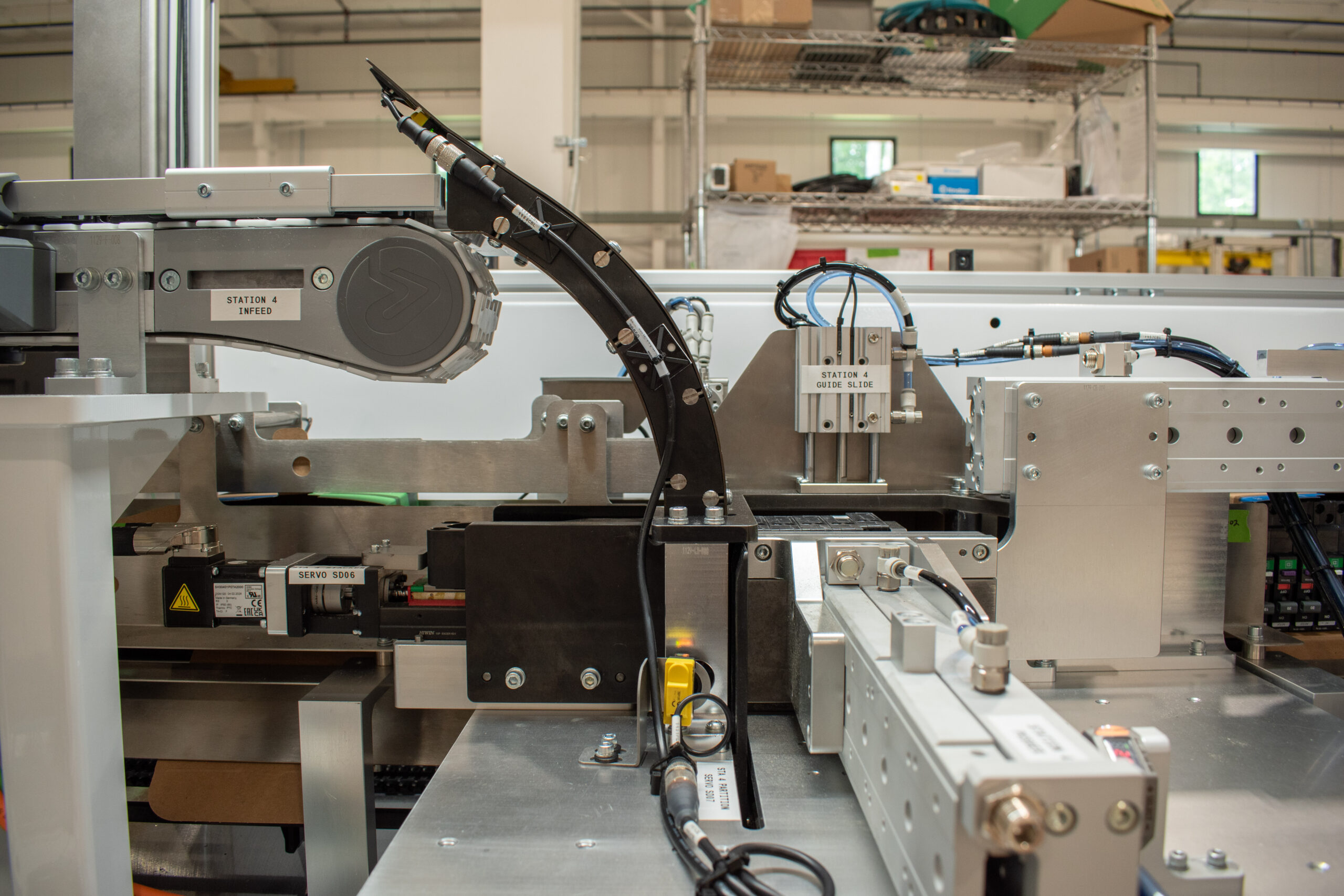
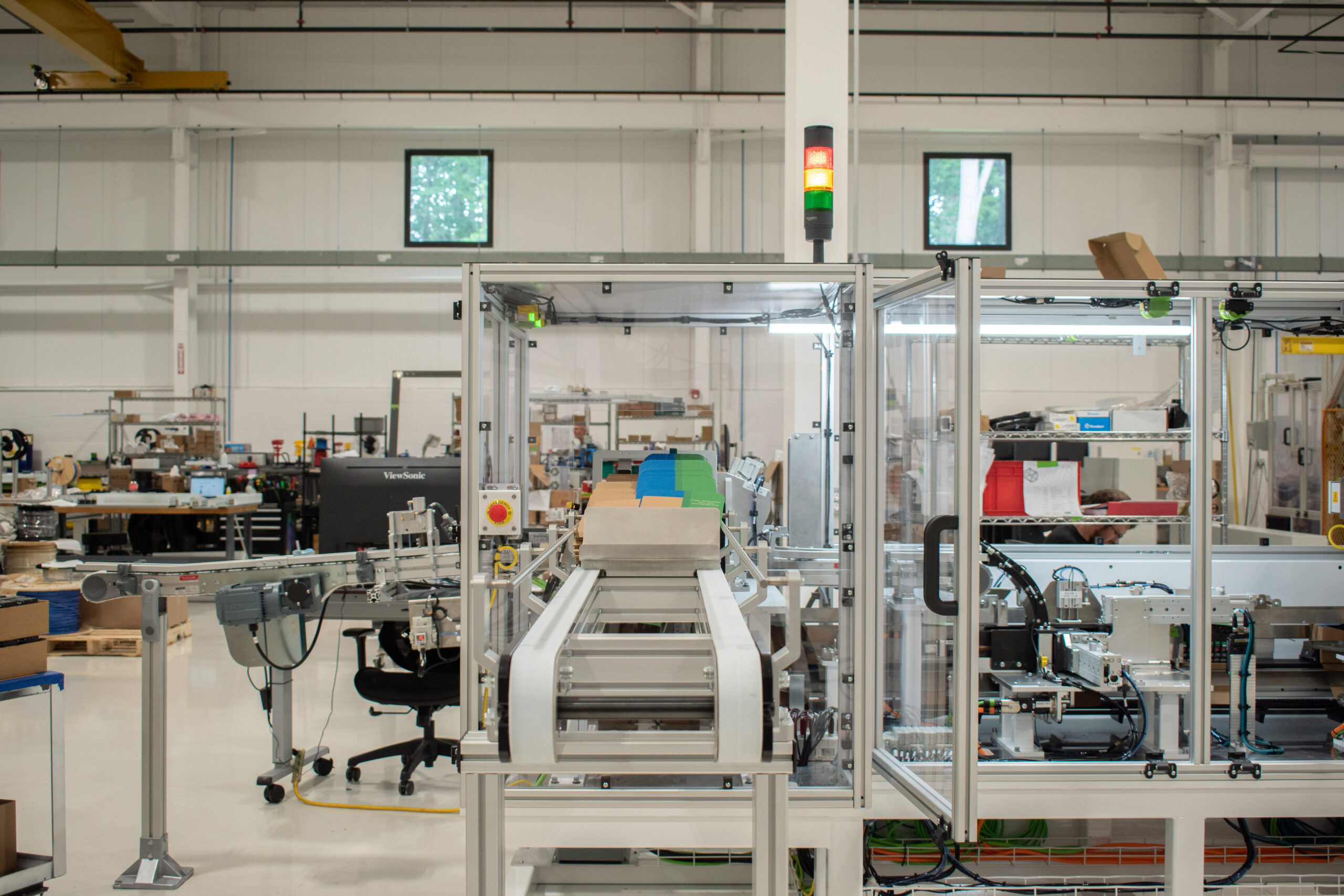
Breakers entered the circuit breaker cartoning machine on an infeed conveyor from the upstream test station. A barcode scanner read each breaker’s identity as it arrived, confirming the correct model before it moved further into the machine. If the scanner detected a mismatch, the machine paused so an operator could remove the breaker. This kept a wrong-model part from ever reaching the stacker.
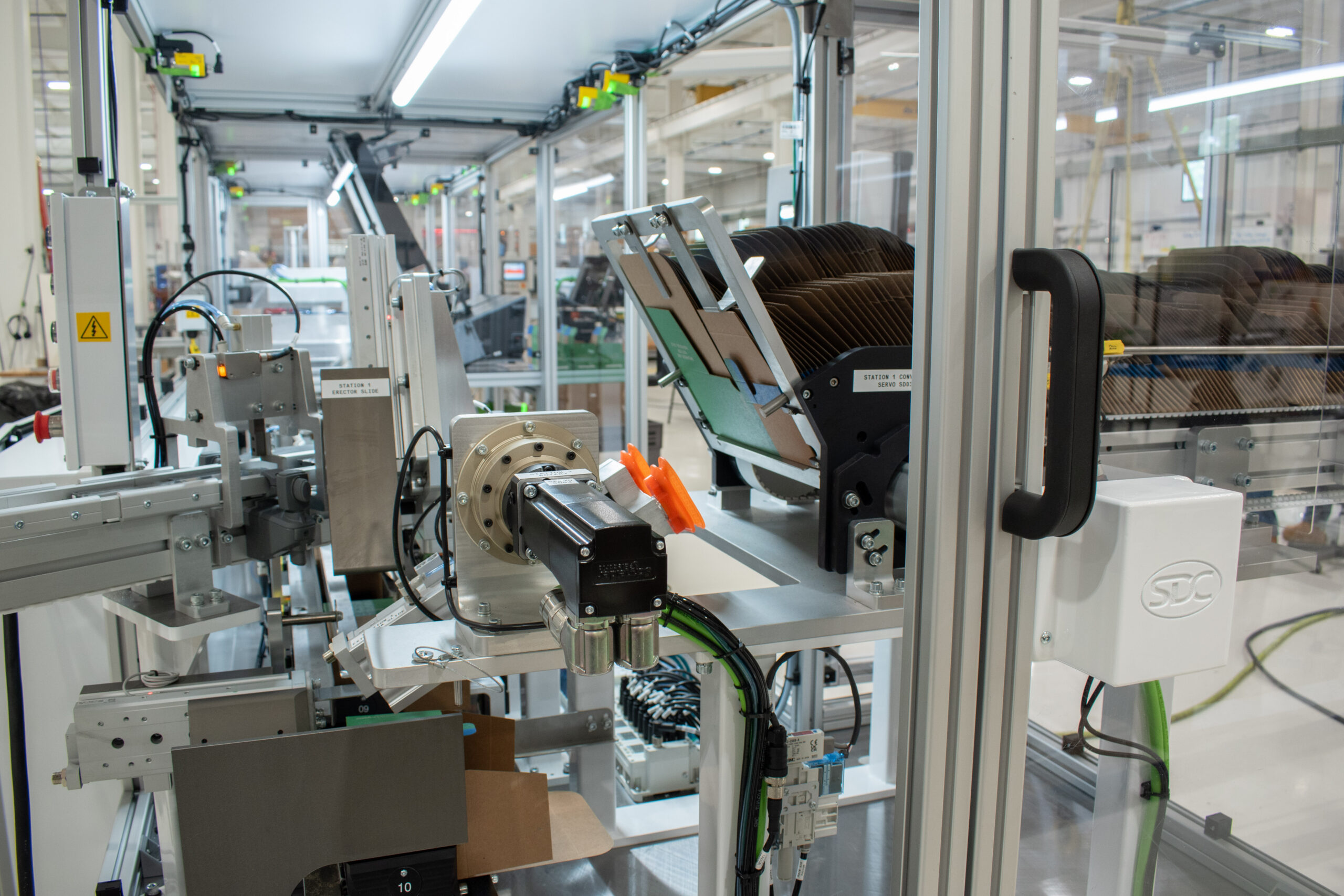
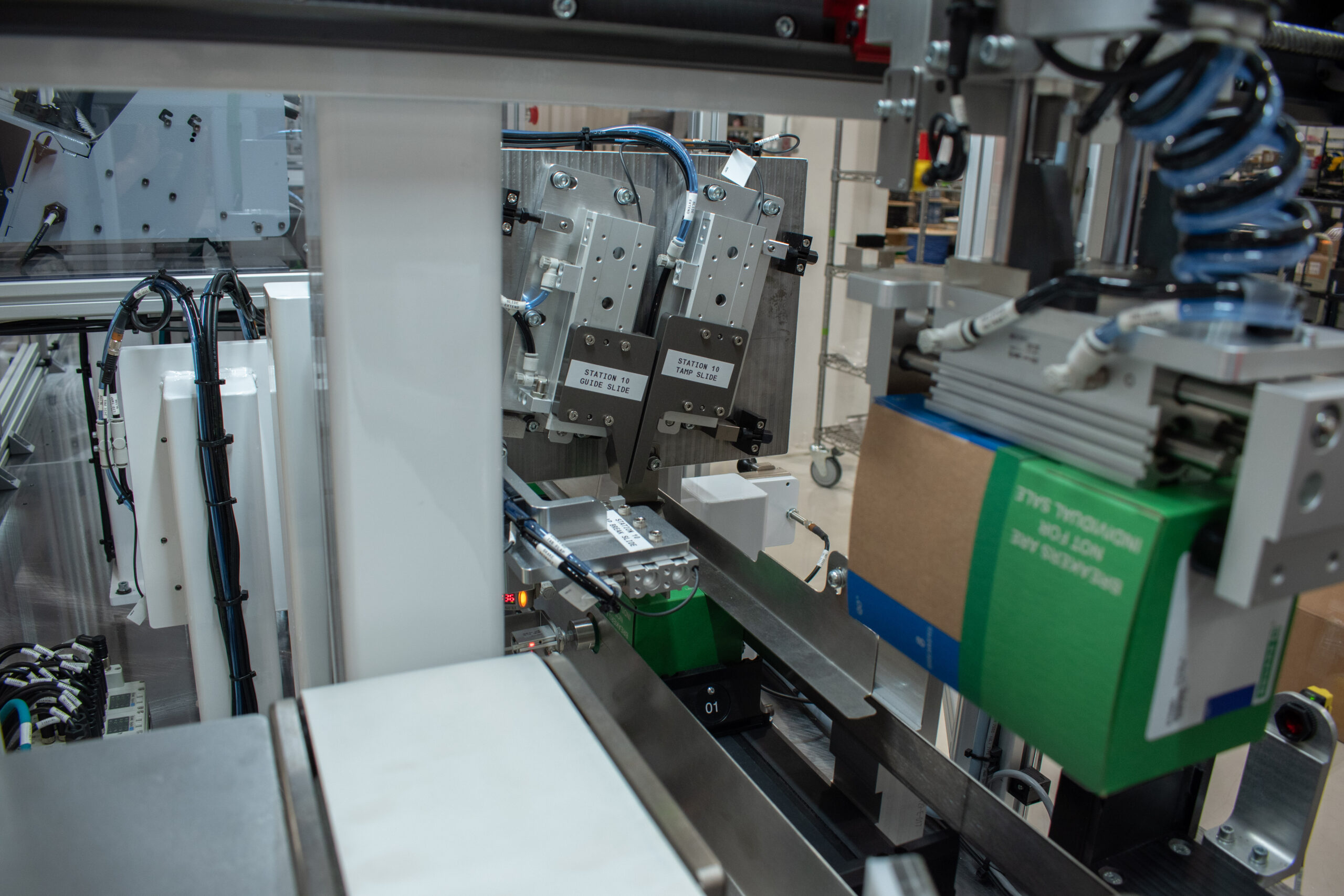
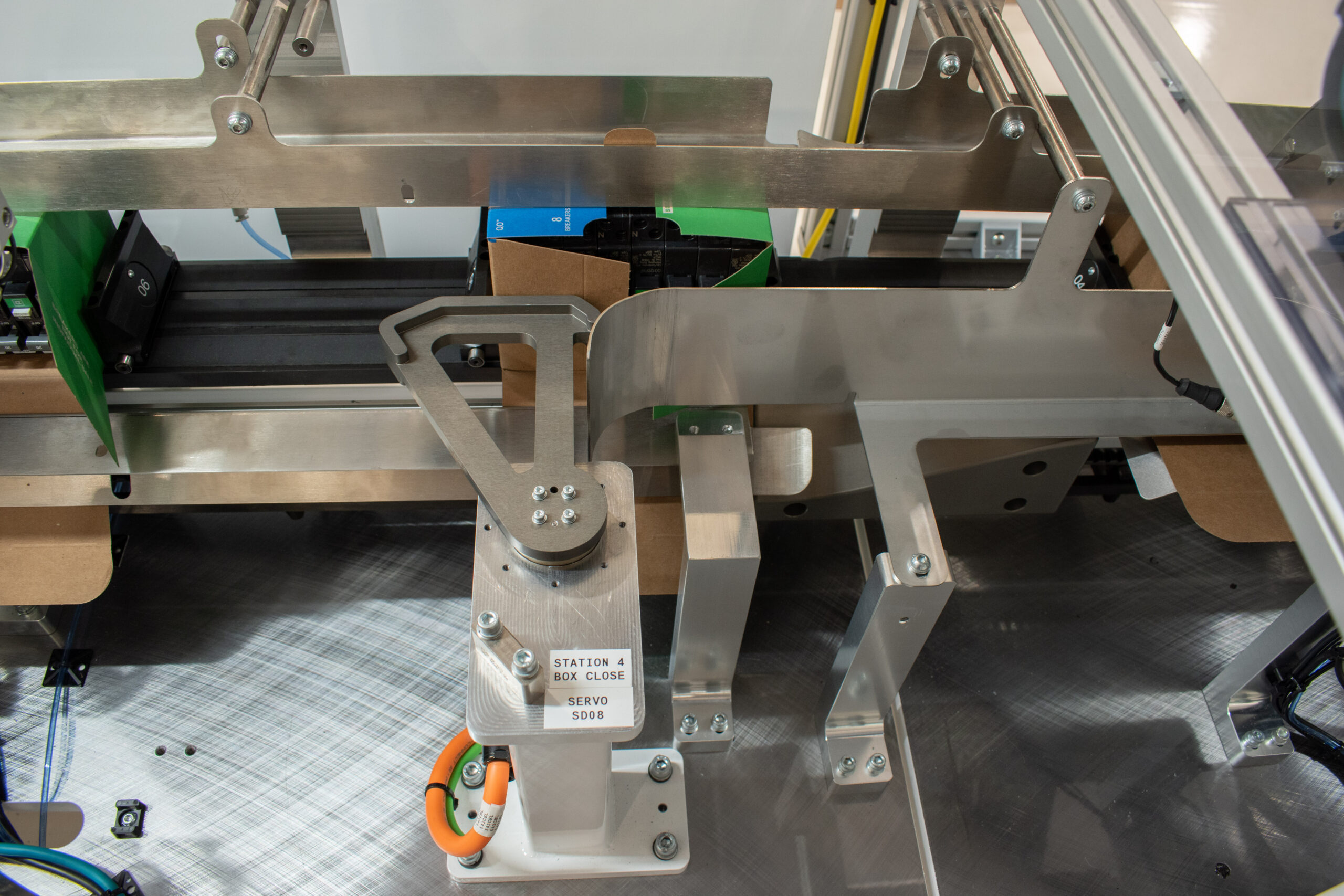
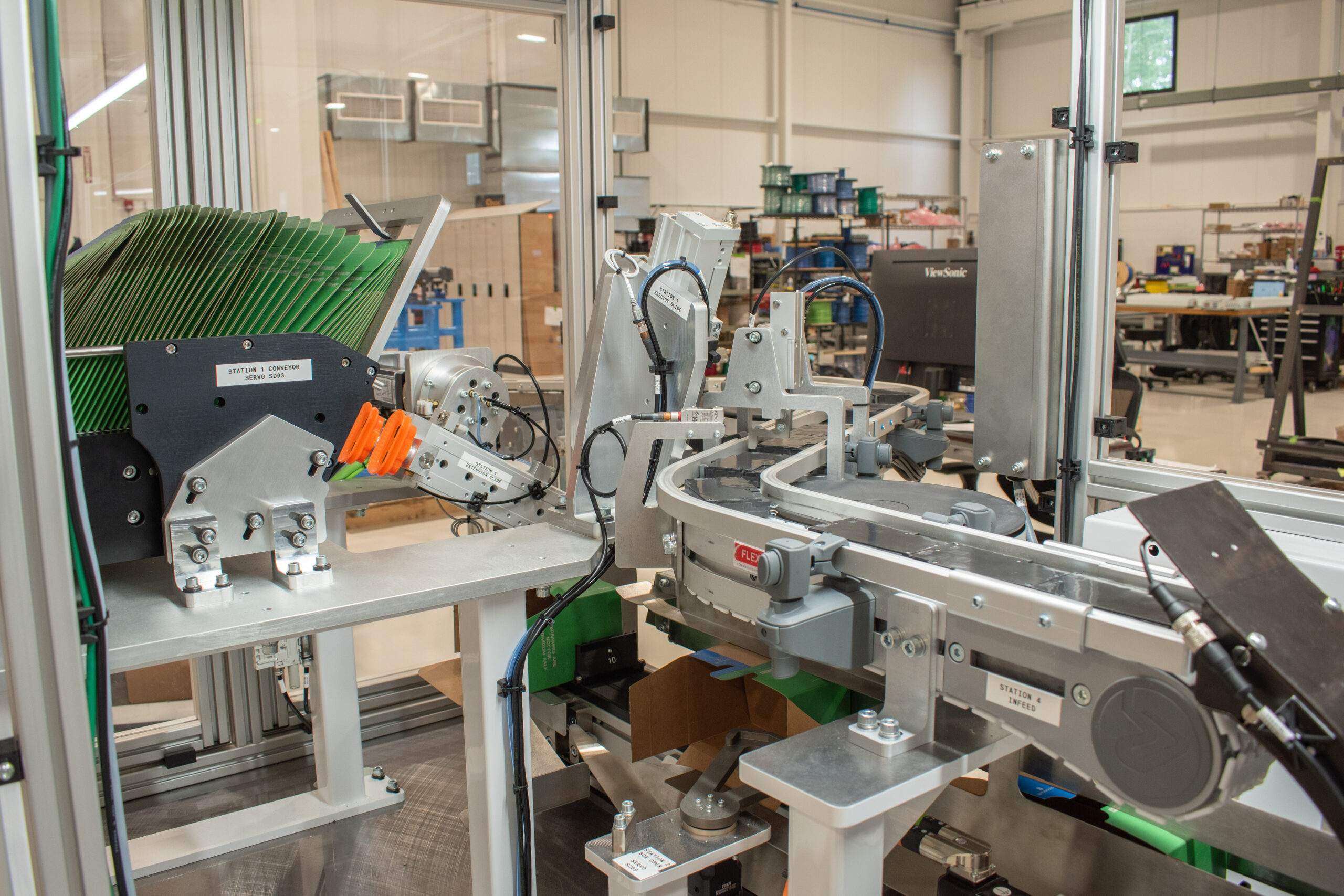
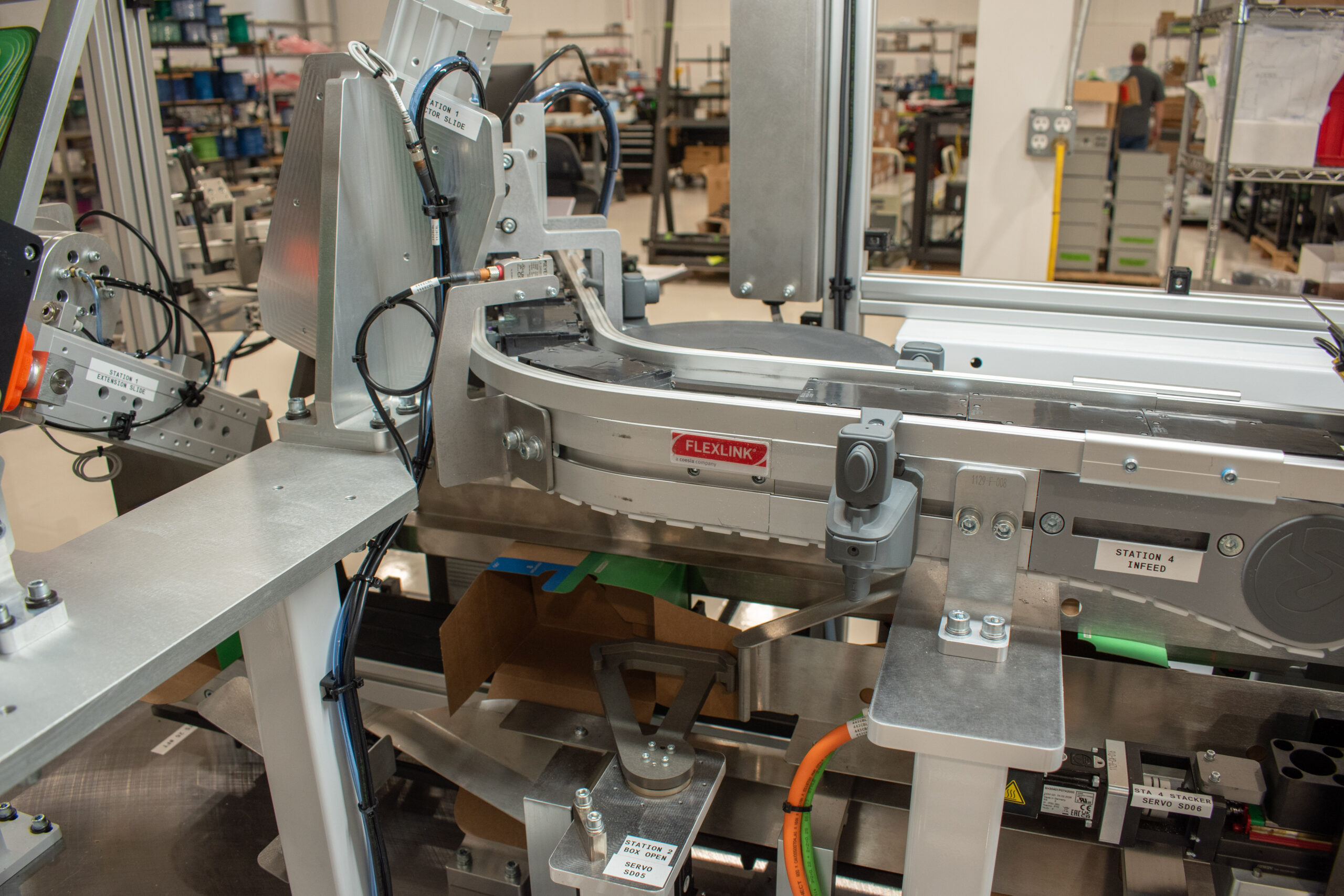
A vacuum pick-and-place mechanism loaded flat cartons from a bulk supply. It popped each carton open against a rigid guide and set it onto a nest on the main conveyor. Guides along the conveyor opened the carton lid, flaps, and locking tab out of the way for loading.
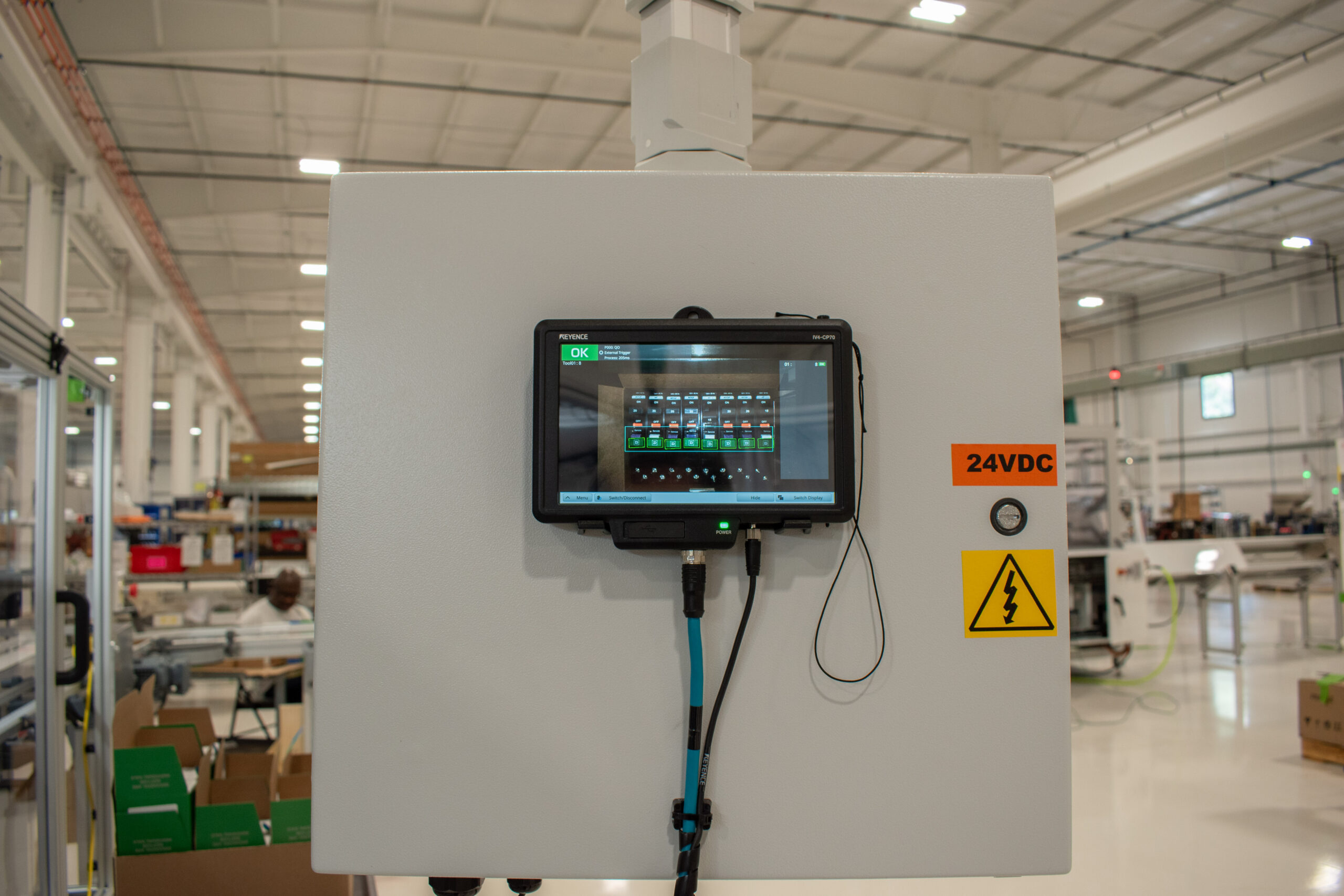
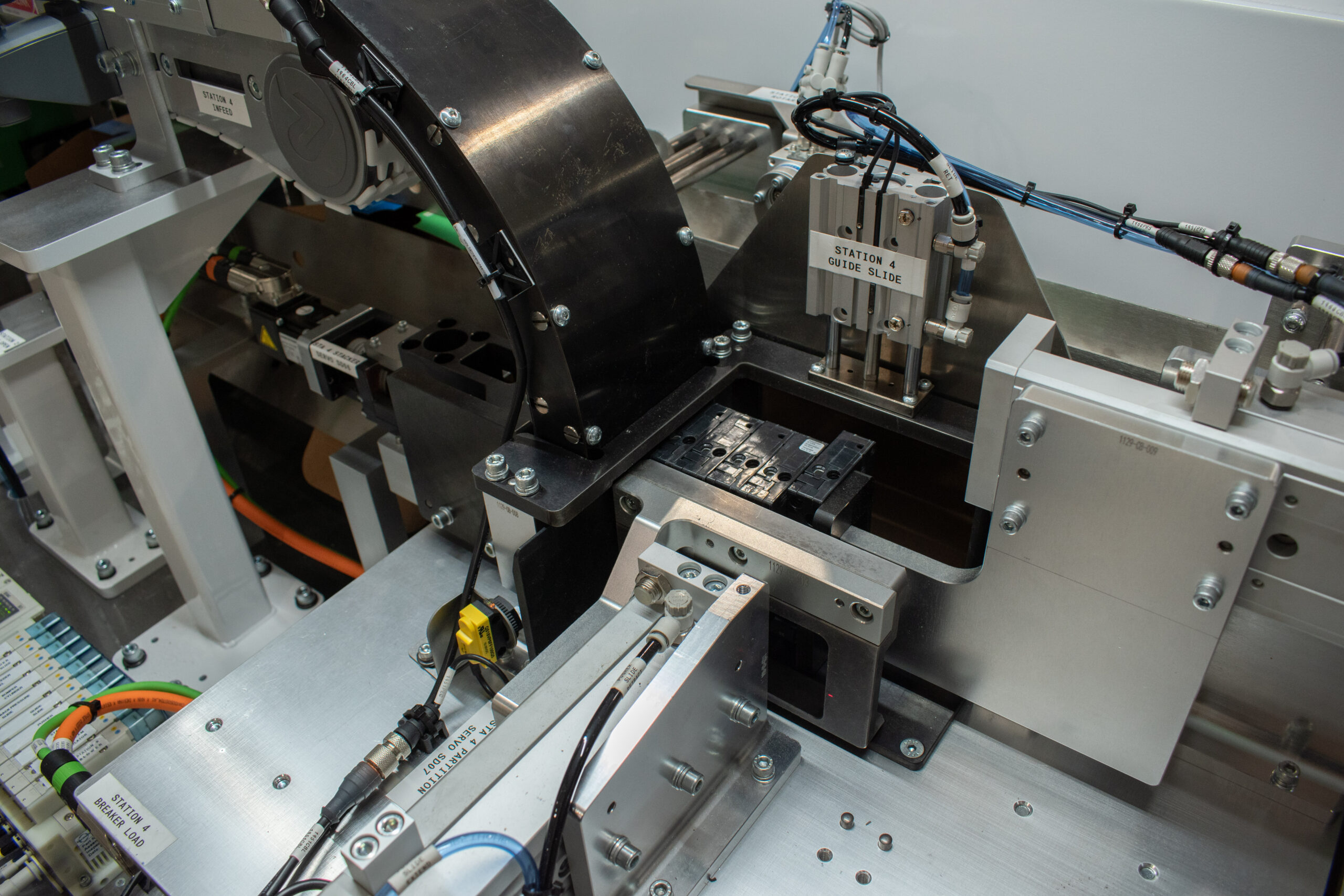
At the stacker, breakers waterfalled down and a horizontal pusher built a stack of six or eight, depending on the breaker family. A servo-indexed separation wall kept certain breakers’ side tabs clear of the waterfall motion. Once the stack was complete, SDC pushed it into the open carton. A vision inspection system then checked the breaker count and ran a front-face quality check before the carton advanced.
Guides closed the carton flaps most of the way, leaving an opening for literature. Two media feeders, each with its own barcode scanner, fed an instruction pamphlet into the carton. One feeder ran active while the second stood by as a backup, so a single feeder fault would not stop the line. Downstream stations then closed the flaps fully, inserted the lid, and folded and locked the closing tab.
Each finished carton transferred onto a platform where a tamp-on label applicator applied a label to the side. A second barcode scanner verified the label’s content and placement. Cartons that passed moved onto a conveyor for good product, while any carton with a missing or unreadable label diverted to a dedicated reject conveyor. This kept good and bad product from mixing.
SDC updated the controls hardware, software, and guarding for the new stations and two-model changeover. The HMI showed one indicating bank for overall machine status and named the exact station behind any fault. Password-protected screens controlled the changeover recipes and label settings. The equipment met NRTL field-labeling rules under UL508A, and it followed NEC, OSHA, NEMA, and ANSI guidelines.
The circuit breaker cartoning machine runs at a rate of 1.5 seconds per breaker, supporting a target output of 255 boxes per hour on the 8-breaker model and 340 boxes per hour on the 6-breaker model, at 85% overall efficiency.
| Metric | Result |
| Machine Rate | 1.5 seconds per breaker. 255 boxes per hour (8-breaker) or 340 boxes per hour (6-breaker) at 85% efficiency. |
| Barcode Traceability | Every breaker and carton verified by barcode or vision at multiple stations |
| Model Changeover | Under 180 seconds to switch from QO to HOM with one operator |
| Variant Changeover | Under 120 seconds between CAFI and DF versions, and under 60 seconds between amperage ratings |
| Reject Handling | Mislabeled cartons automatically divert to keep good and bad product separated |
| Labor | One operator tends the entire line, loading cartons, labels, and literature |
SDC does not build a single standard cartoning machine — every cartoning line SDC delivers is custom-engineered for the customer’s product. For this project, SDC’s engineers drew on a library of pre-engineered technology and proven approaches from past cartoning projects, including carton forming, stacking, and label application methods that had already proven out in the field. From there, they engineered new stations specific to this project, including barcode-verified breaker infeed, vision-inspected stacking, dual media feeders, and label verification and outfeed.
Starting from proven building blocks instead of a blank sheet shortens the schedule and reduces engineering risk. At the same time, every station on this machine was engineered specifically for this customer’s two-family packaging and traceability requirements, making the result unique in its own right.
SDC delivered a circuit breaker cartoning machine that gave a returning customer one line for two breaker families. The machine confirms breaker identity at infeed. It checks stack count and quality with vision inspection. It also checks every label before a carton ships. Together, these checks close the gaps in the manufacturer’s previous electrical component packaging process.
Changeover automation between breaker families, and between product variants, keeps the line flexible without adding operator work. Running at 1.5 seconds per breaker, the machine hits the manufacturer’s required output. It also logs the records needed to catch a defect before it leaves the plant. The project draws on SDC’s proven cartoning experience, cutting engineering risk while still meeting a demanding, multi-model packaging spec. It stands as a strong example of how SDC turns proven building blocks into a machine engineered specifically for one customer’s traceability and throughput needs.
A: It automates circuit breaker packaging. It forms and loads cartons, stacks breakers, inserts literature, applies labels, and checks quality in one line.
A: A Keyence barcode scanner checks each breaker’s identity at infeed. If it finds the wrong model, the machine stops before a bad part reaches the stacker.
A: Yes. This machine handles two breaker families. It changes over automatically between them in under 180 seconds.
A: Vision inspection checks the breaker stack. Barcode scanners check labels automatically. There are no extra steps for the operator.
A: The machine diverts any carton with a missing or unreadable label. It sends that carton to a separate reject conveyor, away from good product.