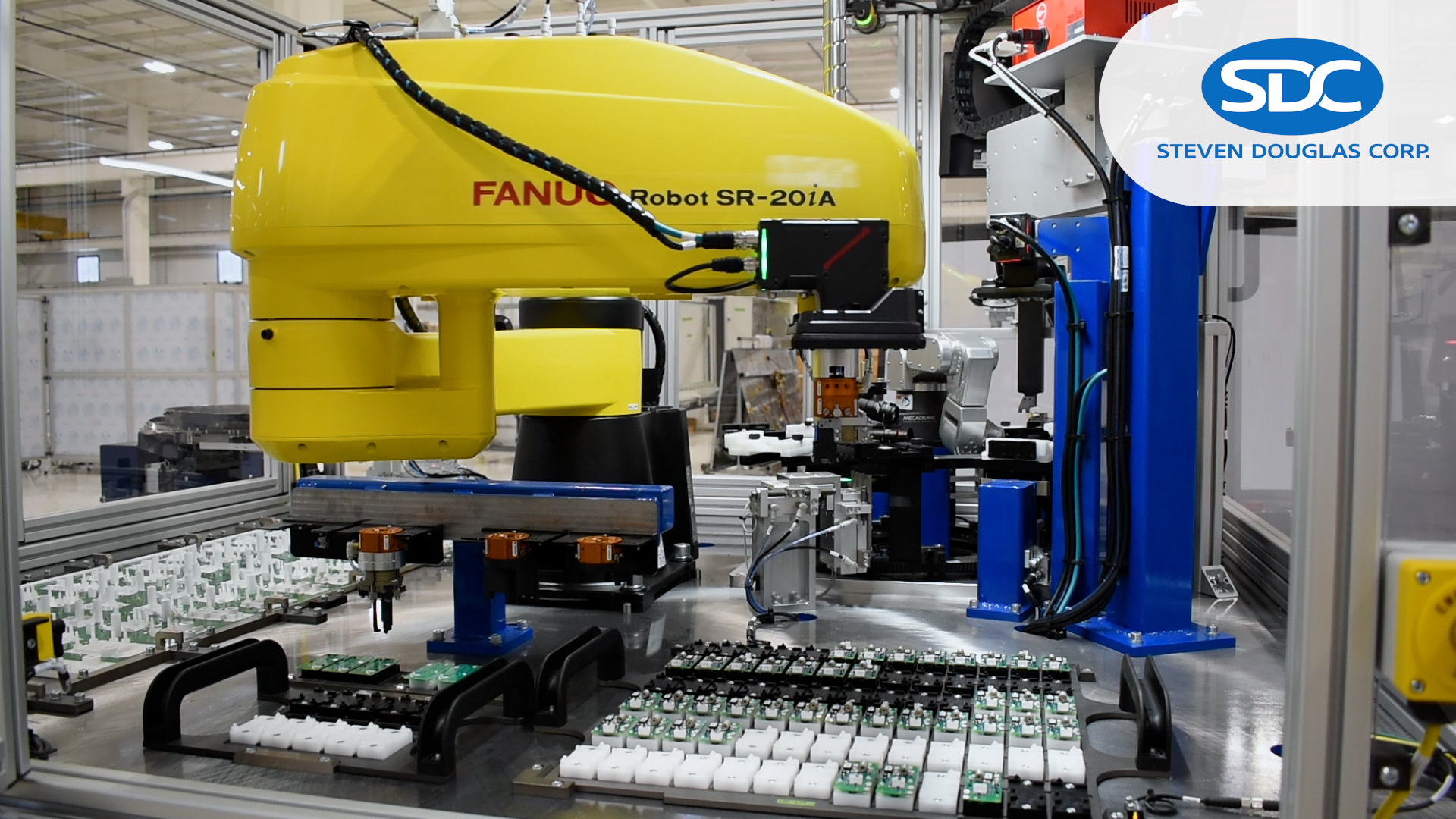
A long-time customer in the medical device industry needed a better way to tune RF circuit boards. Their technicians were doing it by hand—adjusting screws, reading RF measurements, and repeating until each board hit spec. The work was tedious, inconsistent from one operator to the next, and hard to scale. SDC designed and built a custom automated circuit board tuning machine to replace that process entirely, bringing precise automated circuit board tuning to a production environment that had never had it.
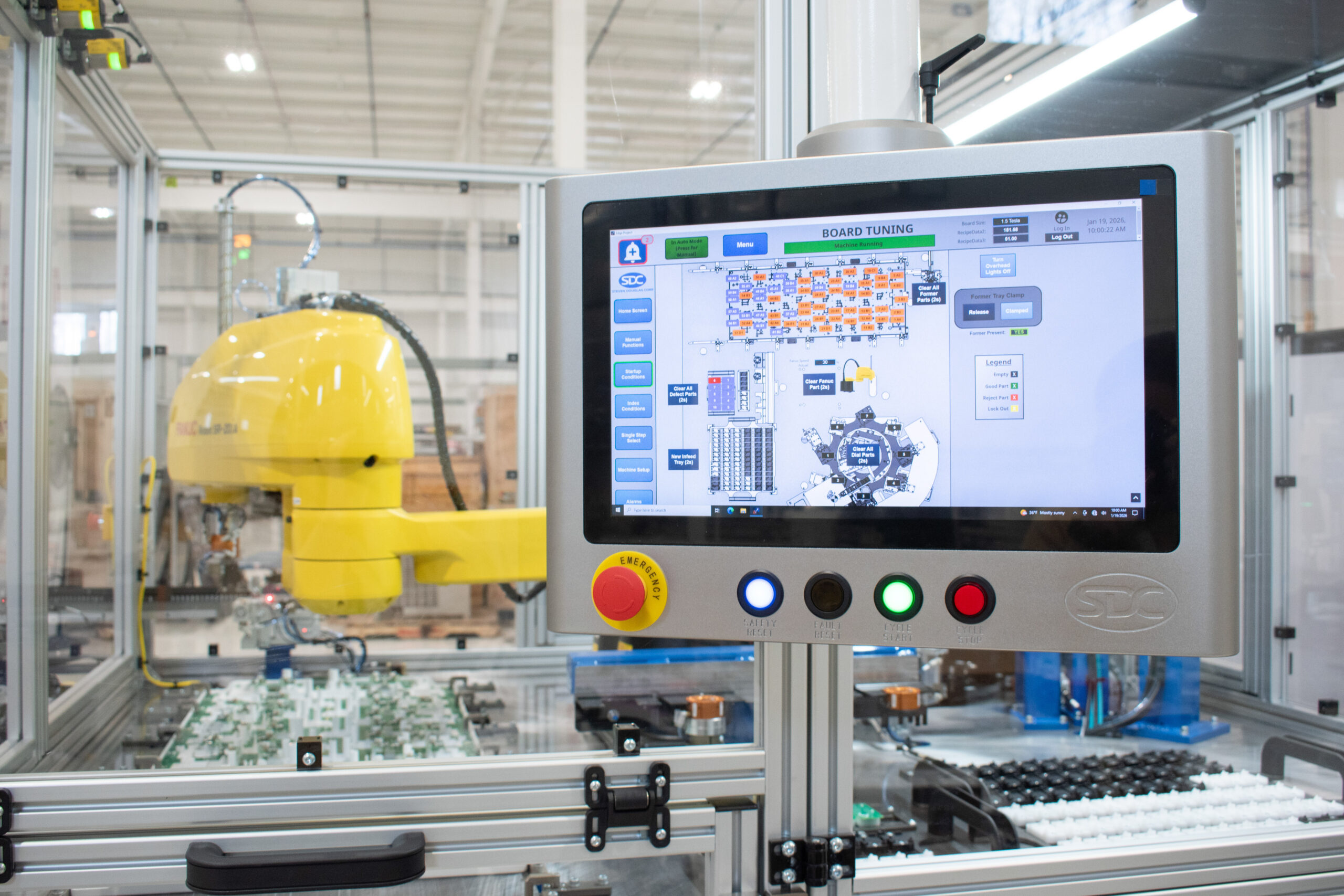
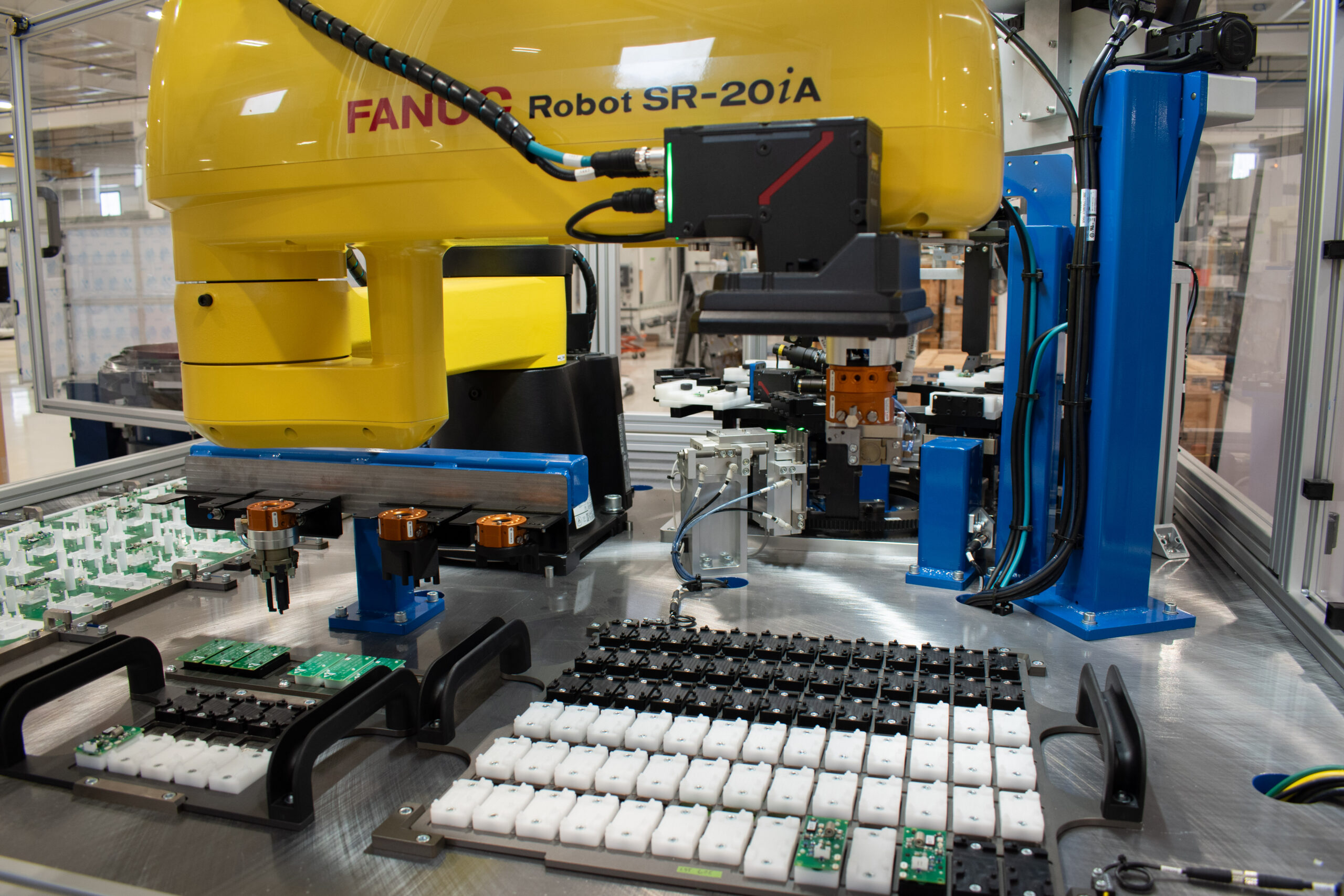
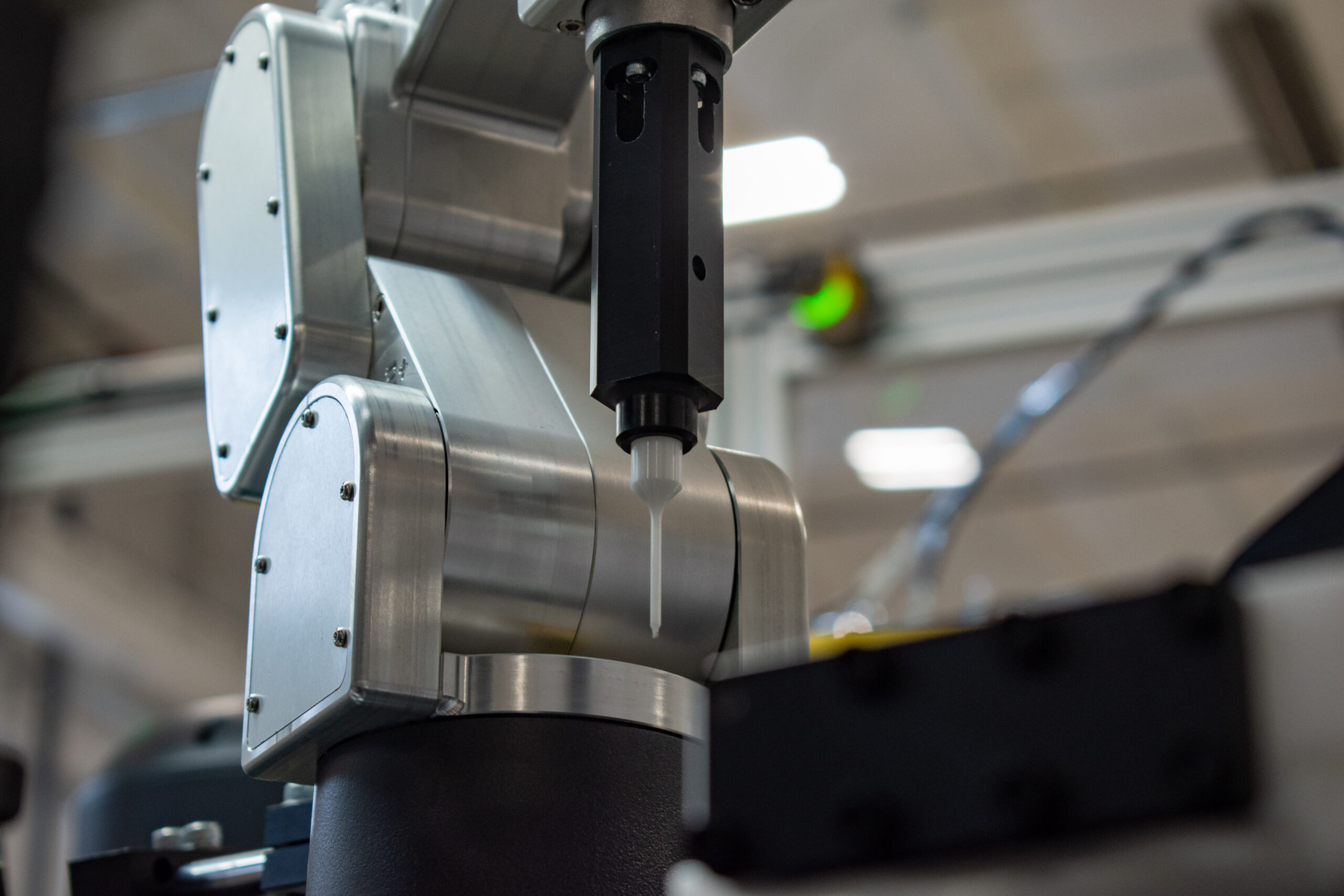
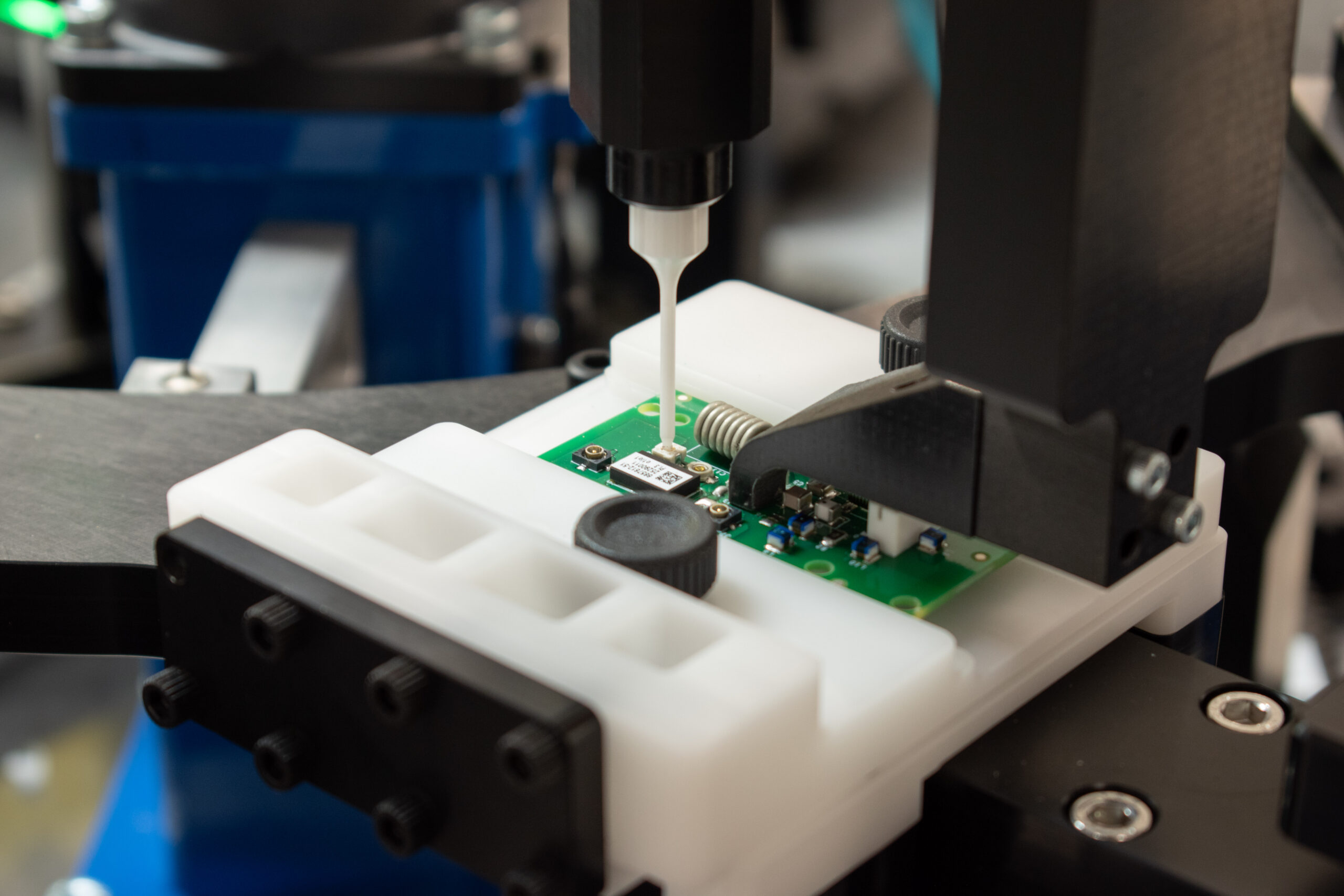
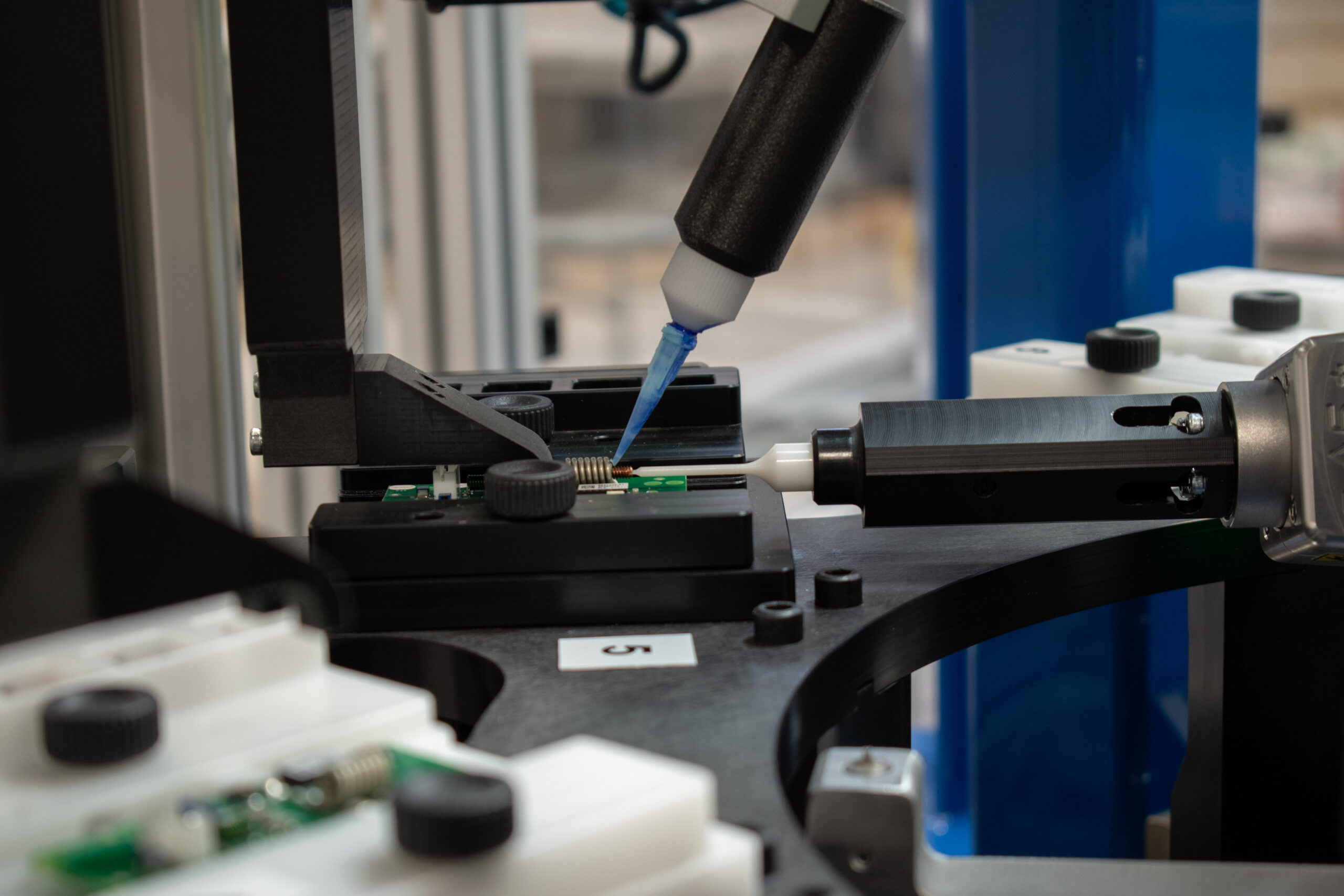
Tuning an RF circuit board isn’t a simple pass/fail test. It’s an iterative process—turn a screw, read a measurement, adjust, and repeat. A technician had to do all of that by hand, then apply adhesive and move the board into sub-assembly. Doing it accurately at production volume was the core challenge.
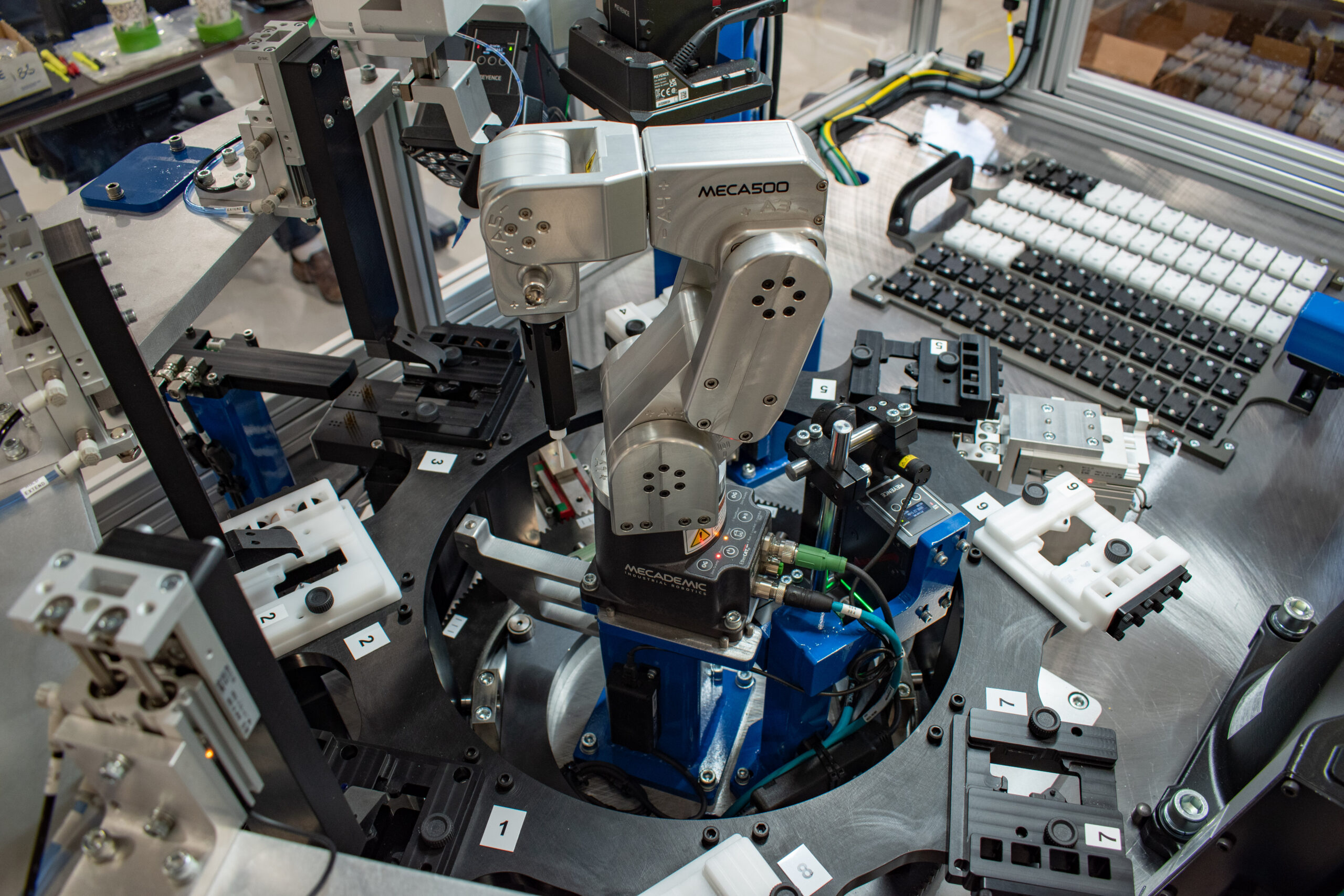
The concept behind this automated board tuning machine was to mirror that process mechanically—but faster, more precisely, and without variation between operators. A circular indexing table would move each electronic board through dedicated test and tuning stations in sequence. Two robots would handle material movement and screw adjustment at the same time. The result: a fully tuned, adhesive-sealed circuit board with no manual intervention required during the cycle.
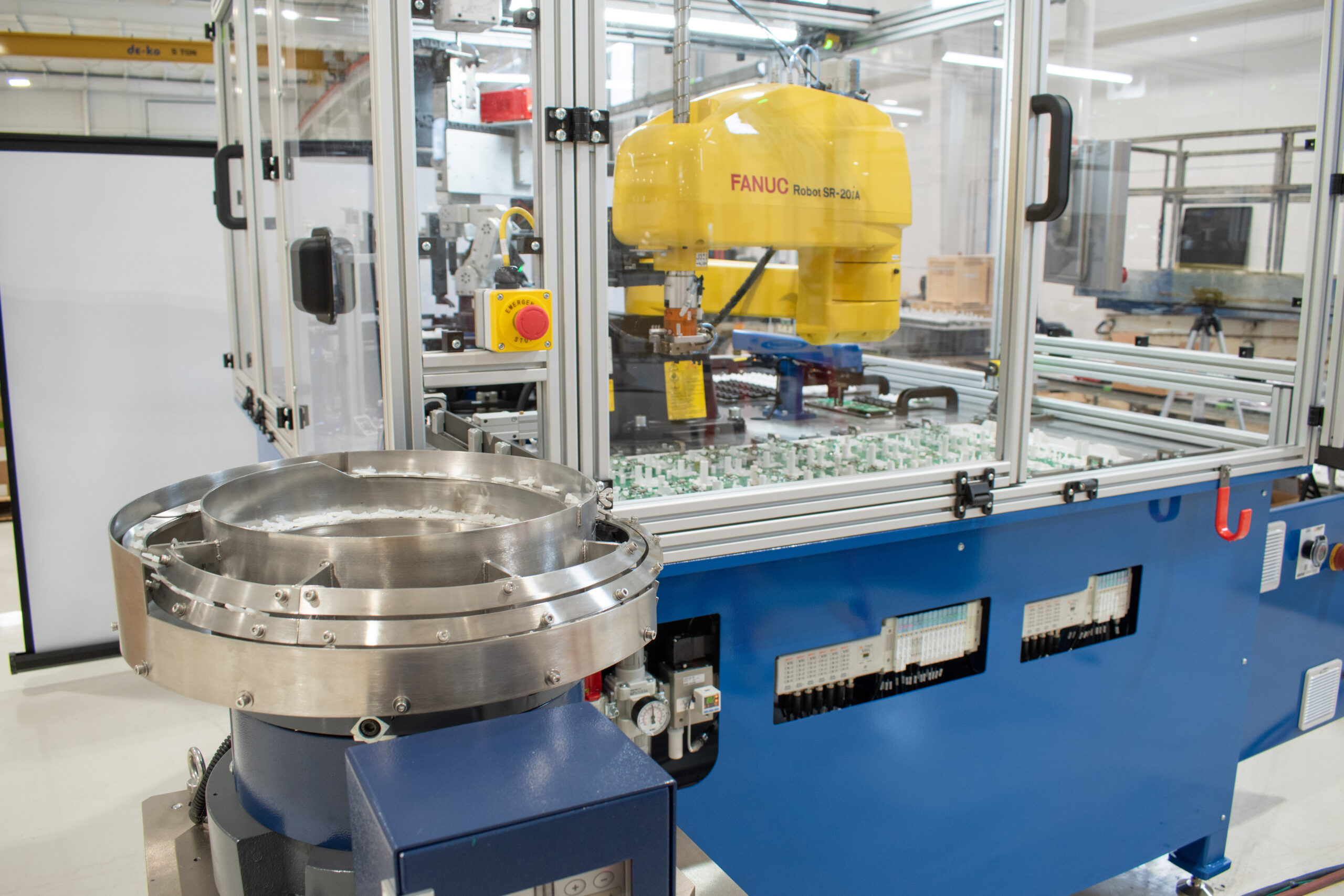
SDC built a dual-robot automated circuit board tuning machine around a circular miniature-sized indexing table. The system handled two product variations of the RF circuit board. Recipe selection allowed it to adapt automatically to different board types and up to four footprints within the same infeed tray.
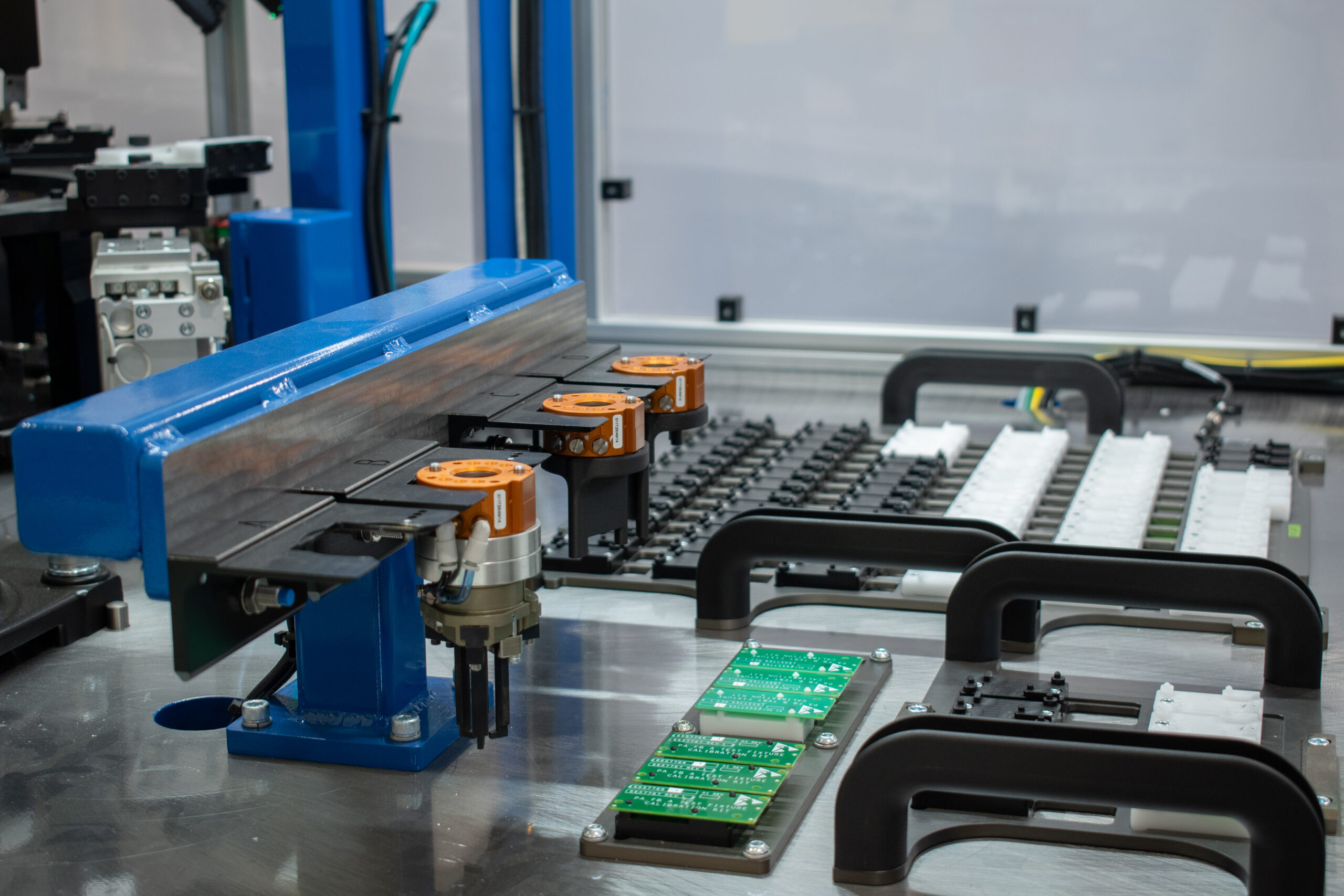
Robot 1—a FANUC SCARA SR-20iA—executed all material handling. As an experienced FANUC robotic integrator, SDC programmed the robot to pick boards from the infeed tray, read barcodes, load and unload the indexing table, install stand-offs, and route rejected boards to the reject tray. Its ATI automatic tool changer allowed end-effector swaps without stopping the machine.
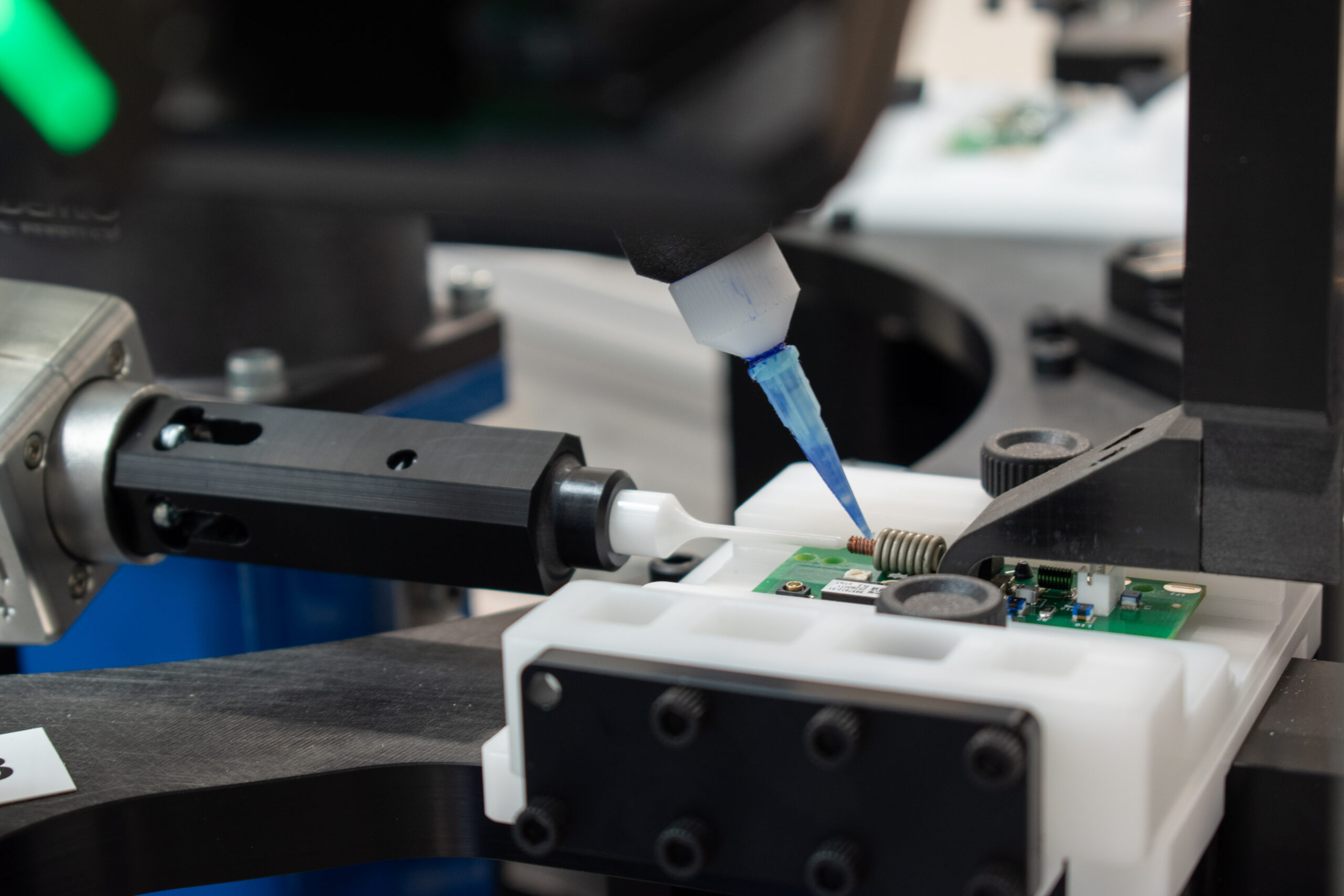
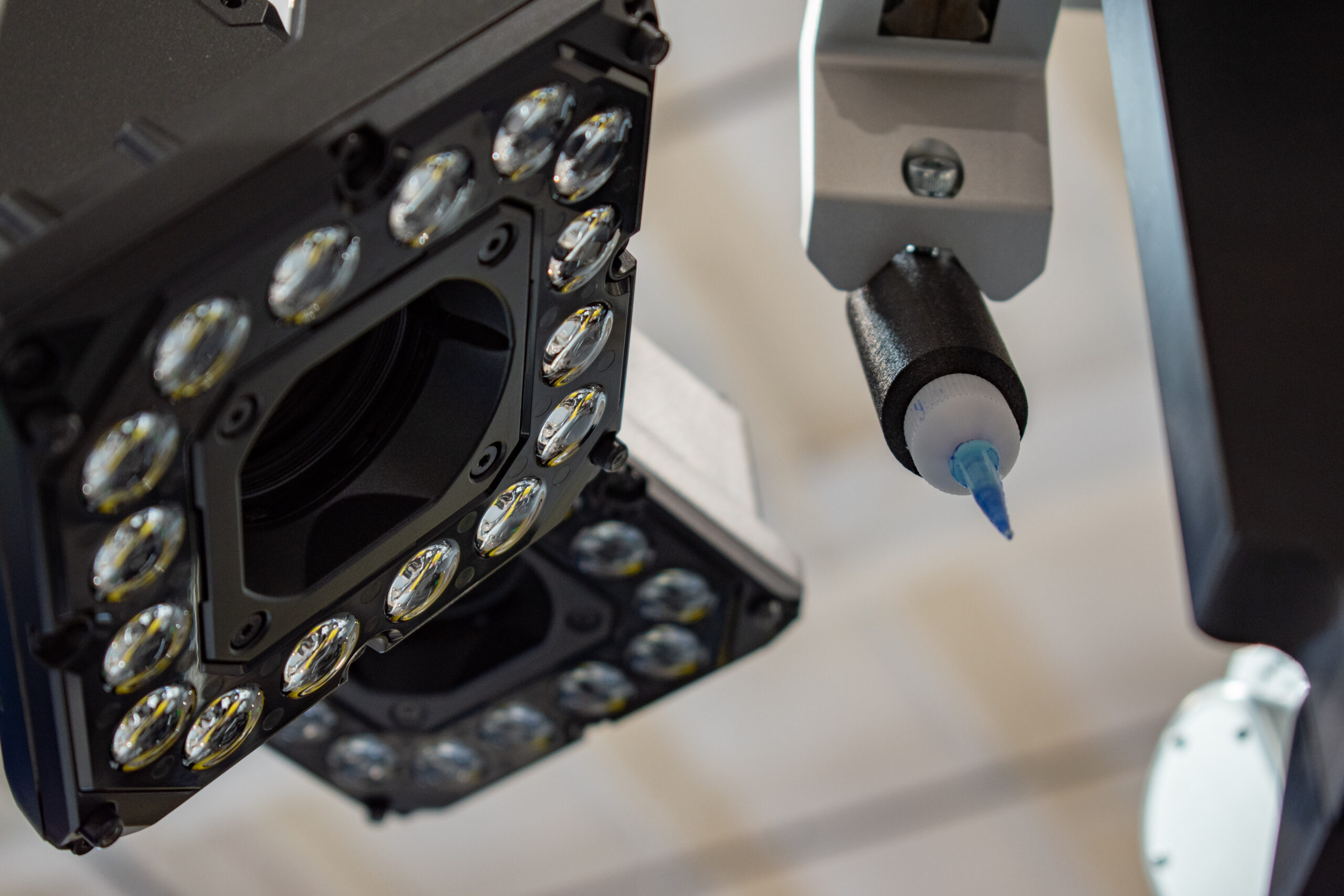
Robot 2—a Mecademic Meca500—performed all tuning operations above the indexing table. SDC’s experience as a certified Mecademic robotic integrator made it the right fit: compact, precise, and capable of multiple continuous revolutions for precision screwdriving in a tight workspace. It used a ceramic screwdriver to keep metallic mass away from the RF circuit boards during measurement.
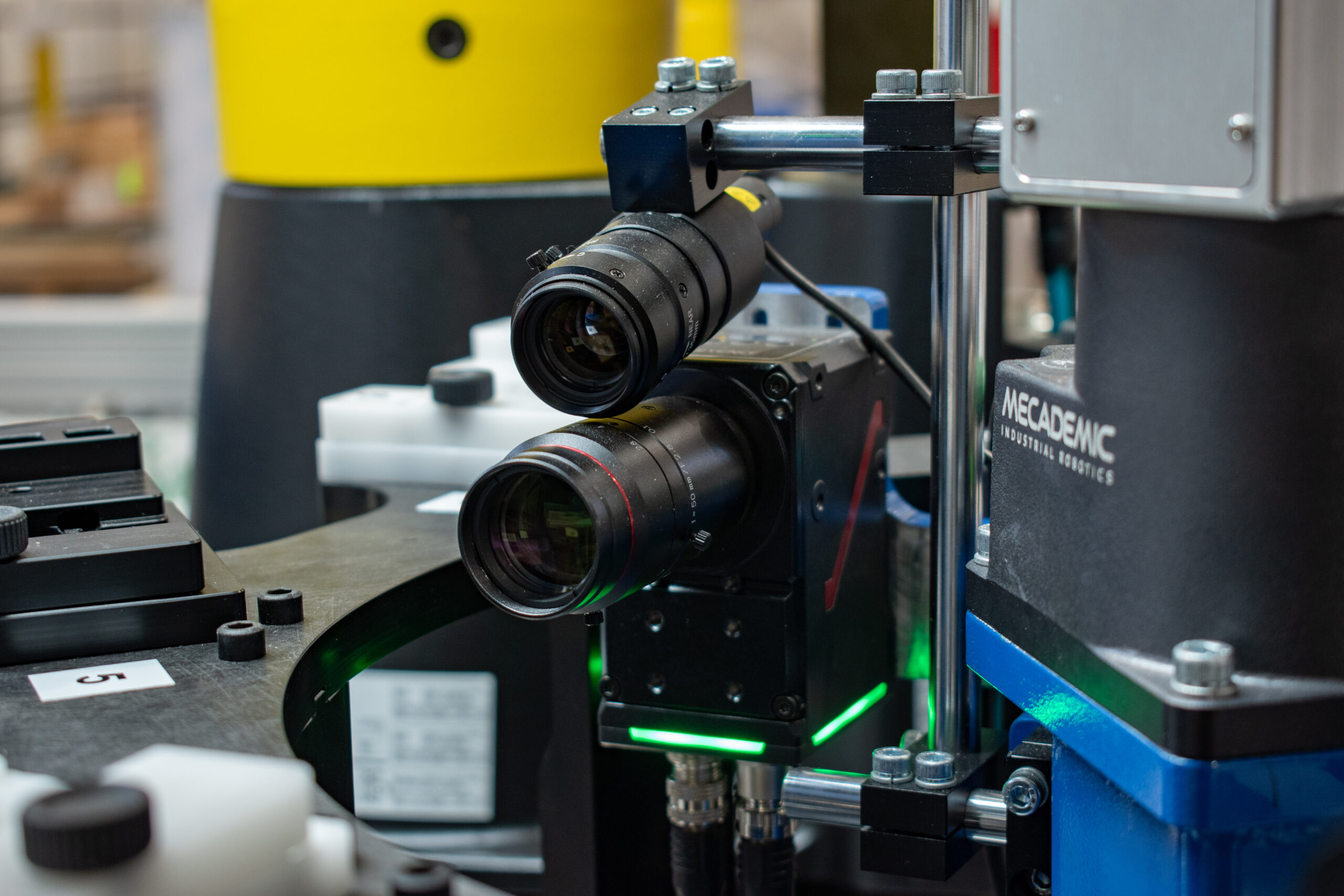
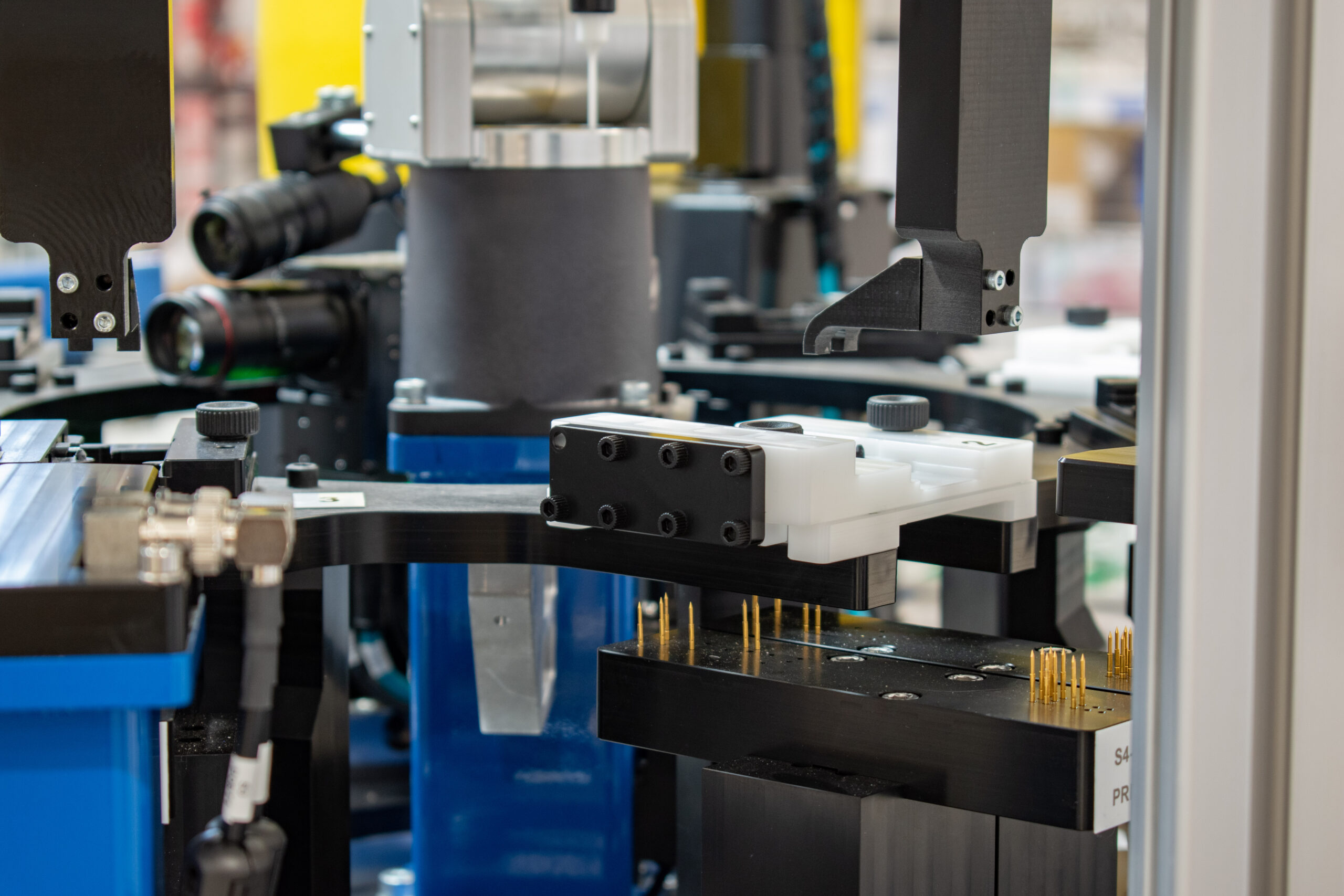
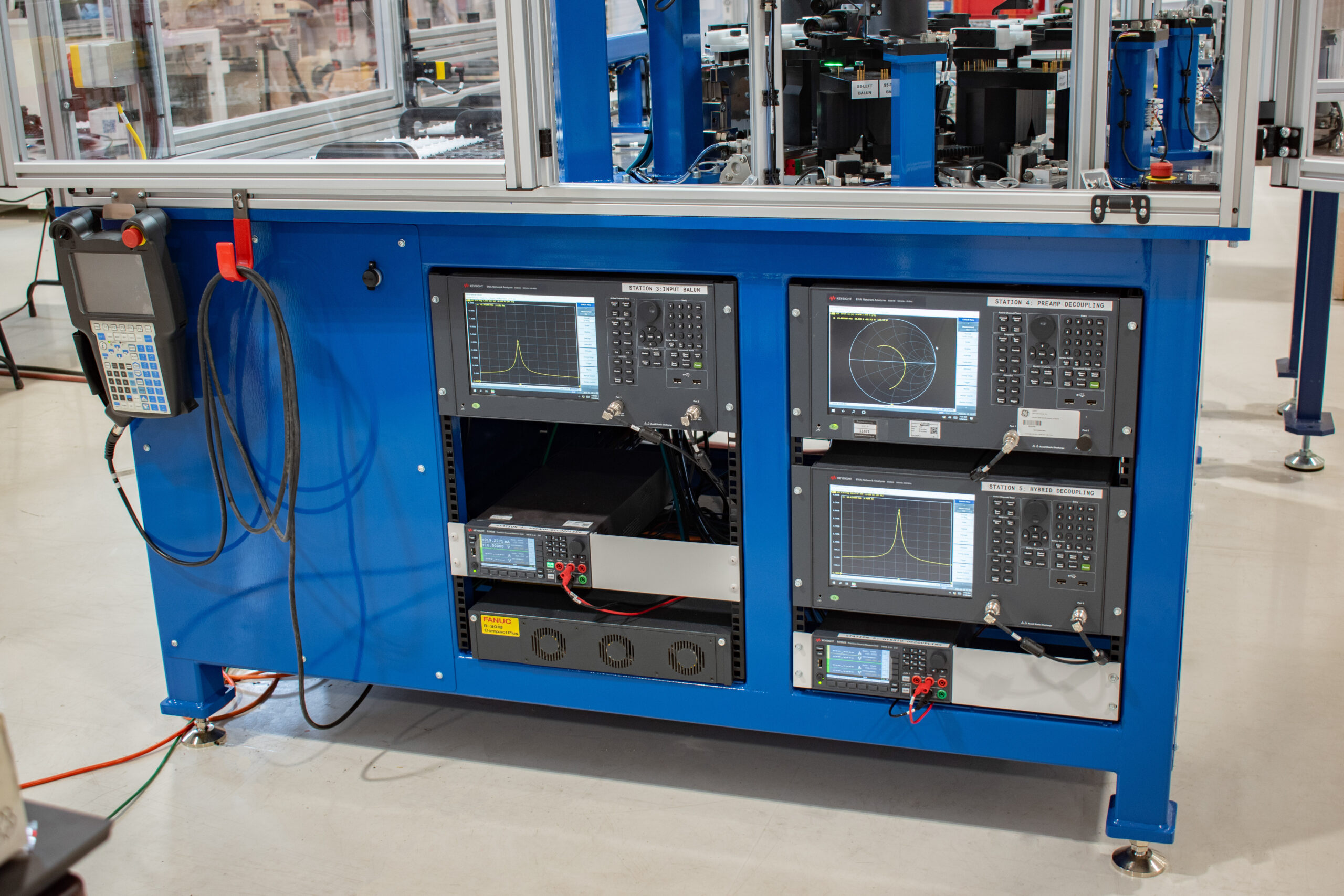
Test pins beneath each indexing table location rose to contact the board’s test points, then retracted before the table moved to the next station. Three vision systems tracked screw positions in real time. Once tuning was complete, Loctite was applied to the input balun screw. The machine also ran periodic calibration cycles using boards supplied by the customer, with all calibration data logged automatically.
All tooling and fixtures in contact with boards were grounded to a maximum resistance of 1 MΩ, meeting customer requirements. A Keyence Multi-Sensor Ionizer SJ-F700 series was also integrated, blowing ionized air across the entire indexing dial to eliminate static electricity and ensure accurate, uninterrupted tuning throughout the cycle. SDC’s standard remote access feature was also included, so the engineering team can wirelessly connect to the machine for support without an on-site visit.
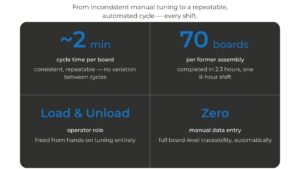
This machine replaced a fully manual process with a consistent, automated cycle. It is a strong example of small part automation and medical device assembly automation working together in one integrated system. The business impact was felt across throughput, labor, and quality.
The machine moves each RF circuit board through a defined sequence of stations on the circular indexing table. This is electronic part automation at its most precise. Here’s how a full cycle runs:
This project is a strong example of what SDC does best: taking a complex manual process and building a machine that does it better. The customer needed more than speed—they needed a system they could trust to meet strict RF performance specs. SDC combined two specialized robots, a multi-station indexing table, and a full suite of test instruments into one complete machine.
What makes it especially noteworthy is the level of adaptability built into the tuning process. The Mecademic robot tunes two different potentiometer styles at two different locations on the same board—adjusting its axis and motion path for each. That kind of accuracy, repeated consistently across an 8-hour shift, is what the manual process could never guarantee. It hit the 2-minute cycle time target, reduced operator training requirements, and delivered board-level data traceability. For a leading manufacturer in the medical device space, this is the kind of medical device automation that pays off every shift.
A: An automated circuit board tuning machine adjusts physical components on an RF circuit board—like screws, potentiometers, and capacitors—while reading electrical measurements to confirm the circuit is within spec. Instead of a technician doing this by hand, a robot handles the adjustments with precision and repeatability, every cycle.
A: As a Mecademic robotic integrator, SDC selected the Meca500 for its compact size and ability to perform multiple continuous revolutions—both critical for precision screwdriving in a tight workspace. It also accommodated the ceramic screwdriver required to meet RF isolation requirements near the RF circuit boards during measurement.
A: The operator selects a recipe at the start of the cycle. The machine supports two product variations of the RF circuit board, with up to four different footprints mixed in the same infeed tray. Vision guidance helps each robot identify and handle boards correctly.
A: If a board does not pass any of the tuning or testing steps, the indexing table skips directly to the unload location. Robot #1 moves the board to a dedicated reject tray rather than placing it on the former assembly. This keeps reject boards separate and clearly identified, with barcode data logged for traceability.
A: Yes. Every eight hours, the machine runs calibration boards through each test station. The PLC sends calibration commands to each network analyzer, and results are checked against known measurements. All data is logged automatically and available for future test cycles, keeping quality assurance on track without disrupting production.
A: Yes. SDC is a level III FANUC ASI (Authorized Systems Integrator) and part of Mecademic’s new Certified Integrator program. SDC has years of experience programming and integrating a variety of different robot brands and types onto their automated machines and has built up a network of preferred robotic suppliers.
A: This wasn’t a standard pick-and-place build. A few things set it apart: