
Choosing a custom automation machine builder isn’t something you do every day. It’s usually triggered by pressure — labor challenges, capacity limits, quality issues, or the simple realization that “this process won’t scale.” And once you start talking to automation companies, they all sound capable. They all show polished videos. They all promise results.
The hard part isn’t finding someone who can build a machine.
It’s finding the right partner to engineer a system that actually works in your real-world production environment — and keeps working five years from now.
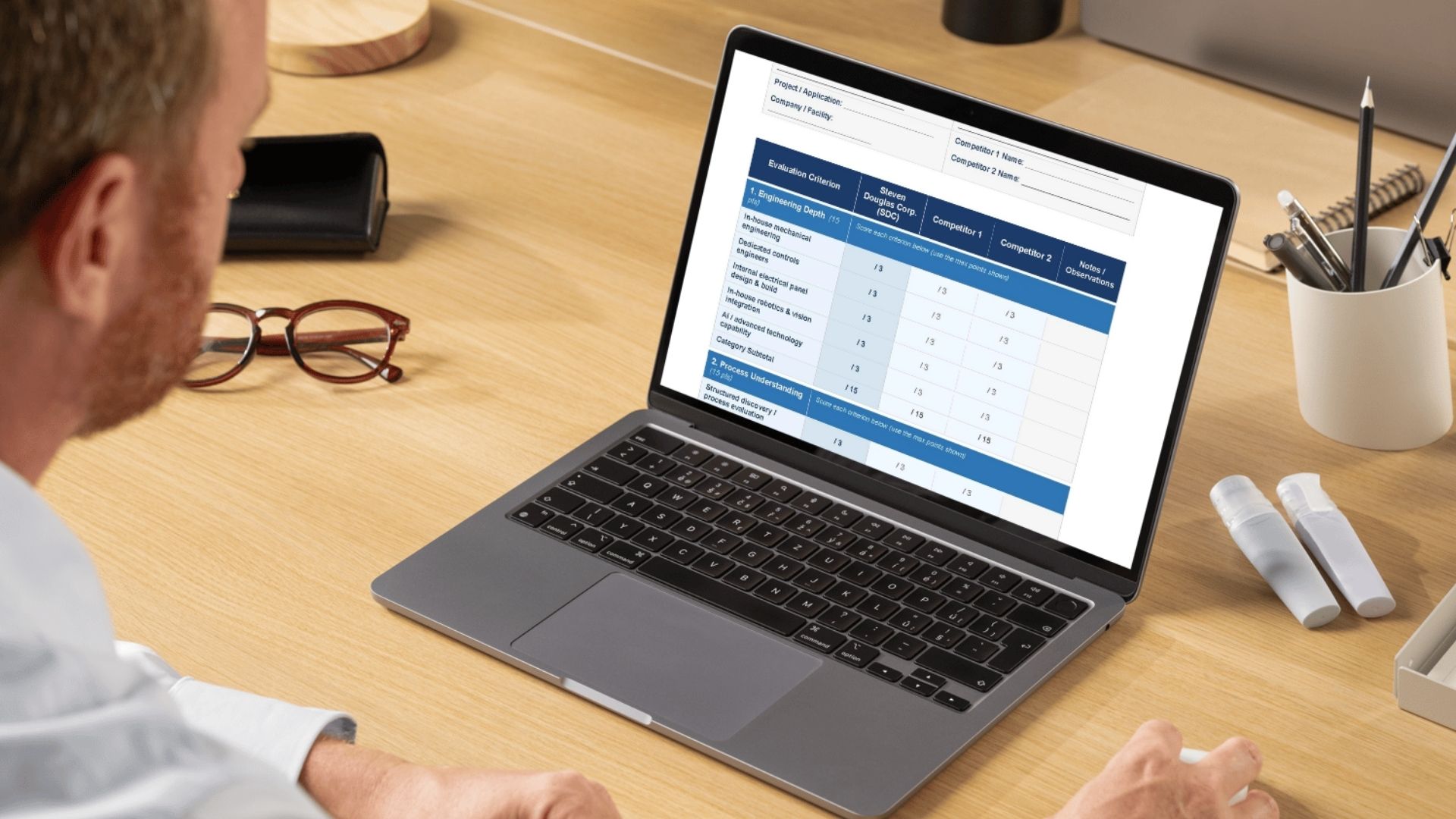
Want to see how the options stack up?
Download our grading rubric.
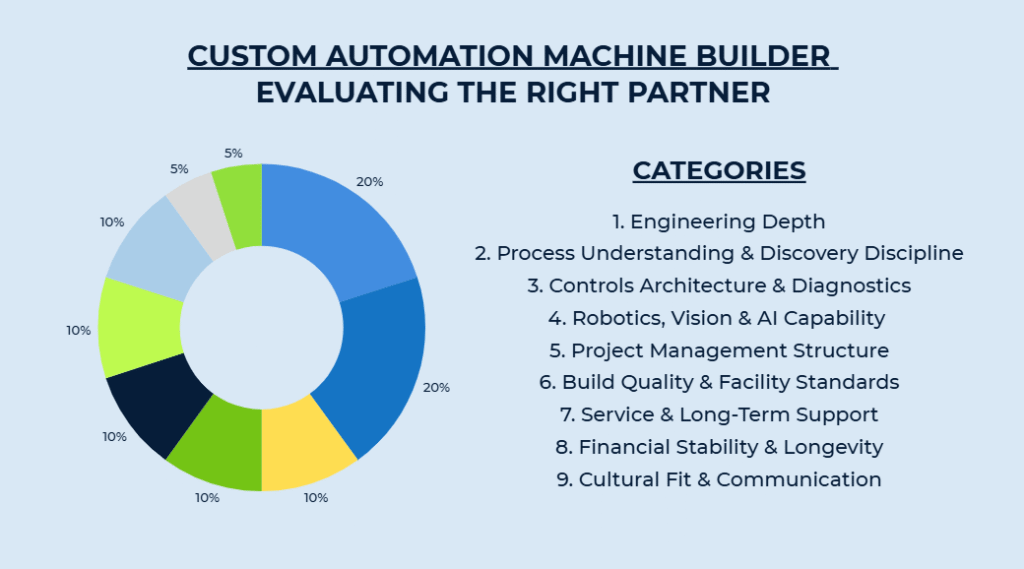
1. Engineering Depth: Can They Build It In-House?
Not all automation integrators are built the same. Some design and engineer everything internally. Others outsource critical components like controls programming or electrical design.
When evaluating a custom automation machine builder, ask:
- Do they have in-house mechanical engineering?
- Do they have dedicated controls engineers?
- Can they design and build electrical panels internally?
- Do they program PLCs, motion systems, and robotics themselves?
- Do they configure and integrate vision systems?
- Do they understand AI integration when appropriate?
Why it matters:
Custom automation is an engineering problem — not a purchasing problem. If core mechanical design, controls programming, robotics integration, or vision configuration are outsourced, accountability gets fragmented. When issues arise (and they always do), you don’t want finger-pointing between vendors. Strong in-house engineering depth shortens iteration cycles, improves system cohesion, and reduces long-term risk. The deeper the engineering bench, the more stable the final system.
2. Process Understanding: Do They Understand Your Operation?
Automation should be built around your process — not a generic template.
A disciplined integrator will:
- Conduct a structured discovery phase
- Observe your current process
- Evaluate part variability and tolerance stack-ups
- Validate cycle time assumptions
- Ask difficult questions early
If an automation machine builder quotes quickly without deep process evaluation, that’s a red flag.
Why it matters:
Machines don’t fail because drawings were wrong. They fail because real-world variability wasn’t considered. Part tolerances shift. Operators load parts differently. Materials behave inconsistently. A machine builder that doesn’t deeply understand your process will design for ideal conditions — not reality. Thorough discovery and process evaluation upfront prevents expensive redesigns and performance gaps later.
3. Controls Architecture: Is It Built to Scale?
Controls are the backbone of any custom automation machine.
Strong controls architecture includes:
- Standardized PLC platforms
- Modular programming structure
- Clear diagnostic interfaces
- Structured fault tracking
- Data collection capability (cycle times, downtime, OEE)
- Integration capability with MES or ERP systems
Poor controls design leads to:
- Difficult troubleshooting
- Limited expandability
- Increased downtime
- Long-term frustration for maintenance teams
When choosing an automation integrator, don’t just ask what PLC they use. Ask how they structure their controls architecture.
Why it matters:
The controls system determines how usable, diagnosable, and scalable your automation will be. Poorly structured PLC code or limited diagnostics can turn minor issues into hours of downtime. Clean, modular controls architecture makes troubleshooting faster, future expansion easier, and integration with plant systems smoother. Controls are invisible when done right — and painfully obvious when done poorly.
4. Robotics, Vision, & AI Capability: Do They Apply Technology Strategically?
Robotics and AI are powerful — when applied correctly.
Ask your automation partner:
- When do they recommend robotics vs fixed automation?
- How do they design vision system lighting?
- Do they use rule-based inspection or AI-based inspection?
- How do they reduce false rejects?
- Do they understand when AI adds value — and when it doesn’t?
AI in manufacturing automation should improve stability and insight. It should not introduce unnecessary complexity.
The right automation company applies advanced technologies with discipline, not hype.
Why it matters:
Advanced technologies like robotics and AI-based inspection can dramatically improve performance — when applied correctly. But overcomplicating a stable process introduces unnecessary risk. A disciplined automation partner understands when to use deterministic logic, when to deploy robotics, and when AI truly adds value. Strategic use of technology increases reliability. Overuse increases complexity.
5. Project Management: Do They Run Structured Projects?
Even strong engineering can fail without disciplined execution.
Evaluate whether the automation machine builder has:
- Dedicated project managers
- Defined milestones
- Structured change order processes
- Clear communication cadence
- Risk mitigation planning
- Formal Factory Acceptance Testing (FAT) procedures
Automation projects often run 6–18 months. Without structure, timelines drift and costs escalate. A disciplined project structure protects both sides.
Why it matters:
Build discipline reflects engineering discipline. Clean panel wiring, organized assembly floors, and structured documentation are not cosmetic details — they indicate process control. Sloppy build standards often correlate with inconsistent system performance and harder troubleshooting down the road. The way a machine is built matters just as much as how it was designed.
6. Build Quality & Facility Standards: Does the Shop Reflect the Engineering?
If possible, visit their facility.
Look for:
- Organized assembly areas
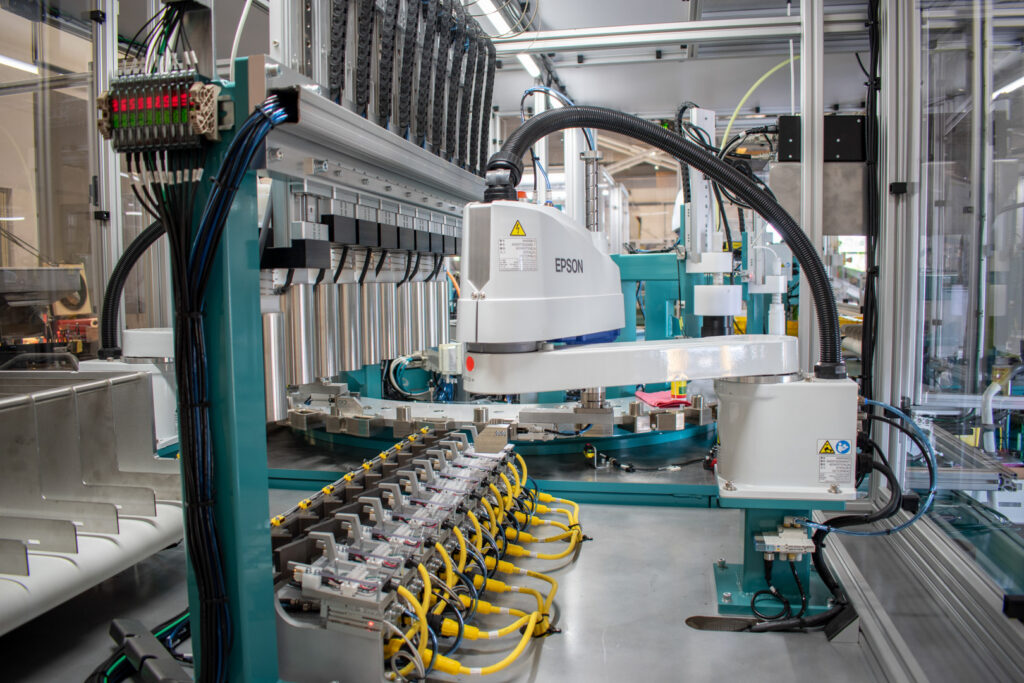
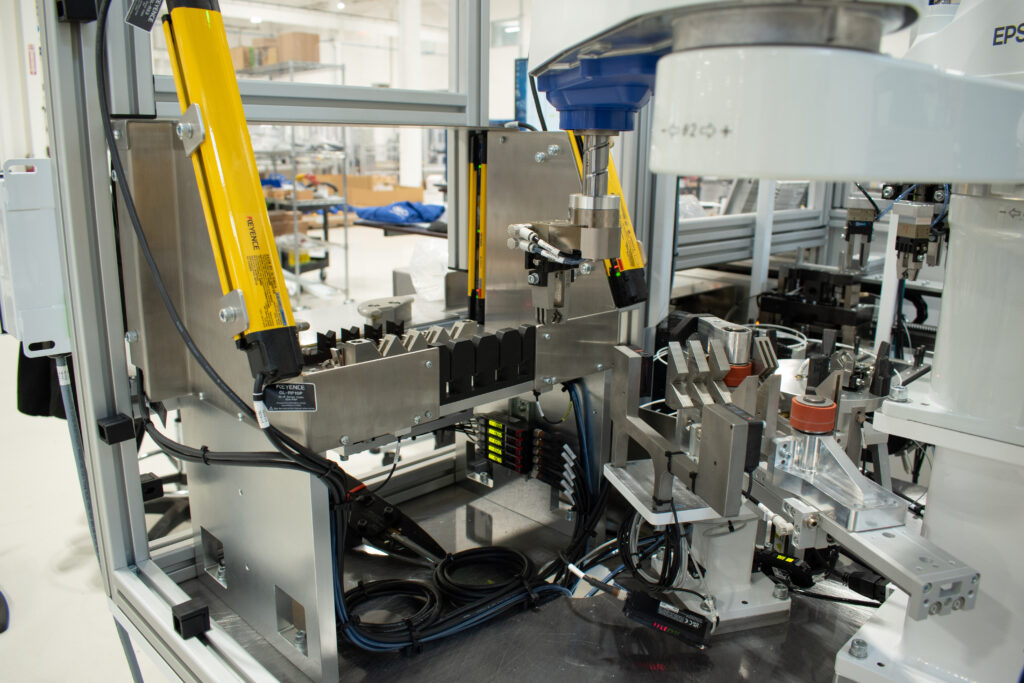
- Clean electrical panel builds
- Clearly labeled wiring
- Documentation processes
- Strong safety culture
Build quality reflects engineering discipline. A structured, organized shop floor often translates into reliable machine performance.
Why it matters:
Build discipline reflects engineering discipline. Clean panel wiring, organized assembly floors, and structured documentation are not cosmetic details — they indicate process control. Sloppy build standards often correlate with inconsistent system performance and harder troubleshooting down the road. The way a machine is built matters just as much as how it was designed.
7. Service & Long-Term Support: What Happens After Install?
Automation is not a one-time transaction.
It’s a long-term system.
Ask:
- Do they have a dedicated service team?
- What is their response time?
- Do they offer remote diagnostics?
- Is spare parts support defined?
- Is operator and maintenance training included?
- Do they offer preventative maintenance guidance?
The true test of an automation partner is how they respond when something goes wrong. Long-term support capability is often undervalued during selection.
Why it matters:
Automation systems evolve. Products change. Volumes increase. Components wear. The true value of a machine builder shows up after installation — when support is needed. A responsive service team, remote diagnostics capability, and structured maintenance planning protect uptime. Without long-term support, even a well-built machine can become a liability.
8. Financial Stability & Longevity: Will They Be There in Five Years?
Custom automation systems often evolve.
You may need:
- System expansions
- Product modifications
- Software updates
- Additional integration
Evaluate:
- Years in business
- Leadership stability
- Repeat customer relationships
- Organizational depth
- Financial stability (when available)
Choosing a short-term vendor for a long-term system introduces risk.
Why it matters:
Custom automation is rarely a one-and-done investment. You may need software updates, expansions, or integration support years later. Partnering with an unstable integrator introduces operational risk. Longevity and organizational depth indicate that a company has navigated market cycles, maintained customer relationships, and built systems that last.
9. Cultural Fit & Communication: Are They Realistic?
This category is often underestimated.
Pay attention to:
- Do they challenge unrealistic expectations?
- Are cycle times quoted conservatively or optimistically?
- Do they communicate clearly?
- Do they admit uncertainty where appropriate?
- Do they focus on partnership rather than transaction?
The best automation machine builders are realistic, structured, and transparent. They prioritize long-term system performance over short-term wins.
Why it matters:
Automation projects require collaboration. A partner who overpromises to win the job can create long-term operational strain. Realistic expectations, transparent communication, and willingness to challenge assumptions are signs of maturity. Cultural alignment ensures smoother execution and fewer surprises throughout the project lifecycle.
Final Thoughts: Choose for Engineering Discipline, Not Just Price
When evaluating a custom automation company, price is only one factor.
The more important question is:
Who has the engineering depth, process understanding, and long-term discipline to build a system that works reliably in your real-world production environment?
Custom automation should:
- Stabilize output
- Improve quality
- Scale with demand
- Integrate intelligent systems where appropriate
- Reduce operational risk
Choosing the right automation machine builder determines whether those outcomes become reality. If you’re currently evaluating automation partners, consider using a structured grading rubric to compare engineering depth, project management discipline, service capability, and long-term fit.
Automation is too significant an investment to evaluate informally.
Structure brings clarity. And clarity reduces risk.
For more information read: Custom Automation Machines: A Buyer’s Guide for Manufacturers